

Protect Yourself From Gift Card Fraud in 2026
Gift cards remain one of the most popular presents for holidays, birthdays, and special occasions. They’re convenient, versatile, and seemingly foolproof—until they’re not. In 2026, fraudulent gift cards have become an increasingly complex problem, costing consumers millions of dollars annually. Scammers have developed clever methods to tamper with cards on retail shelves, drain balances before legitimate purchasers can use them, and create convincing counterfeit cards that leave both givers and recipients empty-handed.
The Federal Trade Commission reported that gift card fraud resulted in over $228 million in losses in 2023, and that number has only grown. Recent cases across the country show criminals targeting major retailers during peak shopping seasons, replacing legitimate gift cards with tampered versions that funnel money directly into their accounts. The good news? By understanding how these scams work and taking simple precautions, you can protect yourself and ensure your gift cards reach their intended recipients with their full value intact.
How to Inspect Gift Cards Before Purchase for Tampering

The first line of defense against gift card fraud starts at the retail display rack. Criminals often visit stores and tamper with cards while pretending to be regular shoppers, making vigilance essential before you make your purchase.
Check the Packaging for Signs of Tampering
Examine the gift card packaging carefully before taking it to the register. Look for any signs that the package has been opened and resealed. Legitimate gift card packaging should be intact, with no tears, scratches, or adhesive residue. Many brands use tamper-evident packaging with special seals or perforations that break when opened—if these security features appear broken or missing, choose a different card.
Pay particular attention to the area where the PIN is concealed. Scammers often carefully peel back the scratch-off coating or protective sticker to record the card number and PIN, then replace it with a similar-looking sticker. If the scratch-off area looks misaligned, appears to have multiple layers, or shows any signs of having been previously scratched and covered, avoid that card entirely.
Verify Card Numbers and Barcodes
Fraudsters sometimes swap the barcodes or card numbers on gift cards, replacing them with numbers from cards they control. Before purchasing, check that all numbers on the card match the numbers on the packaging. Many retailers print the last four digits of the card number on the outside of the package—verify these match the actual card if you can see it through the packaging.
Look for any stickers placed over printed information, especially barcodes or card numbers. Legitimate gift cards should have all identifying information printed directly on the card or packaging by the manufacturer, not added via aftermarket stickers.
Select Cards from Behind the Front Row
An experienced fraud prevention tip: avoid taking the first cards on the display rack. Scammers typically tamper with cards and return them to the front of the display for quick purchase by unsuspecting shoppers. By selecting cards from the middle or back of the rack, you reduce the likelihood of choosing a compromised card.
If you’re purchasing multiple gift cards, inspect each one individually. Criminals often tamper with several cards at once, so finding one compromised card in a batch means others nearby may also be affected.
Trust Your Instincts
If something about a gift card feels off—the packaging seems loose, the card looks different from others on the rack, or the protective elements appear irregular—trust that instinct and choose a different card. It’s far better to spend an extra minute selecting another card than to discover later that you’ve purchased a worthless piece of plastic.
Why Buying Directly from Retailers is Safer Than Third-Party Sellers
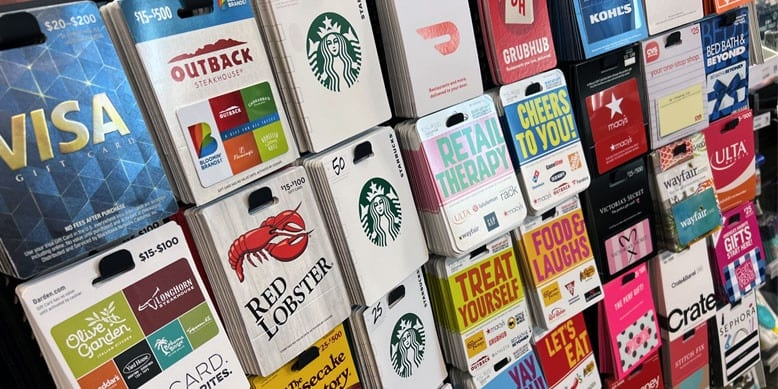
Where you purchase gift cards matters just as much as how carefully you inspect them. The source of your gift card significantly impacts your risk of fraud.
The Risks of Third-Party Marketplaces
Online marketplaces, auction sites, and classified ad platforms have become hotbeds for gift card fraud. While these venues often advertise gift cards at discounts—sometimes 10-30% below face value—the savings come with substantial risks. Fraudsters use these platforms to sell cards they’ve obtained through theft, purchased with stolen credit cards, or loaded with little to no actual value.
Even on seemingly reputable platforms, scammers create convincing seller profiles with fake positive reviews. They may provide you with a card number and PIN that shows a balance when you check it initially, only to drain that balance before you attempt to use the card. By the time you discover the problem, the seller has disappeared, and the marketplace’s buyer protection policies may not cover gift card purchases.
Cardpool and Raise, once-popular gift card resale sites, have both faced significant challenges and changes in their business models precisely because of the difficulty in preventing fraud. While some legitimate resellers exist, the prevalence of scams makes any third-party gift card purchase a gamble.
The Security of Direct Retail Purchases
Purchasing gift cards directly from authorized retailers—whether in-store or through their official websites—provides multiple layers of protection. Authorized retailers have direct relationships with the brands issuing the cards and can verify authenticity. They also maintain systems to track card activation and can assist if problems arise.
When you buy a gift card at a major retailer like Target, Walmart, or grocery chains, these stores have security protocols in place. They activate cards at the point of sale through their secure systems, creating a transaction record that can help resolve disputes. If you discover a problem with a card purchased directly from a retailer, you have a physical location and customer service infrastructure to address the issue.
Major retailers also increasingly use locked display cases for high-value gift cards, employ surveillance cameras near gift card displays, and train employees to watch for suspicious behavior around card racks. These measures significantly reduce the opportunity for in-store tampering.
Buying Directly from the Brand
The absolute safest method for purchasing gift cards is buying directly from the issuing company. Purchasing an Amazon gift card from Amazon.com, a Starbucks card from the Starbucks app, or an iTunes card from Apple eliminates the middleman and ensures you’re receiving a legitimate, untampered card.
Many brands now offer digital gift cards that are delivered via email or text message. These virtual cards eliminate physical tampering and can be sent instantly, making them ideal for last-minute gifts. Recipients receive the card number and PIN directly in their inbox, reducing the risk of interception or theft.
Brand-direct purchases also provide the strongest customer service recourse. If any issue arises with a card purchased directly from the issuing company, their customer service team has complete access to the transaction history and can often resolve problems quickly.
Avoiding Too-Good-To-Be-True Offers
Be extremely skeptical of advertisements offering substantial discounts on gift cards, particularly on social media platforms. Legitimate gift cards rarely sell for significant discounts because they function as cash equivalents. An offer for a $100 gift card for $70 is almost certainly fraudulent.
Scammers also create fake websites that mimic legitimate retailers, offering gift cards at attractive prices. These sites steal your payment information and either send worthless cards or nothing at all. Always verify you’re on the official website by checking the URL carefully and looking for security indicators like HTTPS encryption.
What to Do If You Receive a Compromised Gift Card
Despite your best precautions, you may still encounter a fraudulent or compromised gift card. Quick action can sometimes mitigate or resolve the problem.
Check the Balance Immediately
As soon as you purchase a gift card—or receive one as a gift—check the balance. Most cards include a website or phone number for balance verification. By checking immediately, you establish a baseline and can detect if the balance decreases unexpectedly.
If you purchased the card as a gift, consider checking the balance before giving it to the recipient. While this may seem to diminish the surprise, it ensures you’re giving a functional gift rather than an embarrassing problem. You can include the balance receipt with your gift to show the card’s value.
Document Everything
If you discover your gift card has zero balance or less than expected, immediately document the situation. Take photos of the card, packaging, and your purchase receipt. Write down the date and time you discovered the problem, and note the balance shown (or lack thereof).
Your purchase receipt is crucial evidence. It proves when and where you bought the card and establishes that you’re the legitimate purchaser. Without a receipt, resolving gift card fraud becomes significantly more difficult.
Contact the Retailer Where You Purchased the Card

If you bought the card from a retail store, return there as soon as possible with the card, packaging, and receipt. Explain the situation to a manager—not just a cashier—as they have more authority to address the issue.
Many major retailers have policies for addressing gift card fraud and may refund your purchase or replace the card, particularly if you can demonstrate tampering. While retailers aren’t always obligated to provide refunds for gift cards, many will work with customers who were clearly victims of fraud, especially when evidence of tampering exists.
Reach Out to the Card Issuer
Contact the customer service department of the company that issued the gift card. Explain that you purchased a card that was compromised and provide all relevant information: card number, purchase date, purchase location, and receipt details.
Card issuers can investigate the card’s transaction history and sometimes identify when and how the fraud occurred. While they may not always be able to restore the card’s value, they want to know about fraud patterns affecting their products and may make exceptions in clear-cut cases.
Be persistent but polite. Ask to speak with a supervisor if the first representative cannot help. Document every conversation, including the date, time, representative’s name, and what they told you.
File Reports with Authorities
For significant losses, file a report with your local police department. While police may not investigate individual gift card fraud cases, the report creates an official record that can support your claim with the retailer or card issuer.
Also, report the incident to the Federal Trade Commission through their website at ReportFraud.ftc.gov. The FTC tracks fraud patterns and uses these reports to identify and combat widespread scams. Your report contributes to a larger database that helps protect other consumers.
If the gift card fraud involved an online purchase, report it to the Internet Crime Complaint Center (IC3) at ic3.gov. This FBI-affiliated organization investigates internet-based crimes.
Dispute the Charge with Your Credit Card Company
If you purchased the fraudulent gift card with a credit card, contact your credit card company to dispute the charge. Credit cards offer stronger consumer protections than debit cards or cash purchases. Explain that you purchased a product (the gift card) that was defective or fraudulent.
Credit card companies can initiate chargebacks, reversing the charge while they investigate. This process doesn’t guarantee you’ll recover your money, but it provides an additional avenue for resolution, particularly if the retailer and card issuer haven’t provided satisfactory solutions.
Learn and Share
After experiencing gift card fraud, share your experience with friends and family to help them avoid similar situations. Your real-world example can prevent others from falling victim to the same scams.
Consider leaving reviews on the retailer’s website or social media, especially if they failed to adequately secure their gift card displays or address your fraud complaint. Public accountability can motivate retailers to improve their security measures.
Conclusion: Stay Vigilant and Shop Smart
Gift cards remain an excellent gift option when you purchase them wisely. The convenience and flexibility they offer recipients make them perpetually popular, but that popularity also makes them attractive targets for criminals. By taking a few simple precautions—inspecting cards carefully before purchase, buying from authorized retailers rather than third-party sellers, and immediately verifying balances—you can dramatically reduce your risk of falling victim to gift card fraud.
As we move through 2026, expect fraudsters to develop even more sophisticated tampering techniques. Stay informed about new scam tactics by following consumer protection websites and news. Retailers and card issuers are also improving security measures, including better tamper-evident packaging, instant activation systems, and enhanced customer service protocols for fraud victims.
Remember that if you do encounter a fraudulent gift card, you’re not powerless. Act quickly, document everything, and pursue resolution through multiple channels—the retailer, the card issuer, and if necessary, legal authorities and your credit card company.
The holidays and special occasions should be times of joy, not frustration over financial fraud. By shopping smart and staying vigilant, you can ensure the gift cards you purchase deliver the value and convenience they promise. Whether you’re buying a gift card for a distant relative, a teacher appreciation gift, or a convenient present for a teenager, these precautions protect both your wallet and the recipient’s experience.
Stay safe, shop carefully, and give with confidence knowing you’ve taken the necessary steps to avoid gift card fraud.
Frequently Asked Questions
Q: How can I tell if a gift card has been tampered with?
A: Look for signs of tampering, including torn or damaged packaging, misaligned or double-layered scratch-off areas, stickers placed over barcodes or card numbers, and adhesive residue on the packaging. The packaging should be completely intact with all security seals unbroken. If the PIN protective covering looks like it has been scratched and re-covered, avoid that card.
Q: Is it safe to buy discounted gift cards from third-party websites?
A: Purchasing gift cards from third-party marketplaces carries significant risk. While some legitimate resellers exist, these platforms are frequently used by scammers to sell stolen, empty, or fraudulently obtained cards. The safest approach is to purchase gift cards directly from authorized retailers or the issuing brand, even if it means paying full price.
Q: What should I do immediately after purchasing a gift card?
A: Check the balance as soon as possible after purchase using the website or phone number provided on the card. Keep your receipt as proof of purchase. If you’re giving the card as a gift, consider checking the balance before presenting it to ensure it has the full expected value. Document the card number and PIN in a secure location separate from the physical card.
Q: Can I get my money back if I bought a fraudulent gift card?
A: Recovery depends on several factors,s including where you purchased the card and how you paid. If bought from a major retailer with a receipt, they may refund or replace it, especially if tampering is evident. Contact the card issuer’s customer service as well. If you paid with a credit card, you can dispute the charge. File reports with the FTC and local police to document the fraud.
Q: Are digital gift cards safer than physical gift cards?
A: Digital gift cards purchased directly from the issuing brand are generally safer than physical cards because they eliminate the risk of physical tampering. They’re delivered electronically via email or text, reducing interception risk. However, ensure you’re purchasing from the official brand website or app, not a third-party seller, and protect the digital card code just as carefully as you would a physical card.