
P2P Trading for Beginners: Nigeria 2026 Guide
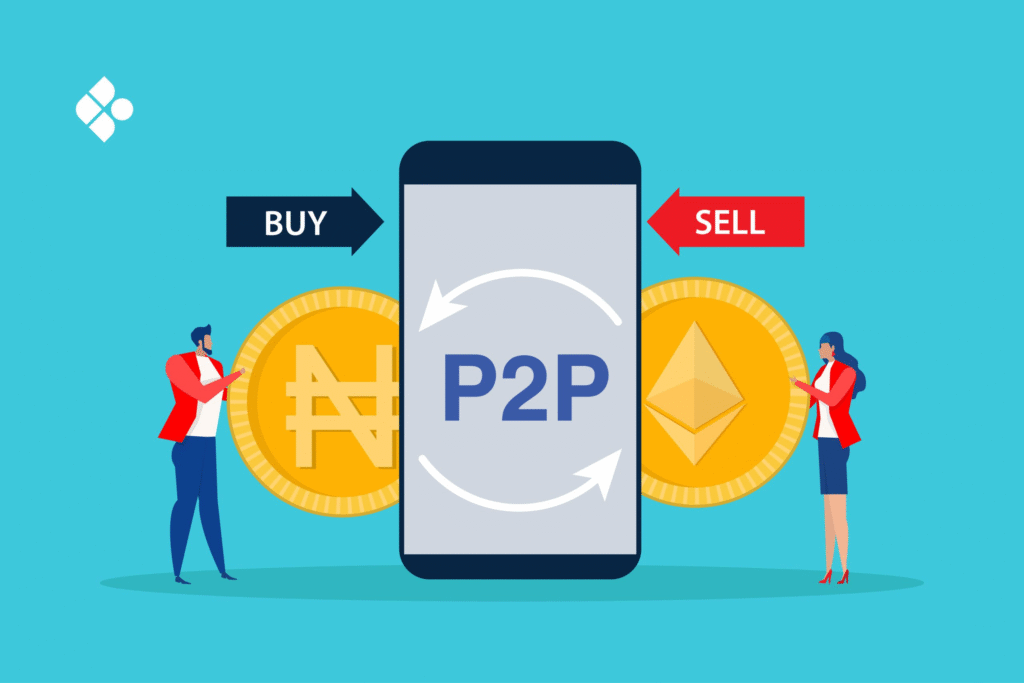
P2P trading sounds risky? Here’s how to do it safely in Nigeria.
If you’re new to cryptocurrency in Nigeria, you’ve probably heard about P2P trading, and maybe you’ve also heard horror stories about scams, frozen bank accounts, or people losing money to fraudsters. These concerns are valid, but they shouldn’t stop you from accessing the crypto market. Understanding how peer-to-peer trading actually works, what the real risks are, and how to protect yourself can transform P2P from a scary unknown into a practical tool for buying and selling crypto with naira.
This comprehensive guide will walk you through everything a beginner needs to know about P2P trading in Nigeria in 2026, from the basic mechanics to advanced safety protocols that experienced traders use every day.
What P2P Trading Actually Means and Why It Works in Nigeria
The Basics: What Is P2P Trading?
Peer-to-peer (P2P) trading is exactly what it sounds like: buying or selling cryptocurrency directly from another person rather than from a centralized exchange. Think of it like using Jiji or Facebook Marketplace for crypto; instead of buying from a company, you’re connecting with individual merchants who want to trade.
Here’s how a typical P2P transaction works:
1. You select a merchant’s offer on a P2P platform
2. The platform locks the merchant’s crypto in escrow (a safe holding space)
3. You send naira to the merchant’s bank account
4. You confirm payment on the platform
5. The merchant verifies receipt of your payment
6. The platform releases the crypto from escrow to your wallet
The entire process usually takes 5-30 minutes, depending on how quickly both parties respond.
Why P2P Became Essential for Nigerians
You might wonder: why not just use a regular exchange? The answer lies in Nigeria’s unique banking landscape.
Since the Central Bank of Nigeria (CBN) directed banks to close accounts facilitating cryptocurrency transactions in 2021, traditional crypto exchanges cannot easily offer naira deposit and withdrawal services. P2P trading emerged as the workaround that keeps crypto accessible to everyday Nigerians.
P2P platforms don’t directly handle naira—individuals do. When you send money to a merchant, it looks like a regular person-to-person transfer to your bank. This structure keeps transactions flowing despite regulatory restrictions.
The advantages for Nigerian users:
– Local payment methods: Use the same bank transfer you’re comfortable with
– Naira liquidity: No need to deal with dollar accounts or international transfers
– Competitive rates: Merchants compete, often leading to better prices than fixed-rate platforms
– Accessibility: Available 24/7 from your phone
The challenges you need to understand:
– Scam risk: Not all merchants are honest
– Account freezing: Some banks flag frequent P2P activity as suspicious
– Rate volatility: Prices can vary significantly between merchants
– Time investment: Finding trustworthy merchants requires research
Now that you understand the landscape, let’s dive into the most critical skill for safe P2P trading: identifying legitimate merchants and avoiding scammers.
How to Verify Legitimate Merchants and Avoid Scammers
The difference between a smooth P2P experience and a nightmare usually comes down to one thing: merchant selection. Here’s your complete verification toolkit.
Red Flags That Scream “Avoid This Merchant”
1. Brand new accounts
If a merchant has fewer than 50 completed trades or their account is less than 3 months old, proceed with extreme caution. Scammers frequently create fresh accounts.
2. Low completion rates
Anything below 95% completion rate is concerning. Legitimate merchants typically maintain 98-100% because they value their reputation.
3. Rates that seem too good to be true
If everyone else is buying USDT at ₦1,580 and someone offers ₦1,650, ask yourself why. Scammers use attractive rates as bait.
4. Pressure tactics in chat
“I need to leave in 5 minutes, send quickly!” or “Mark as paid now, I’ll check later” are classic scammer phrases designed to rush you into mistakes.
5. Requesting off-platform communication
Any merchant who asks you to continue the conversation on WhatsApp, Telegram, or phone calls is trying to move outside the platform’s protection.
6. Vague or aggressive terms
Legitimate merchants have clear, professional trading terms. Confusing language or threatening tones are red flags.
Trade Your Cryptocurrency With Xbanka
Green Flags That Indicate Trustworthy Merchants
✓ 98%+ completion rate with 500+ trades
This combination shows both experience and reliability. The merchant has successfully completed hundreds of transactions.
✓ Verified merchant badge
Most platforms offer verification for established traders. While not foolproof, it adds a layer of legitimacy.
✓ Clear, reasonable trading terms
Professional merchants list their requirements upfront: “Payment from personal account only” or “No third-party transfers.”
✓ Average response time under 5 minutes
Active merchants who treat this seriously respond quickly and professionally.
✓ Rates aligned with market average
Check 5-10 different merchants. If most cluster around ₦1,580-₦1,590, that’s your market rate.
Your Pre-Trade Verification Checklist
Before clicking “Buy” or “Sell” on any P2P offer, run through this checklist:
– [ ] Merchant has completed at least 100 trades
– [ ] Completion rate is 97% or higher
– [ ] Account age is at least 2 months
– [ ] Rate is within 2-3% of market average
– [ ] Trading terms are clear and reasonable
– [ ] No requests for off-platform communication
– [ ] You’ve read recent reviews from other traders
If any item raises concerns, simply choose a different merchant. There are always alternatives.
Common Scam Tactics and How They Work
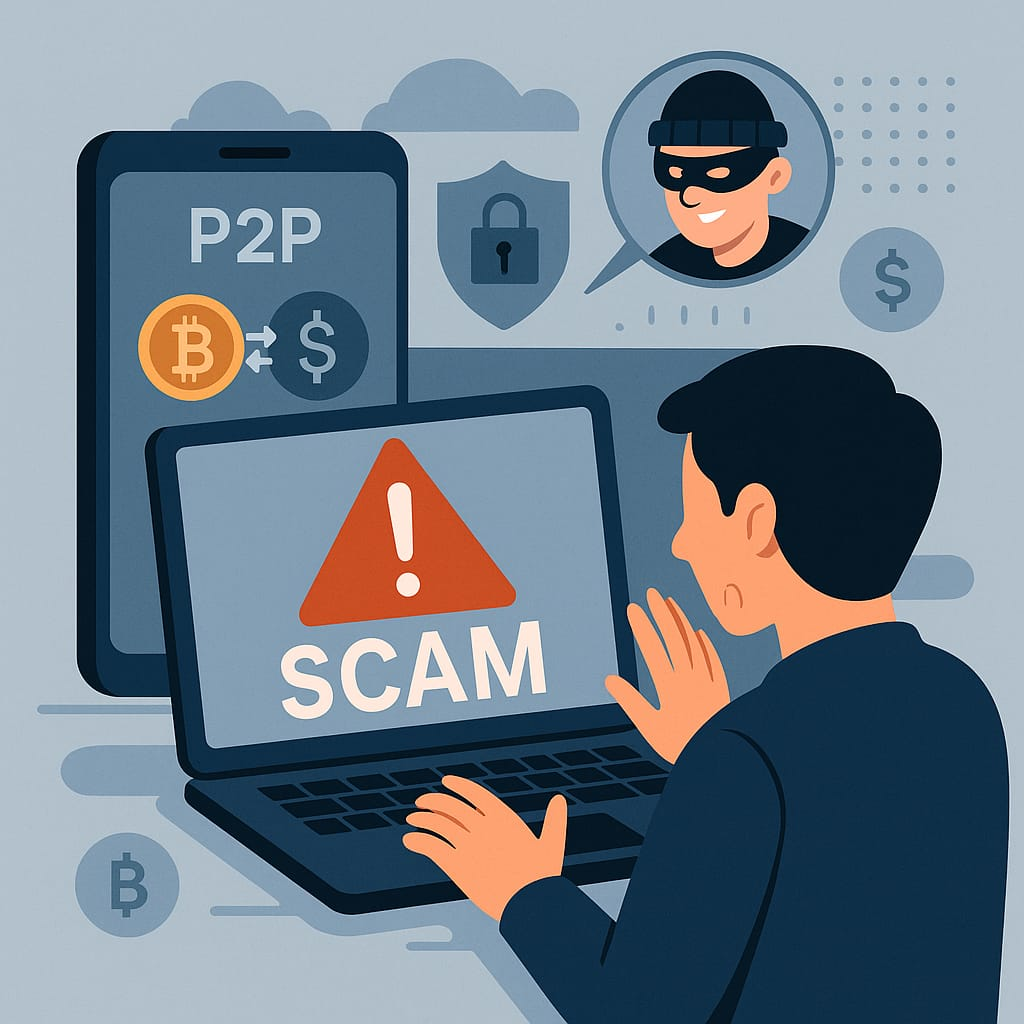
Fake payment screenshot scam
Scammers send a doctored image showing they’ve transferred money, hoping you’ll release crypto before checking your actual bank account. Protection: Always verify payment in your banking app, never trust screenshots.
Chargeback fraud
Scammer pays you, you release crypto, then they dispute the transfer with their bank claiming it was unauthorized. Protection: Keep all chat records and only trade with merchants who have long histories.
Phishing links
Scammer sends a fake “platform login” link to steal your credentials. Protection: Never click links in P2P chat. Always access your platform directly.
Amount mismatch
Scammer sends ₦48,000 instead of ₦58,000, hoping you won’t notice and will release the full crypto amount. Protection: Verify the exact amount matches before confirming.
Understanding the Escrow System (Your Safety Net)
The escrow mechanism is what makes P2P trading relatively safe when used correctly.
When you initiate a trade:
– For buyers: The merchant’s crypto is locked and cannot be withdrawn
– For sellers: Your crypto is locked in escrow automatically
The crypto only releases when:
– Both parties confirm the transaction, OR
– A dispute is resolved in someone’s favor by platform support
Critical rule: Never release crypto from escrow until payment is 100% confirmed in your bank account. Not 99%. Not “the merchant says they sent it.” Only when you see it in your balance.
If there’s any problem—wrong amount, no payment received, suspicious activity—immediately open a dispute instead of releasing. Platform support will investigate using chat records and transaction evidence.
Best Practices for Secure P2P Transactions with Naira
You’ve learned how to spot good merchants and avoid scammers. Now let’s cover the operational security practices that protect you during actual trades.
Rule #1: Never Go Off-Platform
This cannot be stressed enough. Some merchants, after you’ve traded with them successfully once or twice, might suggest: “Next time just send money directly to my account and I’ll send crypto to your wallet. We’ll skip the platform fees.”
Don’t do it. The moment you trade outside the platform, you lose:
– Escrow protection
– Dispute resolution
– Chat records as evidence
– Any recourse if something goes wrong
Platform fees (usually 0-1%) are insurance against losing your entire investment.
Rule #2: Verify Payment in YOUR Banking App
When you’re selling crypto and the buyer says “I’ve sent the payment,” follow this exact protocol:
1. Open your banking app (not SMS, not email)
2. Refresh your account balance
3. Check transaction history for the exact amount
4. Verify the sender’s name matches the P2P platform profile
5. Screenshot the credit alert for your records
6. Only then confirm payment on the platform
Take your time with this. Legitimate buyers understand and expect this verification process.
Rule #3: Keep All Communication Within the Platform
If a dispute arises, your chat history is your evidence. Platforms can review conversations to determine who’s telling the truth.
If you move to WhatsApp or phone calls:
– The platform can’t verify what was said
– You lose protection
– Scammers can claim anything happened
When merchants ask “What’s your WhatsApp?” simply respond: “I prefer to keep all communication here for security.”
Rule #4: Start Small While Learning
Your first 5-10 P2P trades should be modest amounts—₦10,000 to ₦20,000 maximum. This learning phase helps you:
– Get comfortable with the process
– Test different merchants safely
– Learn what normal trading feels like
– Limit potential losses if mistakes happen
Once you’ve successfully completed several small trades, you can gradually increase amounts.
Rule #5: Use a Dedicated Bank Account
Many experienced P2P traders maintain a separate bank account specifically for crypto transactions. Here’s why:
Reason 1: Bank security
Some Nigerian banks flag accounts with frequent P2P activity. If that account gets restricted, it won’t affect your salary, bill payments, or other finances.
Reason 2: Record keeping
A dedicated account makes it easy to track your crypto trading history for personal records or tax purposes.
Reason 3: Amount limits
You can keep only your trading capital in this account, reducing risk if something goes wrong.
Banks generally used by P2P traders include those with less restrictive policies, though this changes over time. Join Nigerian crypto communities to get current recommendations.
Rule #6: Never Lie About Transaction Purpose
Some shady merchants might instruct: “If your bank asks, say it’s payment for clothing” or “Tell them it’s a loan repayment.”
This is terrible advice that can:
– Get your account permanently closed
– Create legal complications
– Mark you for fraud investigation
If your bank inquires about a transaction, be honest: “It’s a personal payment” or “Purchase of digital goods.” Most banks won’t press further. If they have crypto-specific concerns, consider switching to a more crypto-friendly bank rather than lying.
Rule #7: Know How to Open and Win Disputes
Despite your best precautions, you might eventually need to open a dispute. Here’s how to handle it:
When to open a dispute:
– You sent payment but merchant won’t release crypto
– You received wrong payment amount
– Merchant is unresponsive for more than 15 minutes after payment
– You suspect fraudulent activity
How to win a dispute:
1. Provide clear evidence: Screenshots from your banking app showing payment sent/received
2. Reference chat history: Point out specific messages where agreements were made
3. Stay professional: Angry, emotional appeals are less effective than calm, factual explanations
4. Respond quickly: Platform support usually gives both parties 12-24 hours to respond
5. Include transaction IDs: Your bank transaction reference number is crucial evidence
Most disputes resolve within 24-48 hours. Platforms typically side with whoever has stronger evidence, which is why following all the rules above matters.
A Simpler Alternative: Direct Trading Platforms
P2P trading gives you access to competitive rates and local payment methods, but it requires constant vigilance. Every trade means:
– Screening multiple merchants
– Verifying credentials
– Monitoring chat for scam signals
– Manually confirming payments
– Potential dispute headaches
For beginners who find this overwhelming—or experienced traders who value their time—direct trading platforms like Xbankang offer a middle ground.
Instead of trading with random merchants, you trade directly with the platform itself. This means:
– No merchant verification needed: One trusted counterparty
– Instant rate quotes: See your exact price immediately
– Faster settlement: Automated systems process payments within minutes
– Dedicated support: Professional customer service instead of random merchants
– Consistent reliability: No wondering if today’s merchant will be responsive
The trade-off is slightly less rate flexibility compared to hunting for the absolute best P2P offer, but many users find the time savings and peace of mind worth it.
Think of it this way: P2P is like going to a market where you negotiate with different vendors. Direct platforms are like a fixed-price store with guaranteed quality. Both have their place depending on your priorities.
Your Path Forward: Safe Trading in Nigeria’s Crypto Ecosystem

P2P trading doesn’t have to be risky if you approach it with the right knowledge and discipline.
The fundamentals that keep you safe:
1. Only trade with merchants who have proven track records (100+ trades, 98%+ completion)
2. Never release crypto until payment is confirmed in your own banking app
3. Keep all communication on-platform where it can be reviewed
4. Start with small amounts while building experience
5. Use escrow systems and understand when to open disputes
6. Never let anyone pressure you into rushing or moving off-platform
These practices have protected thousands of Nigerian traders through millions of transactions. They’ll protect you too.
For those ready to start P2P trading, the learning curve is real but manageable. Give yourself 5-10 practice trades to get comfortable before scaling up.
For those who’d rather skip the merchant verification process entirely, platforms like Xbankang* provide instant crypto-to-naira trading with transparent rates and reliable payment—no merchant hunting required. Visit *xbankang.com or download the app to see current rates for Bitcoin, USDT, gift cards, and more.
Whichever path you choose, you’re now equipped with the knowledge to trade crypto safely in Nigeria’s evolving digital economy. The key is staying informed, staying cautious, and never letting anyone rush you into decisions. Your financial security is worth the extra five minutes of verification.
Welcome to the world of crypto trading—done safely.
Frequently Asked Questions
Q: Is P2P crypto trading legal in Nigeria?
A: Yes, P2P crypto trading is legal in Nigeria. While the CBN has restricted banks from directly facilitating crypto transactions, there is no law prohibiting individuals from buying and selling cryptocurrency. P2P trading operates in a legal gray area where person-to-person transfers are used, which banks cannot easily restrict. However, always stay updated on regulations as the legal landscape evolves.
Q: How long does a typical P2P transaction take in Nigeria?
A: Most P2P transactions complete within 5-30 minutes. The timeline depends on how quickly both parties respond and confirm their actions. Bank transfers in Nigeria are usually instant, so the main variable is human response time. If a merchant takes longer than 15 minutes to respond after you’ve sent payment, this may be a red flag and you should consider opening a dispute.
Q: What should I do if a merchant doesn’t pay after I release crypto?
A: If you’ve already released crypto from escrow and haven’t received payment, immediately open a dispute on the platform. Provide evidence including screenshots of your bank statement showing no payment received, chat history, and transaction timeline. This is why you should NEVER release crypto before confirming payment in your banking app—once released, recovery is much harder and depends entirely on platform support investigation.
Q: Can my Nigerian bank account be frozen for P2P trading?
A: It’s possible but not common if you follow safe practices. Banks may flag accounts with unusually high transaction volumes or suspicious patterns. To minimize risk: use a dedicated account for P2P trading, avoid accounts that receive your salary, be honest if the bank asks about transactions, keep transaction amounts reasonable, and maintain good standing with your bank. If your bank is consistently problematic, consider switching to a more crypto-friendly institution.
Q: What’s the difference between P2P platforms and direct trading platforms like Xbankang?
A: P2P platforms connect you with individual merchants—you trade with different people each time and must verify each merchant’s trustworthiness. Direct trading platforms like Xbankang let you trade directly with the platform itself, meaning one trusted counterparty, automated processing, and no merchant verification needed. P2P may offer slightly better rates if you hunt for good offers, while direct platforms provide faster, more consistent service with less effort. Think of P2P as a marketplace and direct platforms as a fixed-price store.
Q: How do I know if a P2P merchant’s rate is fair?
A: Check rates from 5-10 different merchants on the platform to find the market average. For example, if most merchants are buying USDT at ₦1,580-₦1,590, that’s your benchmark. Rates within 1-2% of this average are fair. Rates significantly higher (if you’re selling) or lower (if you’re buying) than the average should raise suspicion—they may be scam bait. Also compare P2P rates with direct platforms like Xbankang to ensure you’re getting competitive value for your time and effort.