
Why Big Banks Are Coming After Bitcoin Investors Again

Big banks are once again targeting Bitcoin investors because the market is approaching a critical reversal point. Institutions like JP Morgan and BlackRock are spreading fear, uncertainty, and doubt (FUD) through account closures, negative reports, and aggressive selling. These moves create panic among retail investors and can push prices lower temporarily.
Institutional FUD and Big Bank Pressure on Bitcoin
The major financial institutions are actively creating fear in the crypto market to influence investor behavior. Their actions appear coordinated and designed to shake out retail investors during a period when Bitcoin is historically oversold. This institutional pressure is portrayed as strategic, that is meant to protect their positions or accumulate at lower prices.
JP Morgan’s Anti-Bitcoin Moves
JP Morgan is highlighted as one of the biggest sources of FUD. The bank allegedly closed the account of Jack Mallers (Strike’s founder), pushed negative narratives about MSCI’s possible reclassification of Bitcoin-heavy companies, and is believed to be holding short positions against MicroStrategy. The video also notes that JP Morgan recently sold $134 million worth of MSTR shares. These moves suggest an intentional effort to weaken investor confidence in Bitcoin.
BlackRock’s Bitcoin ETF Selling Trend
BlackRock has been the largest seller of Bitcoin ETFs in recent weeks, offloading about $122 million. Although this has contributed to fear in the market, the video points out that similar periods of heavy outflows in the past have always been followed by massive inflows. The selling is framed as part of broader institutional pressure rather than a long-term bearish signal.
Bullish Indicators Signaling a Bitcoin Market Reversal
There are several technical indicators showing that Bitcoin is at one of the most oversold points in its history. These signals closely resemble previous market bottoms, suggesting that despite current fear and selling pressure, a major recovery is likely approaching. This emphasizes that these metrics commonly appear right before strong upward reversals.
Bitfinex Long Positions (Whale Confidence)
Bitfinex whales have significantly increased their long positions, which is something they typically do only when they believe the market has already bottomed out. The video explains that this surge in long interest often precedes major price reversals and shows experienced traders are expecting a turnaround.
Evidence of Complete Market Capitulation
The host notes that the market has gone through a strong phase of capitulation; heavy panic selling that usually marks the final stage of a downtrend. Historically, once capitulation occurs, Bitcoin tends to bounce back sharply as selling pressure dries up.
Short-Term MVRV Showing Deep Undervaluation
The short-term MVRV metric shows that Bitcoin is more oversold now than during previous dips to $74K and $49K. This is a clear sign that Bitcoin is undervalued at current prices and likely preparing for a strong reversal.
Economic Context and Market Sentiment
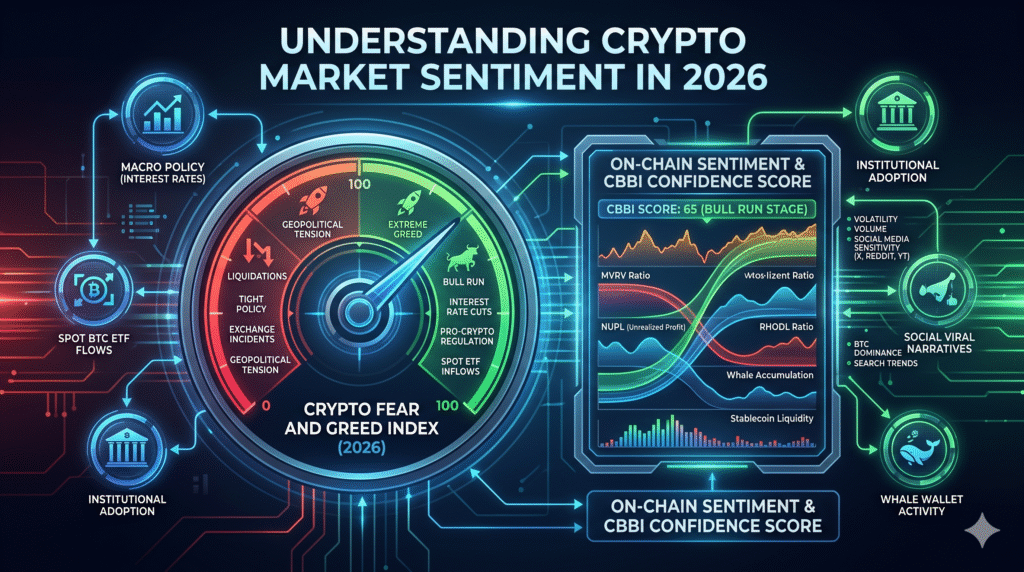
It ties the current crypto movement to broader economic conditions. With the U.S. preparing for a holiday slowdown and the Federal Reserve nearing a potential rate cut, market sentiment is mixed but leaning optimistic. These macro factors may temporarily affect trading volume, but they also create conditions that can support a Bitcoin rebound.
Fed Rate Cut Expectations and Bitcoin’s Position
This highlights a 77% probability of a Fed rate cut in December. A rate cut would ease financial conditions, help struggling sectors, and generally boost risk assets like Bitcoin. This upcoming policy shift could act as a catalyst for Bitcoin’s next major upward move.
Light Market Activity Due to Thanksgiving Holiday
Because the U.S. market slows down during Thanksgiving week, lower trading volume is expected. The video explains that this reduced activity can cause short-term volatility but doesn’t change Bitcoin’s long-term bullish setup. It simply means that price moves may be more exaggerated during the holiday period.
Why This Is a Major Opportunity for Bitcoin Investors
Despite the heavy FUD and institutional selling, Bitcoin’s strongest technical indicators are lining up for a major reversal. This emphasizes that current conditions mirror past bottom signals, meaning this downturn may actually be one of the best accumulation opportunities before a significant recovery.
Staying Levelheaded Amid FUD
Investors are urged not to panic or react emotionally to institutional pressure. Historically, big banks create FUD at market bottoms, and reacting to it often leads to selling at the worst possible time. Staying calm and rational is key during these periods.
DCA Strategy for Long-Term Growth
Dollar-Cost Averaging (DCA) is highlighted as the smartest approach during oversold conditions. This encourages steady buying instead of panic selling, noting that consistent accumulation during dips has proven successful in previous Bitcoin cycles.
MicroStrategy as Proof of Long-Term Bitcoin Success
MicroStrategy and Michael Saylor are examples of successful long-term conviction. Despite years of criticism and repeated FUD attacks, Saylor raised $20B and accumulated over 200K BTC, showing that disciplined long-term strategy wins over fear-driven decisions.
Conclusion
Despite the intense FUD from major banks and the recent wave of selling pressure, it is clear that Bitcoin is flashing some of its strongest bullish signals in years. Oversold RSI levels, rising whale confidence, deep MVRV undervaluation, and signs of full market capitulation all point to Bitcoin approaching a historic reversal zone.
Institutions may be pushing negative narratives to protect their positions or accumulate cheaper Bitcoin, but long-term investors who stay calm and focused are positioned to benefit the most. With improving economic factors, potential Fed rate cuts, and the market resetting, this moment may represent one of the best opportunities before the next major run.
FAQs
1. Does institutional selling mean Bitcoin is going to crash further?
Not necessarily. The video explains that institutional selling usually peaks during extreme oversold conditions, which historically precede major recoveries.
2. What indicators show Bitcoin is near a bottom?
Oversold RSI levels, rising Bitfinex long positions, capitulation signals, and deeply undervalued MVRV metrics all point to a likely reversal.
3. How does the Fed rate cut affect Bitcoin?
Lower interest rates generally support risk assets. The expected December rate cut could boost market confidence and help Bitcoin recover.
4. Is DCA a good strategy right now?
Yes. Dollar-Cost Averaging is recommended during oversold periods because consistent buying during dips has historically led to strong long-term gains.