

Most Anticipated Movie Releases
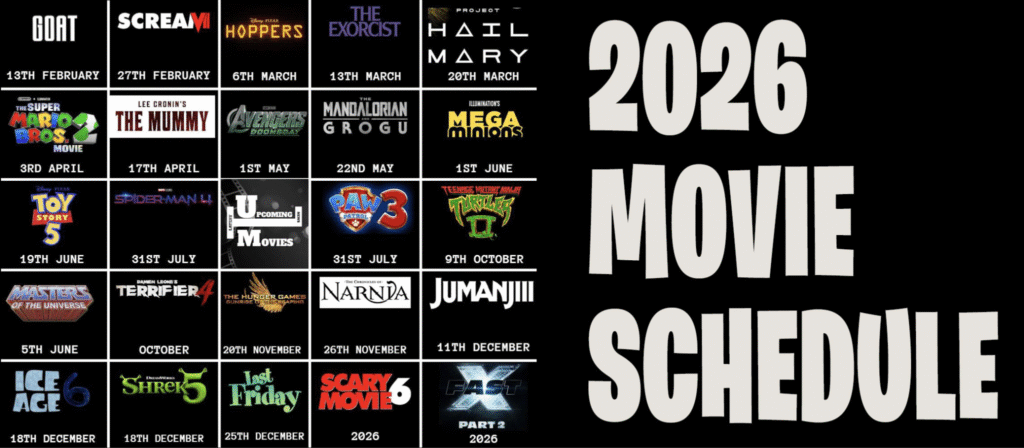
2026 is stacked with blockbusters – here’s your watchlist. With studios carefully positioning their biggest properties throughout the year, movie fans are already circling dates on their calendars for what promises to be one of the most competitive theatrical years in recent memory. From Marvel’s universe-shifting event films to regional powerhouses going global, 2026 represents a critical juncture where theatrical exhibition hopes to reclaim its dominance.
Avengers: Doomsday: December’s Crown Jewel

Marvel Studios has strategically positioned Avengers: Doomsday for a December 2026 release, marking a departure from the traditional May launch window that defined the Infinity Saga. This date selection reveals Disney’s confidence in holiday box office potential while avoiding the increasingly crowded summer marketplace.
The film represents the culmination of Marvel’s Phase Six planning, with Robert Downey Jr. returning to the MCU not as Tony Stark but as the formidable Doctor Doom. This casting choice alone has generated unprecedented speculation about multiversal mechanics and narrative continuity. The Russo Brothers’ return to direct after their success with Infinity War* and *Endgame signals Marvel’s commitment to recapturing the event-film status that defined the franchise’s peak. December releases historically perform differently from summer tentpoles. Avatar* and *The Way of Water* both leveraged holiday periods for extended theatrical runs, with minimal competition allowing for sustained box office performance.
Avengers: Doomsday appears positioned to follow this playbook, particularly with schools closed and families seeking shared entertainment experiences. The production timeline suggests a substantial post-production period, critical for a film likely featuring extensive VFX work across multiple universes and potentially dozens of characters. Marvel’s recent quality control issues have made audiences more discerning, and the studio appears to be allocating sufficient resources for polish. Industry tracking suggests Avengers: Doomsday* could open between $250-300 million domestically, with international markets potentially pushing the global debut past $600 million. These figures would require the film to recapture the cultural momentum that made *Endgame a phenomenon rather than merely another superhero entry.
RajaSaab: Prabhas’s January 2026 Return
While Hollywood focuses on year-end spectacle, the year begins with RajaSaab, marking Prabhas’s return to screens following his mixed box office performance with recent releases. Scheduled for January 2026, this Maruthi-directed venture represents a calculated risk in blending horror elements with period aesthetics for a pan-Indian audience. January traditionally serves as a dumping ground for Hollywood releases, but Indian cinema has increasingly recognized this window’s potential. With Sankranti (Pongal) festivals driving theatrical attendance in South Indian markets, early-year releases can capitalize on holiday crowds without summer competition.
Prabhas’s star power remains undeniable despite recent disappointments. Baahubali’s* legacy established him as one of Indian cinema’s few truly pan-national draws, capable of opening films across language barriers. *RajaSaab* appears designed to leverage this appeal while returning to more character-driven storytelling rather than the spectacle-heavy approach of *Adipurush* or *Salaar. The horror-period hybrid genre presents unique challenges. Indian audiences have demonstrated an appetite for elevated horror with Kantara* and *Tumbbad* performing beyond expectations, but these succeeded through cultural specificity rather than star power.
RajaSaab must balance Prabhas’s mass appeal with genre requirements that typically demand atmosphere over action. Production values appear substantial, with People Media Factory backing ensuring adequate budget for period recreation. The film’s success could redefine release strategies for South Indian cinema, potentially establishing January as a viable alternative to traditional festival windows. Box office projections remain challenging given Prabhas’s recent volatility. A strong opening between ₹150-200 crore globally appears achievable based on brand equity alone, but sustained performance will depend entirely on content quality and word-of-mouth.
Release Strategy and Box Office Landscape

The 2026 calendar reveals sophisticated studio thinking about release date optimisation. Avengers: Doomsday’s* December positioning acknowledges that event films no longer require summer exclusivity, while *RajaSaab’s January timing exploits regional festival patterns ignored by Hollywood. This strategic distribution throughout the year benefits theatrical exhibition broadly. Rather than concentrating tentpoles in summer months where they cannibalise each other’s audiences, spreading releases allows each film breathing room for sustained runs.
The post-pandemic theatrical landscape has proven that exclusive windows matter less than content quality and audience enthusiasm. December 2026 positions Avengers: Doomsday against minimal competition, assuming studios maintain traditional reluctance to challenge Disney’s Marvel properties. The film could feasibly dominate North American screens for 3-4 weeks, accumulating the multiple billion dollars Marvel expects from Avengers-branded entries. International considerations complicate these calculations. China’s market remains unpredictable for Hollywood releases, with approval processes increasingly politicized. Doomsday* may need to achieve *Endgame-level performance without Chinese contributions, placing additional pressure on domestic and other international territories.
For RajaSaab, the challenge lies in converting Prabhas’s South Indian fanbase into a broader national appeal while potentially exploring international markets with significant Indian diaspora populations. January releases rarely achieve sustained runs beyond three weeks, requiring front-loaded performance that demands exceptional opening weekend conversion.
Streaming considerations also factor into theatrical strategies. Disney’s commitment to 90-day theatrical windows for Marvel properties provides Doomsday* with adequate exclusivity, while *RajaSaab will likely follow similar patterns for eventual OTT release. This extended theatrical exclusivity has proven essential for premium large-format screens (IMAX, Dolby) that drive per-screen averages upward. The broader 2026 landscape includes numerous other tentpoles spaced throughout spring and summer, creating a year-round theatrical ecosystem rather than boom-bust seasonal patterns. This maturation of release strategy suggests industry learning from pandemic disruptions and streaming competition.
The Verdict: What These Releases Tell Us
Both Avengers: Doomsday* and *RajaSaab* represent more than individual film releases—they’re statements about theatrical cinema’s evolution. Marvel’s December gambit tests whether event films can succeed outside traditional windows, while *RajaSaab’s January positioning demonstrates regional cinema’s increasing sophistication in release planning. For audiences, 2026 offers consistent theatrical experiences rather than concentrated summer overload.
Movie fans should mark December for Marvel’s latest universe-spanning epic and January for Prabhas’s return to form, but the year’s true success will depend on whether quality matches ambition. The box office implications extend beyond these individual titles. If Doomsday* succeeds in December, expect more studios to explore year-end positioning for tentpoles. If *RajaSaab capitalizes on January’s festival window, regional Indian cinema gains another viable release corridor. Ultimately, 2026’s stacked lineup reminds us that theatrical exhibition thrives on strategic diversity—different films, different audiences, different windows, all contributing to cinema’s ongoing relevance in an entertainment landscape offering infinite alternatives.
Frequently Asked Questions
Q: When is Avengers: Doomsday releasing in 2026?
A: Avengers: Doomsday is scheduled for a December 2026 release, marking a shift from Marvel’s traditional May release window for Avengers films. This strategic December positioning aims to capitalize on holiday box office potential with minimal competition.
Q: What is RajaSaab, and when does it release?
A: RajaSaab is a horror-period film starring Prabhas, directed by Maruthi, releasing in January 2026. The film targets the Sankranti festival window in South Indian markets while aiming for pan-Indian appeal, blending horror elements with period aesthetics.
Q: Why are studios releasing big films in December and January instead of summer?
A: Studios are diversifying release strategies to avoid overcrowded summer windows and capitalize on underutilized periods. December offers holiday audiences and extended run potential (similar to Avatar films), while January captures regional festival audiences in markets like India, allowing each film more breathing room for sustained box office performance.
Q: What are the box office expectations for Avengers: Doomsday?
A: Industry tracking suggests Avengers: Doomsday could open between $250-300 million domestically with a potential global debut exceeding $600 million. The film will need to recapture Endgame-level cultural momentum to meet Marvel’s expectations for Avengers-branded entries, potentially achieving multi-billion dollar totals.
Q: Will these 2026 releases be available on streaming immediately?
A: No. Avengers: Doomsday will maintain Disney’s 90-day theatrical window before streaming on Disney+, while RajaSaab is expected to follow similar theatrical exclusivity patterns before OTT release. This extended theatrical exclusivity has proven essential for maximizing premium format screens and box office performance.