
Apps or Websites: The Definitive Guide to Better Movie Streaming
Apps or websites – which gives you better movie streaming? This fundamental question faces every movie watcher today, and the answer isn’t as straightforward as you might think. The confusion between using mobile apps or websites for movies has become increasingly relevant as streaming platforms invest heavily in both delivery methods, each offering distinct advantages that cater to different viewing scenarios.
The Mobile App Advantage: Portability Meets Personalization
Offline Downloads: Your Movie Library Anywhere
The single most compelling feature exclusive to mobile apps is offline downloading. This capability transforms your smartphone or tablet into a portable cinema, completely independent of internet connectivity. Whether you’re on a long flight, commuting through subway tunnels, or conserving data while traveling abroad, downloaded content ensures uninterrupted viewing.
Most streaming apps allow you to select video quality before downloading, balancing storage constraints against visual fidelity. A standard definition movie might consume 1-2GB, while 4K downloads can exceed 10GB. This flexibility means you can strategically manage your device storage while maintaining acceptable quality for mobile screens.
The practical implications extend beyond convenience. Offline viewing eliminates buffering, provides consistent playback quality, and removes anxiety about bandwidth limitations. For frequent travelers or those with unreliable internet connections, this feature alone justifies choosing apps over websites.
Push Notifications: Never Miss New Releases
Streaming apps excel at keeping you informed through push notifications. These alerts notify you when new movies arrive, when items on your watchlist become available, or when content you’ve been waiting for drops in price for rental.
This proactive communication model contrasts sharply with websites, where you must actively visit and browse to discover new content. Apps bring information directly to your lock screen, creating a personalized movie concierge service that anticipates your interests based on viewing history.
Notifications also serve functional purposes: reminding you when rentals are about to expire, alerting you to temporary downloads nearing their offline viewing window, or notifying you about platform-specific deals and promotions.
Optimized Mobile Interface and Biometric Security
Apps are purpose-built for touchscreen interaction, offering intuitive gesture controls that websites struggle to replicate. Swipe to browse, pinch to zoom on movie details, and tap for instant playback – these interactions feel natural on mobile devices in ways responsive websites cannot fully match.
Biometric authentication (fingerprint or face recognition) provides seamless security without repeatedly entering passwords. This convenience factor significantly enhances the user experience, particularly for platforms requiring frequent authentication to protect account security.
Apps also integrate better with device features: automatic screen rotation, native video player controls, system-level volume management, and background audio for platforms offering soundtracks or behind-the-scenes content.
Website Benefits: Flexibility and Universal Access
Zero Storage Requirements: Stream Without Sacrifice
Websites eliminate the storage dilemma entirely. With apps ranging from 50MB to over 500MB in initial size, plus gigabytes for downloaded content, the storage burden becomes significant on devices with limited capacity. Websites require no installation, no updates, and no persistent storage allocation.
This advantage proves particularly valuable for users with budget smartphones, older tablets, or those who prioritize storage for photos, games, or other applications. You simply navigate to the streaming platform’s URL and start watching immediately.
The storage benefit extends to app management overhead. No waiting for updates, no clearing cache to reclaim space, no dealing with corrupted installations. Websites deliver a maintenance-free viewing experience that respects your device’s resources.
True Cross-Platform Access
Websites work identically across any device with a modern browser – Windows PCs, Macs, Linux machines, Chromebooks, tablets, smartphones, and even smart TVs with browser capabilities. This universal compatibility means you can seamlessly transition between devices without learning different interfaces or encountering platform-specific limitations.
Start watching on your work computer during lunch, continue on your tablet during the commute, and finish on your smart TV at home – all without installing multiple versions of the same app or dealing with varying feature sets across platforms.
This cross-platform consistency also benefits households with diverse device ecosystems. One family member might use an iPad while another prefers an Android tablet and someone else streams on a Windows laptop. The website provides identical functionality for everyone regardless of their hardware choices.
Larger Screen Optimization and Multitasking
Websites shine on larger displays where desktop and laptop computers offer superior viewing experiences. While you can cast or mirror apps to bigger screens, native website viewing on computers provides better resolution options, easier navigation with mouse and keyboard, and more sophisticated playback controls.
Browser-based streaming also facilitates multitasking that apps restrict. Position your movie in one window while working in another, use picture-in-picture mode to float the video over other applications, or leverage browser extensions for enhanced functionality like subtitle customization or playback speed control.
Additionally, websites don’t impose the same restrictions on screenshots or screen recording that apps often enforce through platform-level security measures. This flexibility matters for creating personal reference materials, sharing favorite scenes with friends, or documenting streaming issues for customer support.
No App Store Gatekeeping
Websites bypass app store approval processes, meaning streaming platforms can update features, fix bugs, and roll out improvements immediately without waiting for Apple, Google, or Amazon to approve new versions. This results in faster access to new features and more responsive service improvements.
For users, this means no mandatory update installations before accessing your content. Websites automatically deliver the latest version every time you visit, without the friction of download-install-restart cycles that interrupt your viewing plans.
Platform-by-Platform: Best Services Offering Both
Netflix: The Gold Standard for Dual Experience
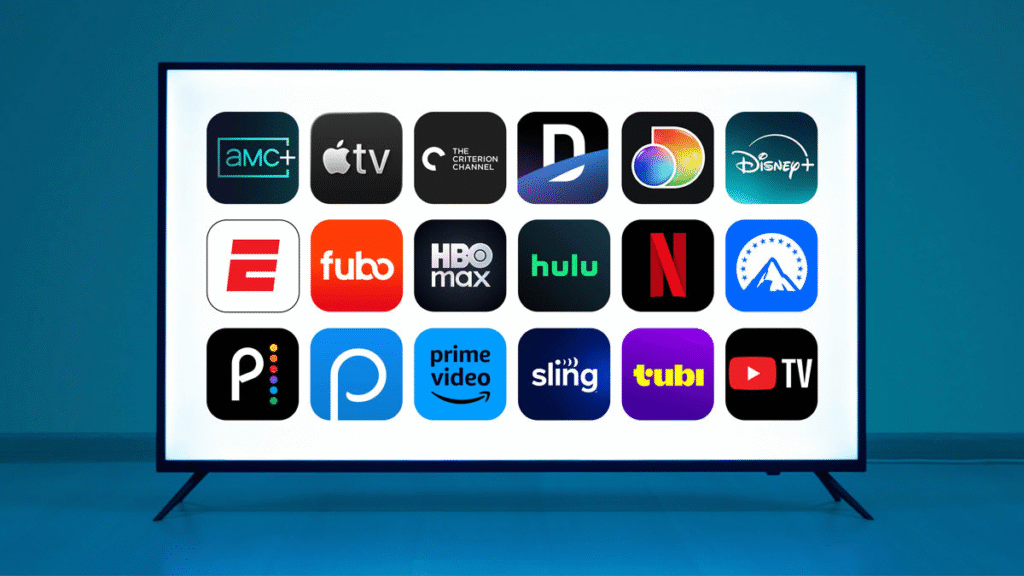
Netflix maintains exceptional parity between its app and web experiences, making it the benchmark for platform-agnostic streaming. The app offers downloads on both mobile and Windows 10/11, push notifications for new releases, and optimized touch controls. The website counters with superior playback controls, easier browsing on larger screens, and better integration with keyboard shortcuts.
Netflix’s Smart Downloads feature automatically deletes watched episodes and downloads the next one when connected to WiFi, making the app particularly valuable for series bingers. Meanwhile, the website’s multiple profile management and parental controls are more intuitive on desktop interfaces.
Amazon Prime Video: Comprehensive but Complex
Prime Video offers robust functionality on both platforms, though with some notable differences. The app provides excellent offline viewing with flexible quality settings and generous download limits. However, the interface can feel cluttered, mixing free Prime content with rental options in ways that confuse casual users.
The website offers clearer content categorization and easier navigation of the vast library, though it lacks some of the app’s personalization features. Prime Video’s X-Ray feature (showing cast, trivia, and music information during playback) works on both platforms but feels more integrated in the app experience.
Disney+: Family-Friendly Across All Platforms
Disney+ delivers remarkable consistency between app and web, with both offering 4K streaming, multi-profile support, and intuitive interfaces. The app’s GroupWatch feature allows synchronized viewing with friends and family remotely, while downloads support unlimited devices (though only 10 total downloads at once).
The website benefits from easier content discovery on larger screens, where Disney’s extensive catalog of franchises, studios, and brands displays more elegantly. Both platforms handle parental controls well, though the app’s PIN protection for individual profiles feels more secure.
HBO Max: Premium Content, Variable Experience
HBO Max’s app provides solid download functionality and smooth mobile playback, though it has historically suffered from occasional stability issues on certain devices. The website delivers more reliable performance on desktops but has faced criticism for lacking 4K support on some browsers.
The platform’s strength lies in content quality rather than technical innovation. Whether using app or website, you access the same premium library, though the viewing experience quality may vary based on your specific device and browser combination.
Apple TV+: Ecosystem Integration
Apple TV+ demonstrates the company’s ecosystem philosophy – the app works brilliantly on Apple devices with seamless integration, offline viewing, and excellent quality. The website serves as the accessibility option for non-Apple users, offering full functionality but lacking the polish of native app experiences.
For Apple users, the app’s integration with the broader Apple TV application (combining multiple streaming services) creates unique value. For everyone else, the website provides capable access to Apple’s growing content library without requiring hardware investment.
Making Your Choice: Decision Framework
Choose Apps When:
– You frequently watch without reliable internet (commutes, travel, areas with poor connectivity)
– Mobile viewing dominates your watching habits
– You value being notified about new releases automatically
– Storage space isn’t a constraint on your devices
– You prefer streamlined, purpose-built interfaces over browser flexibility
Choose Websites When:
– You primarily watch on laptops, desktops, or smart TVs with browsers
– Device storage is limited or precious
– You frequently switch between different device types
– You multitask while watching (working with split screens, picture-in-picture)
– You want to avoid app installation and update maintenance
The Hybrid Approach: Best of Both Worlds
Most sophisticated users adopt a hybrid strategy, leveraging each platform’s strengths contextually. Use apps for downloading content before trips, receiving notifications about new releases, and mobile viewing. Use websites for desktop viewing sessions, initial browsing and discovery on larger screens, and situations where you’re using borrowed or public devices.
This approach requires no additional subscriptions – you’re simply choosing the optimal delivery method for each viewing scenario. Configure notifications in the app to stay informed, but do your serious browsing and queue management on the website where larger screens make detailed comparisons easier.
Technical Considerations: Quality and Performance
Streaming Quality Differences
Contrary to popular assumption, apps don’t automatically deliver better streaming quality than websites. Quality depends primarily on your internet connection, the streaming service’s encoding, and display capabilities rather than delivery method.
However, some platforms do impose browser-specific limitations. Netflix, for instance, restricts certain browsers to 720p while others support 4K. Apps typically support the maximum resolution your device can display, making them preferable for quality-conscious viewers with high-end mobile devices.
Downloaded content quality on apps ranges from standard definition (data-saving mode) to 4K on supported platforms, giving you control over the storage-quality tradeoff. Websites stream adaptively based on current bandwidth, which can result in quality fluctuations during network congestion.
Data Usage Management
Apps provide superior data usage control through download-over-WiFi settings, quality presets for cellular streaming, and offline viewing that consumes zero data during playback. This granular control helps avoid overage charges and manages limited data plans effectively.
Websites stream in real-time, adjusting quality based on detected bandwidth. While this adapts to your connection, it offers less predictability for data consumption. Some platforms allow quality settings on websites, but the controls are generally less comprehensive than app options.
The Future: Convergence and Innovation
The app-versus-website distinction continues blurring as progressive web apps (PWAs) combine website accessibility with app-like functionality. These hybrid solutions install like apps but run on web technology, offering offline capability, notifications, and home screen presence without traditional app store distribution.
Streaming platforms are also investing in cloud-based innovations that may reduce the importance of the delivery method. Features like server-side processing for personalized highlights, AI-driven recommendations, and social viewing experiences work identically regardless of whether you access them through apps or websites.
Conclusion: Context Determines the Winner
The apps-versus-websites question has no universal answer because the superior choice depends entirely on your viewing context. Apps dominate for mobile-first users who value offline access and want personalized notifications. Websites excel for desktop viewers, storage-conscious users, and those prioritizing cross-platform flexibility.
The most savvy movie watchers don’t choose one exclusively – they strategically use both based on immediate needs. Install apps on your primary mobile devices for on-the-go convenience, but bookmark websites for desktop browsing and queue management. This dual approach ensures you always access your streaming content through the optimal interface for each situation.
Ultimately, the best streaming platforms recognize this reality by investing equally in both experiences, ensuring feature parity and excellent performance whether you tap an app icon or type a URL. Your job is simply recognizing which delivery method serves your current needs, then settling in to enjoy the movie.
Frequently Asked Questions
Q1: Can I watch downloaded movies offline on streaming websites?
A: No, offline viewing is exclusive to mobile and desktop apps. Websites require an active internet connection to stream content. If offline viewing is important to you, you’ll need to download the platform’s app and save content while connected to WiFi. Downloaded movies typically remain available for 30 days, with 48 hours to finish once you start watching.
Q2: Do streaming apps use more data than websites?
A: Not necessarily. Both apps and websites consume similar amounts of data when streaming at the same quality level. However, apps provide better data management through download-over-WiFi features and cellular streaming quality controls. Apps also enable offline viewing of pre-downloaded content, which uses zero data during playback. For data-conscious users, apps offer superior control over when and how much data is consumed.
Q3: Why can’t I get 4K quality on my browser but can on the app?
A: Streaming platforms often restrict 4K playback to specific browsers due to digital rights management (DRM) requirements. For example, Netflix only supports 4K on Microsoft Edge and Safari, while Chrome and Firefox are limited to 1080p. Apps typically support your device’s maximum resolution without browser-specific restrictions. This makes apps the better choice for premium quality viewing on 4K-capable devices.
Q4: Is it safe to use streaming websites on public computers?
A: While technically possible, it’s risky to log into streaming websites on public computers. You risk leaving your account credentials accessible to others if you forget to log out. If you must use public devices, always use private browsing mode, log out completely when finished, and change your password afterward. Apps on personal devices with biometric security provide much safer access to your streaming accounts.
Q5: Which uses more storage: streaming apps or downloaded content?
A: The app itself typically uses 50-500MB depending on the platform, which is minimal. Downloaded content consumes significantly more – 1-2GB for standard definition movies, 3-5GB for HD, and 7-15GB for 4K. Websites use no storage for the platform and can’t download content. If storage is extremely limited, stick to website streaming. If you have adequate space and want offline viewing, apps with selective downloading work well.