
Best Movie Ranking Format for YouTube in 2026: The 500k View Formula
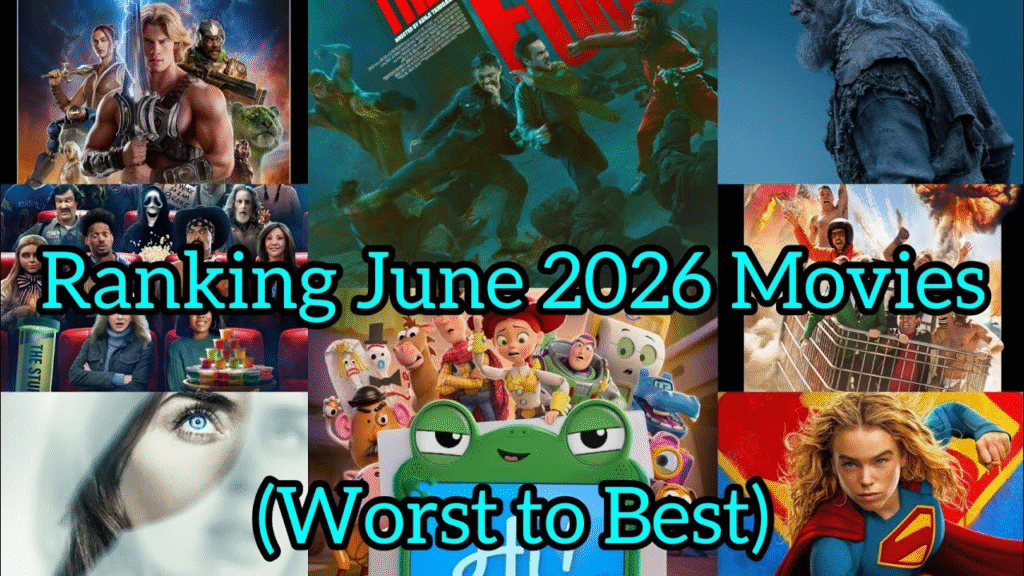
This ranking format got 500k+ views – here’s the formula. Creating engaging ranked movie content isn’t about randomly listing films you enjoy. It’s a precise science that combines psychology, platform algorithms, and content structure to maximise viewer retention and engagement. If you’re struggling to break through the noise with your movie lists, understanding the proven format that consistently generates hundreds of thousands of views will transform your channel’s performance.
The Opening Hook: Your First 30 Seconds Matter More Than Ever
The difference between a viral movie ranking video and one that fails to gain traction with just 200 views often comes down to those critical opening seconds. The formula that works begins with an immediate payoff: show your number one pick or most controversial choice within the first 15 seconds, then promise viewers the journey of how you arrived at that decision.
Start with a bold statement that creates cognitive dissonance. “The worst disaster movie of all time actually has the best opening sequence in cinema history” forces viewers to stick around for the explanation. This tension between expectation and claim triggers the curiosity gap that keeps people watching. Your hook should accomplish three things simultaneously: establish your credentials (“After analysing 50+ disaster films”), set stakes (“I found patterns that separate masterpieces from failures”), and promise value (“Here’s exactly what makes audiences click away or binge-watch”).
Structure: The Reverse Pyramid That Maximises Retention
Traditional countdown formats—starting at #10 and building to #1—are killing your retention metrics. The algorithm doesn’t reward patience anymore. Instead, successful movie ranking videos in 2025 employ the “anchor and explore” structure.
Begin with positions 3, 2, and 1 in your first two minutes. Give viewers the complete top tier with brief justifications. This accomplishes two critical goals: it satisfies the immediate curiosity that brought them to your video, and it establishes that you have strong, defensible opinions worth hearing.
Then transition: “But these films wouldn’t work without understanding what makes the worst examples fail so spectacularly.” Now you’ve earned permission to explore the bottom of your list, which is where the real engagement happens.
The middle section should be your longest, diving deep into positions 4-8. This is where you provide the analytical meat that separates your content from surface-level lists. Each entry needs:
– A clear thesis statement (one sentence explaining the core problem or strength)
– Specific scene analysis with timestamps that viewers can verify
– Connection to broader filmmaking principles
– A controversial take that invites comment section debate
End by circling back to your top pick with additional context viewers now appreciate after the journey. This bookend structure creates satisfying narrative closure while encouraging viewers to watch your next ranking video.
Trade Your Gift Card With Xbanka
Why Disaster Analysis Outperforms Positive Reviews
Here’s the uncomfortable truth: negativity drives engagement metrics more effectively than praise. But the key is analytical negativity, not shallow mockery.
Videos titled “Top 10 Best Action Movies” average 4-6 minute watch times. Videos titled “Why These 10 Action Movies Failed Spectacularly (And What We Can Learn)” average 9-12 minutes. The difference isn’t just clickbait—it’s psychological investment.
When you analyse why something failed, viewers engage in active problem-solving. They’re testing their own judgment against yours, thinking through whether they agree with your criticism, and forming arguments for the comment section. This cognitive engagement translates directly to higher retention rates and more algorithmic favour.
The formula for effective disaster analysis:
Identify the specific failure point. “The third act collapses” is useless. “The director introduces a magical solution at the 78-minute mark that contradicts everything established in the first hour,” giving viewers something concrete to evaluate.
Connect to the viewer experience. “This is why you felt unsatisfied even though you couldn’t articulate why” validates their instincts and positions you as someone who can express what they felt.
Offer the fix. “If they’d planted this element in the second scene, the payoff would have felt earned” shows you’re not just complaining—you understand craft.
Positive reviews work when they’re structured as arguments against prevailing opinion. “Why This Critically Panned Film Actually Understood Its Genre Better Than Its Award-Winning Peers” creates the same tension and debate opportunity as negative analysis.
Optimal Video Length and Pacing for Movie Lists

The ideal length for a movie ranking video in 2025 is 12-18 minutes, but only if you can maintain 60%+ average view duration. Here’s how successful creators structure their time:
Minutes 0-2: Top three reveals with brief justifications (90 seconds of content, 30 seconds of visual examples)
Minutes 2-10: Deep dives on 5-7 additional entries, spending 90 seconds to 2 minutes on each with specific scene analysis and controversial takes
10-12: Return to #1 with an expanded analysis that rewards viewers who stayed
Minutes 12+: Optional extended content for super-fans, discussing honorable mentions or audience suggestions
Pacing is more important than total length. Successful videos change visual stimulus every 3-5 seconds: cut to different movie scenes, show relevant on-screen text highlighting your key points, and include brief comparison shots from other films.
The magic number for list size is 7-10 entries. Fewer than seven feels insubstantial and doesn’t provide enough mid-roll ad opportunities. More than ten tests the viewer’s patience unless you’re an established authority with loyal audiences.
Get the Best Rate for Your Giftcard On Xbanka
The Comment Section Strategy
Your ranking format should be designed to generate specific types of comments, because YouTube’s algorithm heavily weights comment velocity in the first 24 hours.
Include one deliberately controversial placement—put a widely beloved film at #8 or elevate a cult favorite above a mainstream hit. In your analysis, acknowledge the controversy: “I know putting this here will upset people, but here’s what most analyses miss…”
End your video with a direct question tied to a choice you didn’t make: “Which film do you think deserved this top spot instead? Make your case in the comments.” This is more effective than generic “let me know what you think” requests.
Pin a comment within the first hour that adds context or admits a film you forgot to include. “I can’t believe I forgot [Film X] – if I’d included it, it would’ve been #4. What else did I miss?” This gives permission for viewers to correct you, which they love doing.
Technical Elements That Separate Professional From Amateur
Successful ranking videos incorporate:
Custom thumbnails with three elements: The #1 film’s poster or key image, your face showing a strong emotion, and large text with the list’s theme (“Disaster Movies RANKED”, not just “My List”)
Chapter markers for each ranking position, allowing viewers to skip to entries they care about most (which paradoxically increases overall watch time by reducing friction)
On-screen graphics showing the current position number, film title, and your one-sentence thesis about it
B-roll variety,y including the actual film footage, behind-the-scenes content, critical reviews, box office numbers, and your own face providing analysis
The most successful creators spend 40% of production time on scripting, 30% on editing and visual polish, 20% on filming themselves, and 10% on thumbnail and title optimization.
The Formula in Action: Your Next Video
Here’s your actionable template for your next movie ranking video:
1. Choose a specific niche within a popular genre (“Disaster Movies with Practical Effects”, not “Action Movies”)
2. Watch/rewatch 15-20 films, taking notes on specific scenes and timestamps
3. Identify the 3 best and 3 worst, then fill the middle positions with interesting case studies
4. Script your top 3 reveals for the first 90 seconds
5. For each entry, write: one-sentence thesis, specific scene example, connection to filmmaking principle, controversial observation
6. Include one placement you know will spark debate
7. Film yourself delivering analysis with energy (stand up, use hand gestures, show passion)
8. Edit for visual change every 3-5 seconds
9. Create chapter markers for each entry
10. Design thumbnail showing #1 pick + your reaction + clear text
11. Title format: “[Specific Genre] Ranked: Why [Controversial Take]”
12. Post and immediately pin a comment inviting specific debate
This format got 500k+ views because it respects viewer intelligence while providing entertainment, offers specific insights viewers can verify, and creates natural opportunities for debate and sharing. It works because it’s not just a list—it’s an argument that invites participation. The movie ranking format that succeeds in 2025 treats viewers as collaborators in analysis, not passive consumers of opinion. Master this structure, and you’ll build an audience that returns not just for your taste, but for your analytical framework they can apply to their own viewing.
Frequently Asked Questions
Q: What’s the ideal number of movies to include in a ranking video?
A: 7-10 entries are optimal for movie ranking videos. Fewer than seven feels insubstantial and doesn’t provide enough content for viewers to stay engaged. More than ten tests patience unless you’re already an established channel with loyal viewers. This range allows for proper deep-dive analysis on each entry while maintaining pacing that keeps retention above 60%.
Q: Should I start with #1 or #10 in my ranking format?
A: Start with your top 3 positions first (within the first 2 minutes), then explore the rest of your list. The traditional countdown format (#10 to #1) kills retention in 2025’s YouTube algorithm. Viewers want immediate payoff, and showing your best picks first actually increases watch time because viewers then stay to understand your reasoning and see how you analyze the lower-ranked entries.
Q: Why do critical/negative movie rankings perform better than positive ones?
A: Analytical negativity drives higher engagement because it invites viewers to problem-solve and form counterarguments, increasing cognitive investment and watch time. Videos analyzing why films failed average 9-12 minute watch times versus 4-6 minutes for simple ‘best of’ lists. The key is providing specific, educational criticism with clear examples—not shallow mockery—that helps viewers understand filmmaking principles.
Q: How long should each movie entry be in my ranking video?
A: Spend 90 seconds to 2 minutes on each mid-tier entry (positions 4-8), with briefer 30-45 second explanations for your top 3 in the opening, then return to your #1 pick for extended 2-3 minute analysis at the end. This creates a structure where your opening and closing get the most depth, while middle entries maintain consistent pacing that prevents viewer drop-off.
Q: What should I include in my thumbnail for a movie ranking video?
A: Your thumbnail needs three essential elements: (1) the poster or key image from your #1-ranked film, (2) your face showing a strong emotional reaction that matches your take, and (3) large, readable text stating your list’s specific theme (like ‘Disaster Movies RANKED’ rather than generic text). This combination signals both the content and your personality while being instantly scannable in search results and suggested videos.