
Top Altcoins to Invest in for 2026: 6 Cryptocurrencies Poised to Outperform Bitcoin
Introduction: The Altcoin Opportunity in 2026
While Bitcoin remains the cornerstone of cryptocurrency portfolios, altcoins—alternative cryptocurrencies—have historically delivered explosive returns during bull market cycles. As we approach 2026, specific market conditions and technological developments position certain altcoins for potentially outperforming Bitcoin.
The cryptocurrency landscape has matured significantly since previous cycles. Projects with genuine utility, strong development teams, and real-world adoption are separating themselves from speculative tokens. For investors willing to conduct proper research and manage risk appropriately, 2026 presents compelling opportunities in the altcoin market.
This comprehensive guide examines six altcoins with the highest potential for substantial returns, analyzes why market conditions favor these specific projects, and provides a practical framework for risk management and portfolio allocation.
Section 1: Analysis of Top 6 Altcoins with Growth Potential
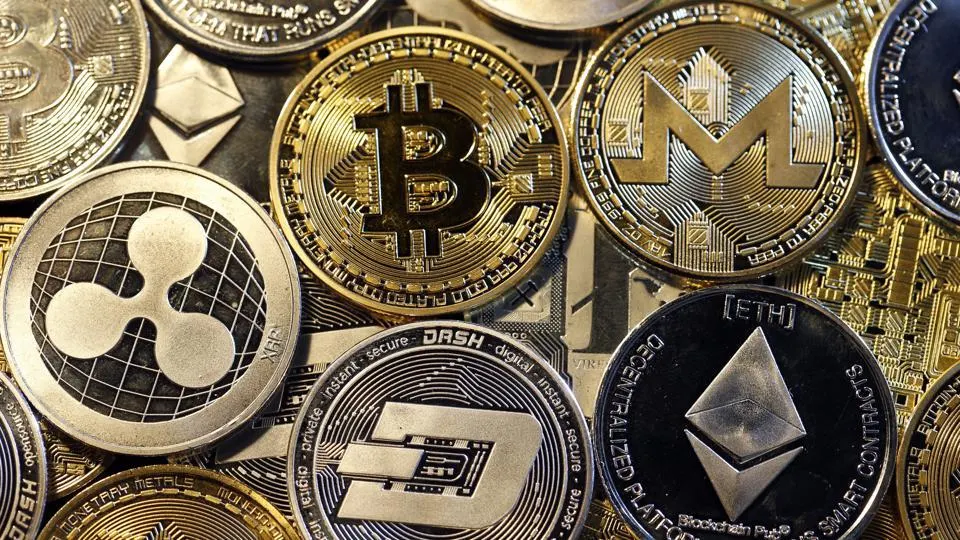
Ethereum (ETH): The Smart Contract Leader
Current Position: Ethereum maintains its dominance as the leading smart contract platform, hosting the majority of decentralized finance (DeFi) protocols, NFT marketplaces, and Web3 applications.
2026 Growth Catalysts:
– Complete transition to Proof-of-Stake: The merge to PoS has positioned Ethereum as an environmentally sustainable blockchain, attracting institutional investors with ESG mandates
– Layer-2 ecosystem expansion: The proliferation of Layer-2 solutions like Arbitrum, Optimism, and Base has dramatically reduced transaction costs while maintaining Ethereum’s security
– Staking yield: Approximately 3-4% annual yield from staking makes ETH attractive as a productive asset
– Institutional ETF adoption: Following spot Bitcoin ETFs, Ethereum ETFs are gaining institutional traction
– EIP-4844 (Proto-Danksharding): This upgrade significantly reduces Layer-2 transaction costs, enhancing scalability
Investment Rationale: Ethereum functions as the infrastructure layer for decentralized applications. As Web3 adoption grows, demand for ETH increases both for transaction fees and as collateral in DeFi protocols. The deflationary tokenomics introduced post-merge (burning a portion of transaction fees) creates supply pressure that could drive price appreciation.
Risk Factors: Competition from faster, cheaper blockchains; potential regulatory scrutiny of DeFi applications; technical execution risks on future upgrades.
Solana (SOL): High-Performance Blockchain Challenger
Current Position: Solana has established itself as the premier high-throughput blockchain, capable of processing thousands of transactions per second with minimal fees.
2026 Growth Catalysts:
– Institutional adoption: Major financial institutions are building on Solana for payment systems and tokenized assets
– Mobile blockchain initiative: Solana’s Saga phone and mobile-first approach target the next billion crypto users
– DeFi and DEX growth: Platforms like Jupiter and Marinade Finance are seeing exponential growth
– NFT and gaming ecosystem: Solana’s low fees make it ideal for gaming applications requiring frequent transactions
– Network stability improvements: Significant infrastructure upgrades have addressed previous network outages
Investment Rationale: Solana offers a compelling value proposition for applications requiring high throughput and low costs. The ecosystem has recovered strongly from the FTX collapse, demonstrating resilience and genuine product-market fit. With major consumer applications launching on Solana, mainstream adoption could drive significant price appreciation.
Risk Factors: Historical network stability issues; centralization concerns; competition from other high-performance chains; validator concentration.
Chainlink (LINK): Decentralized Oracle Infrastructure
Current Position: Chainlink dominates the oracle market, providing secure off-chain data to smart contracts across multiple blockchains.
2026 Growth Catalysts:
– Cross-Chain Interoperability Protocol (CCIP): Enabling secure cross-chain communication creates new revenue streams
– Traditional finance integration: Banks and financial institutions adopting blockchain need reliable oracle solutions
– Proof of Reserve: Growing demand for transparency in centralized crypto services
– Staking implementation: LINK staking provides additional utility and reduces circulating supply
– Expansion beyond price feeds: Weather data, sports results, and IoT data integration
Investment Rationale: Chainlink operates as critical infrastructure for the entire blockchain ecosystem. As smart contracts become more sophisticated and integrated with real-world systems, reliable oracle services become increasingly valuable. Chainlink’s first-mover advantage and extensive partnership network create strong network effects.
Risk Factors: Emerging oracle competitors; potential for blockchain-native data solutions; dependency on overall smart contract platform growth.
Polygon (MATIC): Layer-2 Scaling Solution
Current Position: Polygon is the leading Layer-2 scaling solution for Ethereum, offering significantly reduced transaction costs while maintaining security through Ethereum’s base layer.
2026 Growth Catalysts:
– Enterprise adoption: Major corporations like Disney, Starbucks, and Nike have deployed on Polygon
– Zero-knowledge technology: Polygon zkEVM provides Ethereum scalability with enhanced privacy
– Polygon CDK: Enables projects to launch customized Layer-2 chains
– Gaming and NFT infrastructure: Low fees make Polygon ideal for gaming applications
– Institutional partnerships: Collaboration with traditional finance for tokenized assets
Investment Rationale: Polygon addresses Ethereum’s scalability limitations without requiring users to leave the Ethereum ecosystem. The network’s focus on both consumer and enterprise use cases diversifies risk. With major brands choosing Polygon for Web3 initiatives, mainstream adoption appears increasingly likely.
Risk Factors: Competition from other Layer-2 solutions; dependency on Ethereum’s success; potential for Ethereum’s own scaling solutions to reduce Layer-2 demand.
Avalanche (AVAX): Enterprise-Grade Blockchain Platform
Current Position: Avalanche offers a fast, scalable blockchain platform with subnet functionality allowing customized blockchain environments.
2026 Growth Catalysts:
– Subnet technology: Enables institutions to create compliant, permissioned blockchains while leveraging Avalanche security
– DeFi ecosystem growth: Trader Joe, Aave, and other major protocols expanding on Avalanche
– Institutional partnerships: Focus on tokenized assets and traditional finance integration
– Gaming and metaverse development: High throughput supports complex gaming applications
– Energy efficiency: Eco-friendly consensus mechanism appeals to ESG-focused investors
Investment Rationale: Avalanche’s subnet architecture provides flexibility for enterprises requiring regulatory compliance while maintaining blockchain benefits. The platform’s technical capabilities support high-frequency trading and complex DeFi applications. As tokenization of real-world assets accelerates, Avalanche’s enterprise-focused approach could capture significant market share.
Risk Factors: Intense competition in the smart contract platform space; subnet adoption rate uncertainty; ecosystem developer retention.
Arbitrum (ARB): Ethereum Layer-2 Ecosystem
Current Position: Arbitrum is the largest Ethereum Layer-2 by total value locked, offering optimistic rollup technology for scaling.
2026 Growth Catalysts:
– Ecosystem dominance: Leading DeFi protocols have deployed on Arbitrum
– Arbitrum Orbit: Enables developers to launch custom Layer-3 chains
– Gaming applications: Several major Web3 games building on Arbitrum
– DAO governance maturation: Decentralized governance driving ecosystem development
– Stylus upgrade: Enables developers to write smart contracts in languages beyond Solidity
Investment Rationale: Arbitrum has established itself as the premier Ethereum Layer-2, with the largest ecosystem and deepest liquidity. The network effects from having major protocols and users create a strong competitive moat. As Ethereum usage grows, Arbitrum captures significant transaction flow while offering token holders governance rights over protocol development.
Risk Factors: Competition from other Layer-2s (Optimism, Base); potential regulatory treatment of governance tokens; technological risks with optimistic rollup assumptions.
Section 2: Why 2026 Market Conditions Favor Specific Altcoins
Post-Halving Market Dynamics
Historically, Bitcoin halvings (occurring approximately every four years) precede extended bull markets that particularly benefit altcoins. The 2024 halving creates supply constraints on Bitcoin that typically cascade through the broader cryptocurrency market:
Historical Pattern:
– 6-18 months post-halving: Bitcoin rallies significantly
– 12-24 months post-halving: Capital rotates from Bitcoin to altcoins seeking higher returns
– 18-30 months post-halving: Altcoin season peaks with dramatic outperformance
2026 Positioning: By 2026, we’ll be approximately 18-24 months post-halving—historically the prime period for altcoin outperformance. Investors taking Bitcoin profits typically rotate into established altcoins with strong fundamentals, creating upward price pressure on quality projects.
Institutional Adoption Trends
The cryptocurrency market is experiencing unprecedented institutional adoption:
1. Spot ETF Impact: Bitcoin and Ethereum ETFs have opened cryptocurrency exposure to traditional investors who cannot or will not directly hold digital assets. This legitimizes the asset class and creates sustained buying pressure.
2. Tokenization Movement: Major financial institutions are tokenizing real-world assets (real estate, bonds, stocks) on blockchain infrastructure. This requires reliable, scalable platforms—exactly what Ethereum, Polygon, and Avalanche provide.
3. Enterprise Blockchain Adoption: Companies are moving beyond pilot programs to production deployments. This shift requires mature, stable platforms with proven track records, favoring established projects over newer alternatives.
4. Stablecoin Infrastructure: The stablecoin market continues expanding, requiring robust blockchain infrastructure for settlements. High-throughput chains like Solana benefit directly from payment and remittance use cases.
Technological Maturation and Real-World Use Cases
The cryptocurrency industry has evolved from purely speculative to demonstrating genuine utility:
1. DeFi Maturation: Decentralized finance protocols now offer sophisticated financial services competitive with traditional finance, but with greater transparency and accessibility. This requires reliable infrastructure (Chainlink for data) and scalable platforms (Ethereum Layer-2s).
2. Gaming and Entertainment: Web3 gaming is approaching mainstream quality, requiring blockchains capable of handling thousands of microtransactions affordably. Solana, Polygon, and Arbitrum are positioned to capture this market.
3. Supply Chain and Enterprise: Real-world supply chain tracking, credential verification, and enterprise resource planning increasingly utilize blockchain technology, favoring platforms with strong enterprise focus like Avalanche.
4. Cross-Chain Integration: The future is multi-chain, requiring interoperability solutions. Chainlink’s CCIP and cross-chain bridges become critical infrastructure.
Regulatory Clarity Emerging
Regulatory frameworks are becoming clearer, particularly beneficial for established projects:
1. Classification Certainty: While regulatory debates continue, established platforms with genuine utility are increasingly distinguished from purely speculative tokens.
2. Compliance Infrastructure: Projects that have invested in compliance, legal frameworks, and institutional-grade security are positioned to capture regulated institutional capital.
3. Geographic Diversification: Different regulatory approaches across jurisdictions create opportunities for compliant projects to serve multiple markets.
Section 3: Risk Assessment and Portfolio Allocation Strategy
Volatility Considerations
Altcoins exhibit significantly higher volatility than Bitcoin:
Expected Volatility Ranges:
– Bitcoin: 50-80% annualized volatility
– Established altcoins (ETH, SOL): 80-120% annualized volatility
– Mid-cap altcoins (LINK, MATIC, AVAX, ARB): 100-150% annualized volatility
Drawdown Expectations: Even during bull markets, 30-50% corrections are normal for altcoins. Investors must have the financial capacity and emotional fortitude to withstand significant temporary losses.
Volatility Management Strategies:
– Use only capital you can afford to lose entirely
– Avoid leverage, which amplifies volatility catastrophically
– Set predetermined rebalancing schedules rather than emotional trading
– Consider dollar-cost averaging to smooth entry points
Diversification Framework
1. Portfolio Construction Principles:
Conservative Crypto Allocation (Higher risk tolerance still required):
– 50% Bitcoin
– 30% Ethereum
– 20% diversified across other altcoins
2. Moderate Crypto Allocation:
– 40% Bitcoin
– 30% Ethereum
– 30% diversified across 3-5 altcoins
3. Aggressive Crypto Allocation:
– 30% Bitcoin
– 25% Ethereum
– 45% diversified across 5-8 altcoins
4. Altcoin Diversification Strategy:
Within your altcoin allocation, consider diversifying across different categories:
– Smart contract platforms (SOL, AVAX)
– Layer-2 scaling solutions (MATIC, ARB)
– Infrastructure and middleware (LINK)
This approach reduces single-project risk while maintaining exposure to different cryptocurrency sectors.
Position Sizing Recommendations
Individual Altcoin Position Limits:
– No single altcoin should exceed 15% of your total cryptocurrency portfolio
– For higher-risk mid-cap altcoins, limit to 5-10% per position
– Ethereum, as the second-largest cryptocurrency, can justify larger allocations (20-30%)
Risk-Based Allocation:
For the six highlighted altcoins, a sample allocation might be:
– Ethereum (ETH): 30% of altcoin allocation (most established)
– Solana (SOL): 20% (proven but higher volatility)
– Polygon (MATIC): 15% (strong adoption, moderate risk)
– Chainlink (LINK): 15% (unique infrastructure play)
– Avalanche (AVAX): 10% (enterprise focus, competitive space)
– Arbitrum (ARB): 10% (governance token, newer)
Rebalancing Discipline:
Set calendar-based rebalancing (quarterly or semi-annually) rather than price-triggered rebalancing. This forces you to “sell high, buy low” by trimming outperformers and adding to underperformers, assuming the fundamental thesis remains intact.
Exit Strategy Planning
Most investors focus exclusively on entry strategy while neglecting equally important exit planning:
Profit-Taking Framework:
Incremental Profit Taking:
– At 2x return: Sell 25% of position (recover half initial investment)
– At 4x return: Sell another 25% (fully recover initial investment)
– At 10x return: Sell another 25% (lock in substantial gains)
– Let remaining 25% ride for potential maximum upside
This approach guarantees you lock in profits while maintaining exposure to further appreciation.
Time-Based Strategy:
Establish predetermined holding periods:
– Long-term holders: 3-5 year minimum horizon, ride through full market cycles
– Cycle traders: Plan to reduce exposure 24-36 months post-halving when historically altcoin markets peak
– Active traders: Set shorter-term targets with more frequent rebalancing
Fundamental Deterioration Exit Triggers:
Exit positions regardless of price if:
– Core development team departs
– Significant security breach or hack
– Regulatory action specifically targeting the project
– Fundamental thesis breaks (superior competing technology, loss of major partnerships)
– Evidence of fraud or misrepresentation
Portfolio Rebalancing to Bitcoin:
As the bull market matures (likely late 2025/early 2026), consider gradually rotating altcoin gains back to Bitcoin, which typically holds value better during bear markets.
Risk Mitigation Tactics
1. Security Best Practices:
– Use hardware wallets for significant holdings
– Never store large amounts on exchanges
– Enable all available security features (2FA, withdrawal whitelists)
– Maintain multiple backups of seed phrases in secure locations
2. Tax Planning:
– Understand tax implications in your jurisdiction
– Keep detailed records of all transactions
– Consider tax-loss harvesting during market downturns
– Consult with crypto-knowledgeable tax professionals
3. Emotional Management:
– Write down your investment thesis for each holding
– Set rules before investing, follow them mechanically
– Avoid checking prices constantly (weekly or monthly is sufficient)
– Ignore social media hype and FOMO
– Remember that missing gains is painful but losing capital is worse
Conclusion: Building a Balanced Altcoin Portfolio for 2026
The six altcoins highlighted—Ethereum, Solana, Chainlink, Polygon, Avalanche, and Arbitrum—represent the strongest combination of established track records, technological innovation, real-world adoption, and growth potential heading into 2026.
Each serves different but complementary roles in the evolving blockchain ecosystem:
– Ethereum provides the foundational smart contract infrastructure
– Solana offers high-performance alternatives for specific use cases
– Chainlink delivers critical oracle infrastructure across chains
– Polygon and Arbitrum solve Ethereum’s scaling challenges through different approaches
– Avalanche targets enterprise and institutional adoption
The confluence of post-halving market dynamics, increasing institutional adoption, technological maturation, and emerging regulatory clarity creates favorable conditions for quality altcoins to outperform Bitcoin during the 2025-2026 period.
However, success requires more than simply purchasing these assets. Disciplined portfolio construction, rigorous risk management, predetermined exit strategies, and emotional control separate successful cryptocurrency investors from those who experience devastating losses.
Key Principles for 2026 Altcoin Investing:
1. Invest only what you can afford to lose completely – Cryptocurrency remains highly speculative and volatile
2. Diversify across multiple quality projects – Don’t concentrate risk in a single altcoin
3. Focus on projects with real utility and adoption – Speculation eventually gives way to fundamentals
4. Maintain long-term perspective – Short-term volatility is inevitable and meaningless
5. Lock in profits incrementally – Nobody goes broke taking profits
6. Continuously educate yourself – The space evolves rapidly; stay informed
7. Ignore noise and hype – Make decisions based on research, not social media sentiment
The altcoin market offers extraordinary return potential, but demands extraordinary discipline. Investors who combine thorough research, prudent risk management, and emotional control position themselves to capitalize on what could be one of the most significant wealth-creation opportunities of the decade.
As we move through 2025 and into 2026, the cryptocurrency market will undoubtedly experience dramatic volatility, regulatory developments, technological breakthroughs, and unexpected challenges. Projects with genuine utility, strong development teams, growing adoption, and sound tokenomics will emerge stronger, while speculative tokens without substance will fade.
The six altcoins presented here have demonstrated resilience through previous market cycles, continue to show strong development activity and growing adoption, and address real problems in the evolving digital economy. While no investment is without risk, these projects represent the most compelling opportunities for investors seeking altcoin exposure in 2026.
Begin your research, establish your strategy, manage your risk, and position yourself thoughtfully for what could be a transformative period in cryptocurrency markets.
Frequently Asked Questions
Q1: Why might altcoins outperform Bitcoin in 2026?
A: Historically, altcoins tend to outperform Bitcoin 18-24 months after Bitcoin halving events, which positions 2026 favorably. Additionally, altcoins offer specific utilities—smart contracts, scaling solutions, oracle services—that can generate higher returns as blockchain adoption grows. While Bitcoin serves primarily as a store of value, altcoins power applications, DeFi protocols, and enterprise solutions, creating multiple value drivers beyond simple price appreciation.
Q2: How much of my portfolio should I allocate to altcoins?
A: Your altcoin allocation depends on your overall risk tolerance and financial situation. Even conservative crypto portfolios shouldn’t exceed 5-10% of your total investment portfolio. Within your cryptocurrency holdings, a moderate approach might be 40% Bitcoin, 30% Ethereum, and 30% other altcoins. Never invest money you cannot afford to lose completely, as cryptocurrency remains highly volatile and speculative.
Q3: What’s the difference between Layer-1 and Layer-2 cryptocurrencies?
A: Layer-1 cryptocurrencies (like Ethereum, Solana, and Avalanche) are base-layer blockchains that process and finalize transactions on their own network. Layer-2 solutions (like Polygon and Arbitrum) build on top of Layer-1 blockchains to improve scalability and reduce costs while inheriting the security of the underlying chain. Both have investment merit: Layer-1s capture fundamental value, while Layer-2s solve practical scaling problems.
Q4: How do I know when to sell my altcoin investments?
A: Establish exit strategies before investing. A disciplined approach includes: taking partial profits at predetermined multiples (25% at 2x, 25% at 4x, 25% at 10x), planning time-based exits aligned with market cycles (typically 24-36 months post-halving), and setting fundamental deterioration triggers (team departure, security breaches, regulatory action). Avoid emotional decision-making by writing down your exit rules and following them mechanically.
Q5: Is Ethereum still considered an altcoin?
A: Technically, any cryptocurrency other than Bitcoin is an altcoin. However, Ethereum has achieved such market dominance and institutional acceptance that many investors now consider it a separate category—a ‘blue chip’ cryptocurrency alongside Bitcoin. For portfolio construction, Ethereum typically deserves larger allocation than other altcoins due to its established position, lower relative volatility, and critical infrastructure role in the blockchain ecosystem.
Q6: What are the biggest risks with altcoin investing?
A: Altcoin investing carries several significant risks: extreme volatility (100%+ annualized), technological risks (smart contract bugs, network failures), competition (superior projects can emerge quickly), regulatory uncertainty (unclear legal status), team risk (dependency on development teams), and market correlation (most altcoins decline severely in crypto bear markets). These risks can be managed through diversification, position sizing, and investing only capital you can afford to lose.
Q7: Should I invest in all six altcoins mentioned or focus on fewer?
A: Diversification across multiple quality altcoins reduces single-project risk. For most investors, holding 3-6 altcoins provides adequate diversification without becoming unmanageable. Choose projects across different categories (smart contract platforms, Layer-2 solutions, infrastructure) that align with your thesis about blockchain’s future. Smaller portfolios might focus on 2-3 larger positions, while larger portfolios can accommodate 5-8 positions with appropriate sizing.
Q8: How important is the technology versus the token price potential?
A: Both matter, but in different timeframes. Superior technology and real-world adoption create sustainable long-term value, while price potential attracts speculative capital that drives short-term returns. The best investments combine both: strong fundamental technology that solves real problems, plus tokenomics that capture value from that utility. Avoid projects with flashy marketing but no genuine technological innovation or adoption.