

Gift Card Fraud: A $10M Problem Explained
Introduction: The $10 Million Gift Card Heist

When federal agents arrested a network of 23 individuals across five states in late 2023, they uncovered one of the largest gift card fraud operations in U.S. history. The sophisticated criminal enterprise had stolen and laundered over $10 million worth of gift cards in just 18 months—a staggering figure that represents only a fraction of the estimated $3 billion annual loss to gift card fraud nationwide.
This wasn’t the work of opportunistic shoplifters or individual scammers. Instead, investigators revealed a highly organized operation with defined roles, international connections, and technological sophistication that allowed them to drain thousands of gift cards before retailers could react. The case offers a rare glimpse into the shadowy world of organized gift card fraud—and the innovative methods law enforcement is using to fight back.
Gift cards have become a preferred target for criminals because they offer something most stolen goods don’t: instant liquidity, difficult traceability, and minimal legal risk compared to other financial crimes. Understanding how these operations work is the first step in protecting yourself and recognizing the true scope of this growing problem.
The Organized Crime Networks Behind Gift Card Fraud
The Structure of Gift Card Fraud Rings
Modern gift card fraud operations bear little resemblance to petty theft. These are sophisticated criminal enterprises with hierarchical structures resembling legitimate businesses. At the top sit organizers who finance operations and coordinate activities. Below them, specialized teams handle distinct phases of the fraud pipeline.
“Boosters” or “runners” form the ground level, responsible for obtaining gift cards through various methods: physical theft from retail stores, purchasing cards with stolen credit card information, or exploiting return fraud schemes. In the $10 million bust, investigators found that boosters were paid a percentage of the card value—typically 30-40%—creating a lucrative incentive for aggressive theft operations.
Middle-tier operatives, often called “checkers,” verify card balances and activate stolen cards using compromised point-of-sale systems or insider retail employees. The involvement of retail insiders represents a particularly troubling trend. In several recent cases, store employees were recruited to provide unrestricted access to card displays, override security protocols, or share activation codes.
Technology specialists play an increasingly critical role. These individuals deploy card-skimming devices at retail locations, hack into retailer databases to harvest unactivated card numbers, or create sophisticated bots that systematically test card numbers online until they find active balances. One operation dismantled in 2023 used custom-built hardware devices that could clone gift card magnetic strips in under three seconds.
From Theft to Liquidation: The Criminal Pipeline
Once cards are obtained, the liquidation process moves with remarkable speed. Time is the enemy of gift card fraudsters—retailers can deactivate compromised cards, and patterns become detectable with volume. Successful operations have streamlined the conversion of stolen cards into cash or goods within 24-48 hours of acquisition.
The most common liquidation method involves purchasing high-demand, easily resold merchandise: electronics, designer goods, and gaming consoles top the list. These items are then sold through online marketplaces, pawn shops, or to fences who specialize in moving stolen goods. Some operations have established semi-legitimate storefronts or online businesses that serve as fronts for laundering stolen merchandise.
Increasingly, fraudsters are using gift card resale websites—platforms designed for legitimate consumers to sell unwanted gift cards at a discount. By creating multiple accounts and using stolen identities, criminals can quickly convert gift cards to cash, typically receiving 70-85% of the card’s face value. The anonymity of these transactions and the high volume of legitimate trades make detection challenging.
Cryptocurrency has opened new avenues for liquidation. Several online platforms allow users to exchange gift cards for Bitcoin or other cryptocurrencies, providing an additional layer of anonymity and making funds nearly impossible to trace once converted. The $10 million operation utilized at least three different crypto exchanges to launder proceeds.
Some sophisticated operations skip traditional liquidation entirely by using stolen gift cards to purchase advertising credits on major platforms, which are then resold to legitimate businesses at a discount. This method provides a veneer of legitimacy while converting stolen value into cash.
International Connections and Money Laundering
What begins as theft in American retail stores often has international dimensions. Many large-scale gift card fraud operations have connections to organized crime networks based in Eastern Europe, West Africa, and Southeast Asia. These international components typically handle money laundering, technological infrastructure, or provide markets for liquidated goods.
The global nature of these operations became evident in the $10 million case when investigators traced cash flows to accounts in Romania, Nigeria, and Vietnam. Wire transfers, cryptocurrency exchanges, and trade-based money laundering techniques obscured the trail, requiring cooperation from international law enforcement agencies.
Some operations use gift cards as a form of currency within broader criminal ecosystems. Stolen U.S. gift cards might be traded for narcotics, used to pay for cybercrime services, or exchanged for access to hacked databases. This integration into larger criminal economies makes gift card fraud a gateway crime that funds more serious illegal activities.
The international resale market for American gift cards is particularly robust in countries where U.S. brands are popular but direct access is limited. Criminals sell stolen cards at significant discounts on international forums and marketplaces, knowing that geographic distance and jurisdictional complexities provide protective barriers against prosecution.
How Law Enforcement Tracks and Busts Gift Card Operations
Digital Forensics and Transaction Tracking
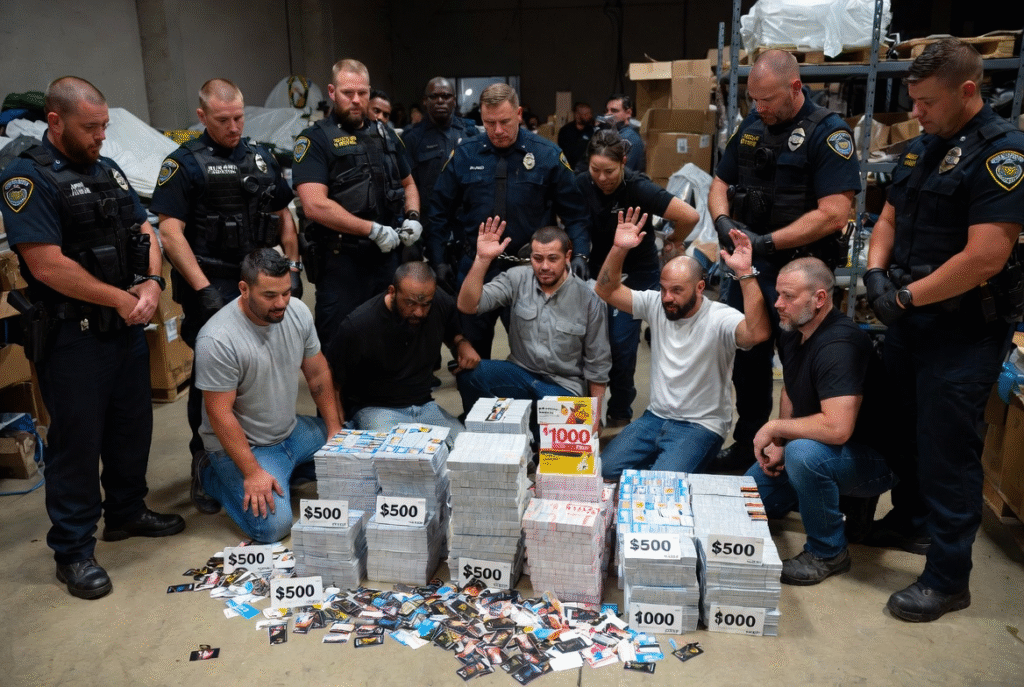
The breakthrough in the $10 million case came from advanced transaction analysis. Federal agents used sophisticated data mining techniques to identify patterns across thousands of gift card activations and redemptions. Anomalies—such as cards activated in one state and used minutes later hundreds of miles away, or large batches of cards purchased and immediately drained—triggered algorithmic alerts.
Digital forensics teams can now reconstruct entire criminal networks by following gift card transaction trails. Each card activation, balance check, and purchase creates digital footprints: IP addresses, device identifiers, geolocation data, and timestamp information. When analyzed collectively, these data points reveal the structure, scale, and participants in fraud operations.
Blockchain analysis has become crucial as criminals increasingly convert stolen cards to cryptocurrency. Specialized firms can trace cryptocurrency transactions across multiple exchanges and wallets, often identifying cash-out points where digital currency converts back to traditional money. These conversion points—typically bank accounts or cryptocurrency ATMs—provide investigators with real-world identities and locations.
Email and communication monitoring, conducted under warrant, has proven valuable in understanding organizational structures. Criminals coordinate through encrypted messaging apps, email, and sometimes custom-built communication platforms. Once investigators gain access to these communications, they can map relationships, identify leaders, and predict future activities.
Retailers have invested heavily in proprietary fraud detection systems that use machine learning to identify suspicious patterns in real-time. These systems can automatically flag unusual purchasing behaviors, such as split transactions designed to stay below reporting thresholds or rapid sequential purchases across multiple locations. When retail fraud detection systems share data with law enforcement databases, the combined intelligence becomes exponentially more powerful.
Retail Surveillance and Cooperation
Physical surveillance remains a cornerstone of gift card fraud investigations. High-resolution security cameras can capture faces, license plates, and methods used by theft rings. In several recent cases, investigators used facial recognition technology to link suspects across multiple retail locations and jurisdictions, building comprehensive profiles of individual fraudsters.
Major retailers have established dedicated organized retail crime divisions that work closely with law enforcement. These teams share intelligence, provide expert testimony, and coordinate multi-jurisdictional investigations. The cooperation has led to industry-wide databases that track known offenders, suspicious transaction patterns, and emerging fraud techniques.
Controlled purchases and undercover operations have successfully infiltrated fraud networks. Law enforcement officers, posing as buyers of stolen gift cards or merchandise, can document criminal activity, establish probable cause for warrants, and identify key players within organizations. In the $10 million investigation, an undercover agent made repeated purchases over six months, gaining trust and access to higher levels of the operation.
Retail employees serve as critical witnesses and intelligence sources. Training programs now teach frontline workers to recognize signs of organized gift card theft: individuals photographing card numbers, tampering with packaging, or making suspicious bulk purchases. Employee reports have initiated numerous successful investigations.
Geographic analysis of theft patterns helps predict where criminals will strike next. By mapping incidents across regions and identifying temporal patterns, law enforcement can deploy resources proactively. Some operations run on predictable schedules—hitting stores in a circuit pattern, targeting specific days when staffing is light, or concentrating on holiday periods when gift card inventory and sales volume are highest.
Recent Major Busts and Arrests
The $10 million case represents just one of several significant gift card fraud prosecutions in recent years. In 2022, a California-based operation involving 18 defendants was dismantled after a two-year investigation revealed over $7 million in losses. The group had recruited retail employees at major chains to provide access to gift card stockrooms and override security systems.
A Florida case in 2023 exposed a particularly innovative scheme where criminals hacked into retailers’ gift card activation systems, allowing them to activate cards remotely without purchase. The operation had stolen over $5 million before cybersecurity experts detected the intrusion and alerted authorities. The technical sophistication required specialized prosecution, with federal computer fraud charges carrying sentences of up to 20 years.
International cooperation led to arrests in a Romanian-based operation that targeted U.S. retailers. The group used malware to compromise point-of-sale systems across 200+ stores, harvesting gift card numbers as they were activated. The stolen data was sold on dark web marketplaces to buyers worldwide. The case required coordination between the FBI, Europol, and Romanian authorities, culminating in simultaneous raids across three countries.
Return fraud operations have resulted in multiple prosecutions. These schemes involve purchasing legitimate items with stolen credit cards, returning them for gift cards, then selling those cards for cash. A New York case uncovered a $3 million operation that processed over 1,000 fraudulent returns across six months. The methodical documentation of each transaction allowed prosecutors to build overwhelming evidence, resulting in guilty pleas from all defendants.
Prosecutors have increasingly pursued RICO (Racketeer Influenced and Corrupt Organizations Act) charges against gift card fraud networks, treating them as ongoing criminal enterprises rather than isolated thefts. RICO charges carry enhanced penalties and allow authorities to seize assets, disrupting the financial incentives that sustain these operations. Several defendants in the $10 million case face potential sentences of 15-25 years due to RICO enhancements.
Impact on Retailers and Innocent Consumers
Financial Losses Across the Industry

The retail industry absorbs billions in annual losses from gift card fraud. These costs extend beyond the face value of stolen cards. Retailers must invest in enhanced security systems, fraud detection technology, employee training programs, and legal resources to prosecute offenders. When cards are purchased with stolen credit cards, retailers face chargeback fees that can exceed the card’s original value.
Smaller retailers are disproportionately affected. While major chains can absorb losses and invest in sophisticated anti-fraud infrastructure, independent stores often lack resources for adequate protection. A single organized theft operation can devastate a small business’s profit margins for an entire quarter.
Insurance costs have risen as gift card fraud claims increase. Retailers must balance the expense of comprehensive coverage against deductibles that may exceed the value of smaller incidents. Some insurers have begun excluding or limiting gift card fraud coverage, forcing retailers to self-insure against these losses.
The fraud tax—indirect costs passed to consumers through higher prices—affects everyone. Industry analysts estimate that gift card fraud adds 0.5-1.5% to retail prices across affected categories. During high-fraud periods, some retailers have temporarily suspended gift card programs or implemented restrictive purchase limits that inconvenience legitimate customers.
Brand reputation damage represents an intangible but significant cost. When consumers purchase gift cards that have been tampered with or find their legitimate cards drained by fraudsters, trust in the retailer erodes. Negative publicity from major fraud cases can decrease gift card sales for extended periods, affecting a profitable product category that typically generates higher margins than physical merchandise.
Consumer Victims: Drained Cards and Lost Funds
Consumers become victims in multiple ways. The most direct harm occurs when someone purchases a gift card—often as a gift for a special occasion—only to discover the balance has been stolen before the intended recipient can use it. The disappointment and embarrassment of giving a worthless card can’t be quantified financially but creates lasting negative associations.
Balance draining typically occurs through card number harvesting schemes. Criminals photograph or manually record card numbers from retail displays, then systematically check activation status online. The moment a card is legitimately purchased and activated, fraudsters immediately drain the balance through rapid online purchases. The legitimate buyer discovers the theft only when attempting to use the card.
Disputing drained gift cards is frustratingly difficult. Unlike credit card fraud, which offers robust consumer protections, gift card transactions are often treated as cash equivalents. Many retailers maintain policies stating that they cannot replace lost or stolen gift cards, leaving victims without recourse. Even when retailers investigate, the burden of proof often falls on consumers to demonstrate they didn’t use the card themselves.
Scam victims represent another category of consumer harm. Criminals use gift cards as untraceable payment in various scams—romance fraud, IRS impersonation, tech support scams, and more. Victims are instructed to purchase gift cards and provide the numbers to scammers. While not directly related to card theft operations, these scams exploit the same characteristics that make gift cards attractive to organized crime: difficulty tracing and irreversibility of transactions.
Some consumers unknowingly participate in fraud by purchasing stolen gift cards at discount rates from resale sites or informal sellers. When these cards are deactivated by retailers or law enforcement, innocent buyers lose their money with little legal recourse. The proliferation of gift card resale markets has blurred the line between legitimate secondary sales and fencing stolen property.
The Ripple Effect on Gift Card Policies
Retailers have implemented numerous policy changes in response to organized fraud. Purchase limits—restricting the quantity of gift cards bought in a single transaction or within a specific timeframe—have become common. While these measures frustrate some legitimate bulk buyers (such as businesses purchasing employee rewards), they significantly disrupt high-volume fraud operations.
Enhanced packaging represents a physical security upgrade. Many retailers now use cards sealed in thick plastic clamshells or secured behind locked displays. Some have moved entirely to a system where cards on the sales floor carry no value until purchased, with activation occurring only at the register. These measures reduce tampering and number harvesting but add costs and occasionally create customer service friction.
Activation delays have been introduced by some retailers. Cards purchased online may not activate for 24-48 hours, providing a window for fraud detection systems to review transactions and cancel suspicious orders before cards can be drained. While this prevents certain fraud types, it also reduces the instant gratification that makes gift cards attractive for last-minute purchasers.
Return policy restrictions now target fraud schemes. Many retailers no longer allow returns for gift cards, have eliminated the option to return merchandise for a gift card without a receipt, or require ID for all gift card transactions above certain thresholds. These policies create databases that help identify patterns while deterring casual fraudsters who fear identification.
Digital gift cards have grown in popularity partly due to fraud concerns. Electronic cards delivered via email can include enhanced security features—unique codes, two-factor authentication for high-value cards, and immediate deactivation capabilities if fraud is detected. However, digital cards present their own security challenges, including phishing attacks and email interception.
Some retailers have explored blockchain-based gift card systems, creating immutable transaction records that make fraud detection easier and improve transparency. While still experimental, these systems could represent the future of gift card security, though implementation costs currently limit adoption to larger retailers.
Conclusion: Protecting Yourself from Gift Card Fraud
The $10 million bust demonstrates that law enforcement is fighting back against organized gift card fraud with increasing sophistication and success. Federal prosecutors are treating these operations as serious organized crime, pursuing lengthy sentences that serve as meaningful deterrents. The coordination between retailers, technology companies, and law enforcement has never been stronger, with information sharing and advanced analytics creating a formidable defense.
However, individual vigilance remains essential. Consumers can protect themselves by purchasing gift cards from secure, tamper-proof displays or from locked cases requiring employee assistance. Inspect packaging carefully for signs of tampering—resealing, scratched PIN areas, or loose wrapping. Avoid purchasing gift cards from auction sites or informal sellers offering discounts, as these may be stolen or obtained fraudulently.
Use gift cards quickly after purchase, particularly during high-fraud periods like holidays. The longer a card sits unused, the more opportunity fraudsters have to discover and drain a compromised number. Register cards when possible—many retailers offer registration systems that provide some protection against balance theft and make recovery easier if fraud occurs.
If you discover a drained gift card, report it immediately to the retailer and consider filing a police report, particularly for high-value cards. While recovery isn’t guaranteed, documented reports contribute to law enforcement databases that help identify patterns and build cases against fraud networks. Persistence sometimes yields results—some victims have successfully recovered funds by escalating complaints and providing documentation of the legitimate purchase.
The gift card industry continues evolving its security practices, learning from each major bust and adapting to emerging fraud techniques. As authentication technology improves and prosecution becomes more aggressive, the risk-reward calculation for criminals may shift. Until then, awareness and caution remain your best defense against becoming another statistic in the multi-billion dollar gift card fraud economy.
The criminals behind the $10 million operation are now facing justice, but countless other fraud networks remain active. Your vigilance, combined with industry improvements and law enforcement efforts, forms a collective defense against an adaptable and persistent threat.
Frequently Asked Questions
Q1: How do criminals drain gift card balances before the cards are even purchased?
A: Criminals use several methods to drain cards before legitimate purchase. The most common is number harvesting: they record card numbers and PINs from retail displays by photographing them or manually writing them down. They then systematically check these numbers online to see when they become activated. The moment a legitimate customer purchases and activates the card, automated systems detect the activation and immediately drain the balance through rapid online purchases. Some sophisticated operations use tampered point-of-sale systems or retail employee insiders to access activation information in real-time.
Q2: Can I get my money back if my gift card is stolen or drained by fraudsters?
A: Recovery is possible but not guaranteed. Unlike credit cards, gift cards don’t have federal consumer protection requirements, and policies vary by retailer. Your best chance of recovery involves reporting the theft immediately to the retailer with proof of purchase, explaining the situation clearly, and being persistent. Some retailers will investigate and may replace the card if they determine fraud occurred. Filing a police report strengthens your case. However, many retailers maintain strict no-replacement policies for lost or stolen cards. Prevention—inspecting cards carefully before purchase and using them promptly—is more reliable than expecting reimbursement after fraud.
Q3: Why do scammers always demand payment in gift cards?
A: Gift cards are ideal for scammers because they combine the irreversibility of cash with easy remote transfer. Unlike wire transfers or bank deposits, gift cards require no identification to use. Once a scammer receives the card numbers and PINs, they can immediately liquidate the value through online purchases, resale platforms, or cryptocurrency exchanges. The transactions are nearly impossible to trace back to individuals. Additionally, gift cards can be used across state and international borders without triggering financial reporting requirements. Banks can reverse fraudulent wire transfers; credit card charges can be disputed; but gift card transactions are typically final the moment the numbers are revealed.
Q4: How can I tell if a gift card has been tampered with before I buy it?
A: Inspect packaging carefully for signs of resealing—look for uneven adhesive, loose wrapping, or packaging that appears to have been opened and closed. Check that PIN or security code areas haven’t been scratched or tampered with. Avoid cards displayed in easily accessible areas; choose cards from behind locked displays or request that an employee retrieve one from secure inventory. Look for packaging damage, even minor tears or punctures that might indicate someone accessed the card number. If anything seems unusual about the card’s appearance or packaging, select a different card or purchase from a different retailer. Legitimate cards should be sealed in factory-original packaging with no signs of human interference.
Q5: Are digital gift cards safer than physical cards?
A: Digital gift cards offer some security advantages but present different vulnerabilities. They eliminate physical tampering and number harvesting from retail displays, and often include enhanced security features like unique activation codes and immediate deactivation capabilities. However, digital cards are vulnerable to email interception, phishing attacks, and account compromises. If criminals gain access to your email or the account where you purchased digital cards, they can steal the information. Digital cards purchased from unofficial websites may be stolen or fraudulently obtained. Overall, digital cards from reputable retailers sent to secure email accounts are reasonably safe, but both formats require vigilance. The safest approach is using any gift card immediately after receiving it, regardless of format.