

Is Ethereum Dead?
Everyone thinks Ethereum is dying, but institutions are quietly loading up. The narrative couldn’t be more bearish. Ethereum has underperformed Bitcoin throughout 2025, Layer 2 solutions are supposedly “cannibalizing” the mainnet, and retail sentiment has turned decidedly negative. Social media is flooded with declarations that ETH is “dead” and that newer, faster blockchains have won the smart contract wars.
But here’s what most retail investors are missing: while they’re panic-selling, institutions are systematically accumulating. The disconnect between public sentiment and institutional behavior has rarely been this pronounced—and historically, that’s exactly when the biggest opportunities emerge.
Let’s cut through the noise and examine what’s actually happening with Ethereum.
ETH’s 2025 Struggles: Layer 2 Cannibalization and Fading Sentiment
There’s no sugarcoating it—Ethereum has faced significant headwinds in 2025.
The Layer 2 “Problem”
The irony is palpable: Ethereum’s scaling solution is being framed as its death sentence. Layer 2 networks like Arbitrum, Optimism, and Base have exploded in adoption, processing millions of transactions daily at a fraction of mainnet costs.
This success has created a perceived problem. As activity migrates to L2s, Ethereum mainnet gas fees have declined dramatically. Lower fees mean less ETH being burned through EIP-1559, which has reduced the deflationary pressure that previously supported ETH’s price.
Transaction counts on mainnet have plateaued while L2 activity has soared. To critics, this looks like Ethereum is being hollowed out by its own children.
Sentiment at Multi-Year Lows
Retail sentiment metrics paint a grim picture. The ETH/BTC ratio hit levels not seen since 2021, with Ethereum dramatically underperforming Bitcoin. Social media mentions have turned overwhelmingly negative, with influencers who previously championed Ethereum now questioning its long-term viability.
Search interest for “Ethereum” has declined while newer chains like Solana have captured mindshare. The narrative has shifted from “Ethereum will flip Bitcoin” to “Ethereum is a dying dinosaur.”
Developer activity, while still strong in absolute terms, has faced competition from ecosystems offering better grant programs and lower barriers to entry. Some high-profile projects have announced plans to go multi-chain or even leave Ethereum entirely.
The Regulatory Overhang
Unlike Bitcoin’s clear commodity status, Ethereum still faces regulatory uncertainty in key jurisdictions. The delay and repeated rejections of spot Ethereum ETF applications (in some markets) have created an institutional adoption barrier that Bitcoin doesn’t face.
This uncertainty has kept some traditional finance players on the sidelines, waiting for clearer regulatory frameworks before committing significant capital.
The Perception Crisis
Perhaps most damaging is the perception that Ethereum has lost its edge. It’s no longer the fastest, cheapest, or newest. The “Ethereum killer” narrative has evolved into “Ethereum has already been killed.”
For many retail investors, the bull case has become murky. Why hold ETH when you can bet on faster chains, higher yields elsewhere, or just stick with Bitcoin’s simplicity?
This is the narrative that dominates crypto Twitter, Reddit, and YouTube. It’s also the exact opposite of what institutional data is showing.
Rising Institutional Adoption Signals Despite Price Weakness

While retail capitulates, institutional adoption of Ethereum has accelerated across multiple fronts.
Spot ETF Accumulation (Where Approved)
In markets where spot Ethereum ETFs have been approved, accumulation has been steady and significant. Unlike the initial hype-driven buying, current inflows represent sustained, systematic allocation—the hallmark of long-term institutional positioning.
Grayscale’s Ethereum Trust, despite its conversion complications, has seen net inflows from institutional clients. BlackRock’s private communications indicate strong client interest in Ethereum exposure beyond just Bitcoin.
On-Chain Institutional Footprints
Blockchain analytics reveal a different story than price charts tell. Large wallet addresses (1,000+ ETH) have been in accumulation mode throughout 2025’s price weakness. These aren’t retail investors—the transaction patterns, custody solutions, and associated addresses point to institutional entities.
Exchange outflows to cold storage have increased, indicating long-term holding intentions. Meanwhile, the amount of ETH locked in staking continues to grow, now exceeding 28% of total supply—capital that’s explicitly long-term oriented.
Corporate Treasury Adoption
While Bitcoin has dominated corporate treasury strategies, Ethereum is quietly gaining ground. Several fintech companies and blockchain-adjacent businesses have added ETH to their balance sheets in 2025, recognizing its utility beyond just a store of value.
These additions are strategic, not speculative—companies building on Ethereum or utilizing its infrastructure are securing positions in the asset that powers their operations.
Traditional Finance Integration
The real institutional story is happening in infrastructure, not price speculation.
JPMorgan, despite previous skepticism, has expanded its Onyx blockchain initiatives that utilize Ethereum infrastructure. Tokenization projects for real-world assets have overwhelmingly chosen Ethereum as their settlement layer, with billions in tokenized treasuries, commodities, and securities now living on Ethereum or its L2s.
Visa and Mastercard have both expanded their Ethereum-based settlement experiments. Swift has continued developing cross-border payment solutions using Ethereum technology. These aren’t speculative bets—they’re operational integrations that assume Ethereum’s long-term viability.
The Institutional Thesis Differs from Retail
Institutions aren’t buying Ethereum hoping for a quick 10x. Their thesis centers on:
– Network effects: Ethereum has the largest developer community, the most deployed capital, and the strongest ecosystem effects
– Lindy effect: Having survived multiple bear markets and “Ethereum killer” cycles increases confidence in survival
– Infrastructure layer: Ethereum is positioning itself as the financial settlement layer for tokenized assets
– Regulatory clarity path: Institutions believe regulatory frameworks will eventually provide the clarity needed for mainstream adoption
Most tellingly, institutional accumulation has increased as prices have fallen and sentiment has soured—classic contrarian positioning. They’re buying the fear that retail is selling.
Major Upgrades Planned for 2026 That Could Reverse Trend

Ethereum’s 2026 roadmap contains several catalysts that could fundamentally alter current dynamics.
The Verge: Stateless Clients
Scheduled for late 2026, stateless clients will allow nodes to verify blocks without storing the entire blockchain state. This dramatically reduces hardware requirements, potentially enabling Ethereum nodes to run on mobile devices.
The implications are massive: increased decentralization, easier validation, and a pathway to significantly higher throughput without sacrificing security.
The Purge: Protocol Simplification
This upgrade focuses on reducing blockchain bloat and simplifying the protocol. By implementing state expiry and history expiry, Ethereum will become more sustainable long-term while reducing the cost and complexity of running nodes.
These aren’t flashy features, but they address fundamental scaling bottlenecks that currently limit Ethereum’s ceiling.
EIP-4844 Expansion: Blob Scaling
While proto-danksharding (EIP-4844) launched in 2024, 2026 will see expansions that further reduce L2 costs by an order of magnitude. This addresses the current concern that L2s don’t feed enough value back to the mainnet.
With cheaper data availability, L2 activity can increase dramatically while still generating meaningful mainnet revenue through blob fees.
Pectra Upgrade: Enhanced Staking
The Pectra upgrade will increase the maximum effective balance for validators from 32 ETH to 2,048 ETH, making institutional staking significantly more efficient. This removes a major operational headache for large stakers who currently must manage hundreds of separate validators.
Improved staking economics and reduced operational complexity should drive additional institutional staking—further reducing liquid supply.
L2 Value Capture Mechanisms
The Ethereum Foundation and core developers are actively working on mechanisms to ensure L2 growth translates to L1 value capture. Proposed upgrades would require L2s to pay more substantial fees to the Ethereum mainnet, addressing the current “value leakage” concern.
These changes would transform the current narrative from “L2s are killing Ethereum” to “L2s are Ethereum’s growth engine.”
Regulatory Catalysts
While not a technical upgrade, 2026 may bring regulatory clarity that has eluded Ethereum. New administrations, clearer SEC guidance, and potential legislation could remove the regulatory overhang that has kept some institutional capital sidelined.
The approval of spot Ethereum ETFs in additional major markets would provide regulated access for pension funds, endowments, and other institutions currently prohibited from direct crypto exposure.
The Perception Shift
Technical upgrades matter, but narrative shifts often matter more for price action. When (or if) these upgrades demonstrate that Ethereum successfully scaled without sacrificing decentralization—something critics claimed was impossible—the narrative could flip rapidly.
Markets are forward-looking. If Ethereum’s 2026 upgrades gain credibility and institutional adoption continues accelerating, price action could frontrun the actual implementations by months.
Conclusion: What the Data Actually Says About Ethereum’s Future
So is Ethereum dead or a buying opportunity?
The data suggests neither the bear narrative nor the maximalist bull case is accurate.
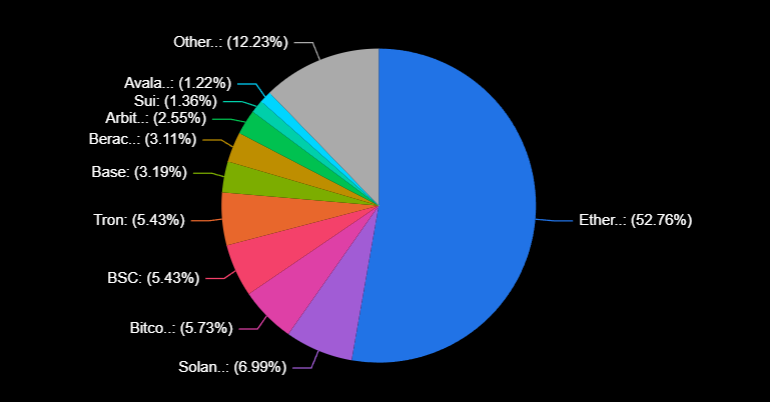
Ethereum isn’t dying. Network fundamentals remain strong: developer activity is still industry-leading, total value locked exceeds all competitors combined, and the ecosystem continues expanding. The “death” narrative confuses price underperformance with fundamental deterioration—these aren’t the same thing.
But Ethereum also isn’t guaranteed to succeed. Real challenges exist: competition is fiercer than ever, regulatory uncertainty remains, and the L2-centric roadmap contains execution risk. Newer chains have demonstrated that alternatives are viable.
What’s clear is the disconnect: retail sentiment is extremely bearish while institutional positioning is increasingly bullish. Historically, when this gap emerges, retail is usually wrong.
Institutions have longer time horizons, deeper analysis capabilities, and less emotional decision-making. They’re not infallible, but they’re systematically accumulating while retail capitulates.
The contrarian case is simple: If you believe Ethereum’s technical roadmap will deliver, regulatory clarity will eventually arrive, and institutional adoption will continue—current prices offer compelling risk/reward. The market has priced in a significant probability of failure; if Ethereum merely survives and executes moderately well, substantial upside exists.
The bear case remains: If L2s truly cannibalize value, competition from faster chains intensifies, or regulatory barriers prove insurmountable, Ethereum could continue underperforming. Lower prices are possible.
For investors evaluating positions, the question isn’t whether Ethereum is “dead” (it clearly isn’t) but whether current prices compensate for the risks. Given institutional accumulation patterns, 2026 technical catalysts, and extreme negative sentiment, the asymmetric opportunity appears to favor long-term holders willing to endure continued volatility.
This isn’t financial advice—it’s a reality check against the panic narrative dominating social media. Sometimes the best opportunities hide in plain sight, masked by bearish sentiment that everyone believes, but the data doesn’t support.
What institutions are doing speaks louder than what influencers are saying. And right now, institutions are quietly loading up while everyone else is running for the exits.
Frequently Asked Questions
Q: Is Ethereum actually dying in 2025?
A: No. While Ethereum has underperformed Bitcoin and faced narrative challenges, network fundamentals remain strong. Developer activity is still industry-leading, total value locked exceeds all competitors, and institutional adoption is accelerating. Price underperformance doesn’t equal fundamental deterioration.
Q: Why are Layer 2 solutions considered bad for Ethereum?
A: They’re not inherently bad—this is a misunderstood narrative. L2s reduce mainnet gas fees, which temporarily decreases ETH burning. However, upcoming upgrades will implement better value capture mechanisms, and L2s expand Ethereum’s total addressable market. The current concern is temporary and being actively addressed.
Q: What are institutions seeing that retail investors are missing?
A: Institutions focus on long-term infrastructure value rather than short-term price action. They see Ethereum’s network effects, developer ecosystem, regulatory clarity pathway, and role as a settlement layer for tokenized assets. On-chain data shows large wallets accumulating during price weakness—classic contrarian positioning.
Q: What major Ethereum upgrades are coming in 2026?
A: Key 2026 upgrades include: stateless clients (The Verge), allowing mobile nodes, protocol simplification (The Purge), expanded blob scaling for cheaper L2s, enhanced staking efficiency (Pectra), and mechanisms for better L2 value capture. These address current scaling bottlenecks and the L2 value leakage concern.
Q: Should I buy Ethereum now or wait?
A: This depends on your risk tolerance and time horizon. The contrarian case suggests current prices offer compelling risk/reward given institutional accumulation, 2026 catalysts, and extreme negative sentiment. However, risks remain, including competition, regulatory uncertainty, and potential continued underperformance. This isn’t financial advice—evaluate based on your own research and risk capacity.
Q: How do I know if institutions are really accumulating ETH?
A: On-chain analytics show large wallet addresses (1,000+ ETH) in accumulation mode, increasing exchange outflows to cold storage, growing staking participation (28%+ of supply), and sustained ETF inflows in approved markets. Corporate treasury additions and traditional finance integration projects also indicate institutional conviction beyond speculation.