

The Streaming Giant’s Film Future Hangs in the Balance
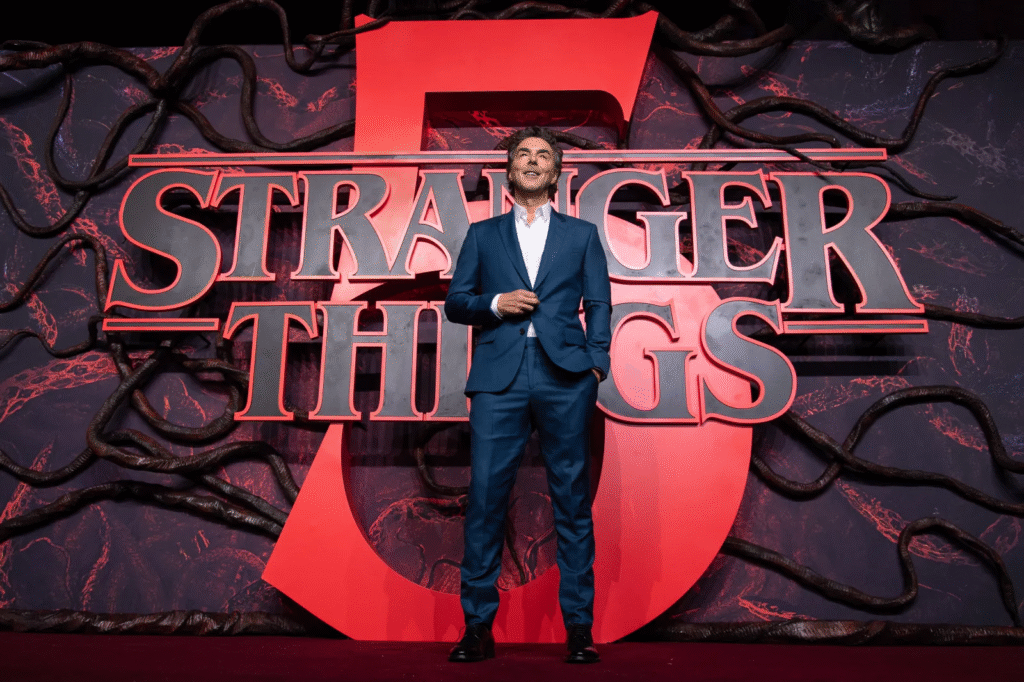
Stranger Things is ending – here’s what it means for Netflix’s future. The conclusion of the Duffer Brothers’ flagship series isn’t just the finale of a beloved show; it’s a pivotal moment that will define how Netflix approaches its film strategy for years to come. As the streaming landscape becomes increasingly competitive and theatrical releases regain cultural cachet, the way Netflix handles the Stranger Things universe exit will serve as a blueprint for how the platform transforms its most valuable IP into cinematic experiences.
The Finale Trailer’s Strategic Positioning
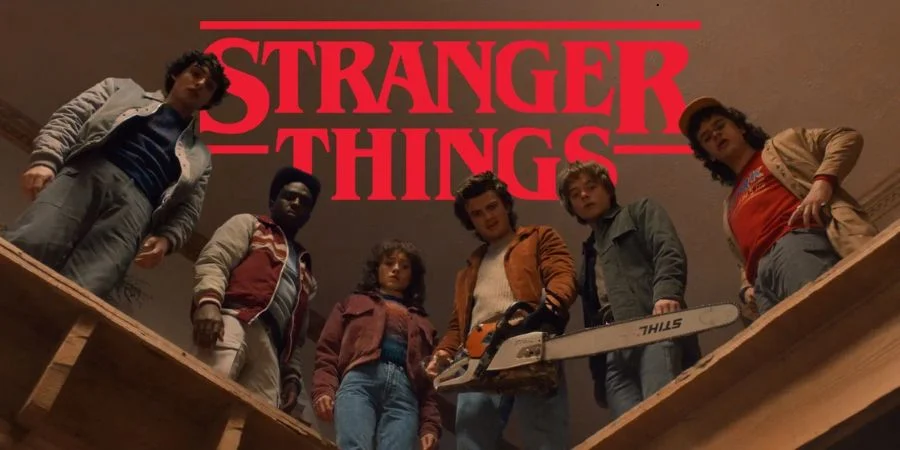
The recently released trailer for Stranger Things Season 5 does more than tease plot points and character arcs—it functions as a masterclass in audience retention strategy. Netflix has carefully positioned this final season not as an ending, but as a transition point. The trailer’s apocalyptic imagery, featuring Hawkins consumed by the Upside Down and our core group facing seemingly insurmountable odds, creates emotional investment that Netflix clearly intends to carry beyond the series finale.
What’s particularly revealing is the trailer’s cinematic quality. The production values rival major theatrical releases, with sweeping shots, intricate visual effects, and a scope that feels distinctly film-like rather than television-bound. This isn’t accidental. Netflix is conditioning its audience to associate Stranger Things with big-screen-worthy spectacle, even as it streams directly into living rooms.
The trailer also emphasizes legacy and consequence—themes that naturally extend beyond a single series conclusion. References to characters’ journeys from childhood to young adulthood, the accumulation of trauma across seasons, and the suggestion that this battle will have lasting implications for Hawkins and potentially the world all point toward a narrative universe that won’t simply close when the credits roll on the final episode.
More importantly, the marketing push surrounding Season 5 represents Netflix’s largest promotional investment in a series to date. This level of spend makes sense only if the company views Stranger Things 5 not as a conclusion but as a launchpad—a way to maintain peak audience engagement that can be redirected toward related film projects.
From Series Success to Film Franchises: Netflix’s Conversion Strategy
Netflix has been quietly building a playbook for transforming successful series into extended film universes, with varying degrees of success. The platform’s approach to Stranger Things will likely determine whether this strategy becomes central to their business model or remains an experimental side venture.
The company has already tested the waters with series-to-film extensions. The Fear Street trilogy demonstrated Netflix’s ability to create interconnected film narratives, though it originated as a film concept rather than a series conversion. Army of the Dead spawned both a prequel film and an anime series, showing Netflix’s willingness to build multimedia franchises. Even properties like The Witcher have expanded with films like Nightmare of the Wolf, though with mixed reception.
What makes Stranger Things different is its proven cultural penetration. The series has generated billions in merchandise sales, created multiple viral moments, and maintained consistent viewership across four seasons—a rarity in the streaming age where even successful shows often see dramatic viewership drops. This built-in audience represents a guaranteed opening weekend equivalent, the holy grail of film economics.
Netflix has already confirmed multiple Stranger Things spin-off projects in development. While details remain scarce, the Duffer Brothers have indicated these won’t be simple continuations but rather expansions of the universe. This language mirrors the Marvel Cinematic Universe approach—using a core property to establish a world that can support multiple narrative threads.
The film strategy makes financial sense for Netflix in ways that series production increasingly doesn’t. As production costs for high-end television have skyrocketed—Stranger Things Season 5 reportedly costs over $30 million per episode—the economics of continuing to produce eight to ten episodes become challenging. Feature films, even expensive ones, offer more predictable budgets and can be positioned as event content that drives subscriber acquisition during specific windows.
Moreover, films solve a narrative problem that Netflix faces with all its properties: the difficulty of maintaining quality and audience interest across multiple seasons. The streaming model has historically encouraged longer runs than narratives can sustain, leading to shows that outstay their creative welcome. By concluding Stranger Things at five seasons while the quality remains high, Netflix preserves the property’s value for film exploitation.
The company is also watching how competitors handle similar transitions. Disney+ has successfully used series like WandaVision and Loki to set up films and vice versa, creating an interconnected model that keeps subscribers engaged across different content types. HBO has leveraged Game of Thrones (despite its controversial ending) into the successful House of the Dragon series. Netflix needs its own version of this sustainable IP exploitation model.
Streaming Versus Theatrical: The Distribution
Dilemma
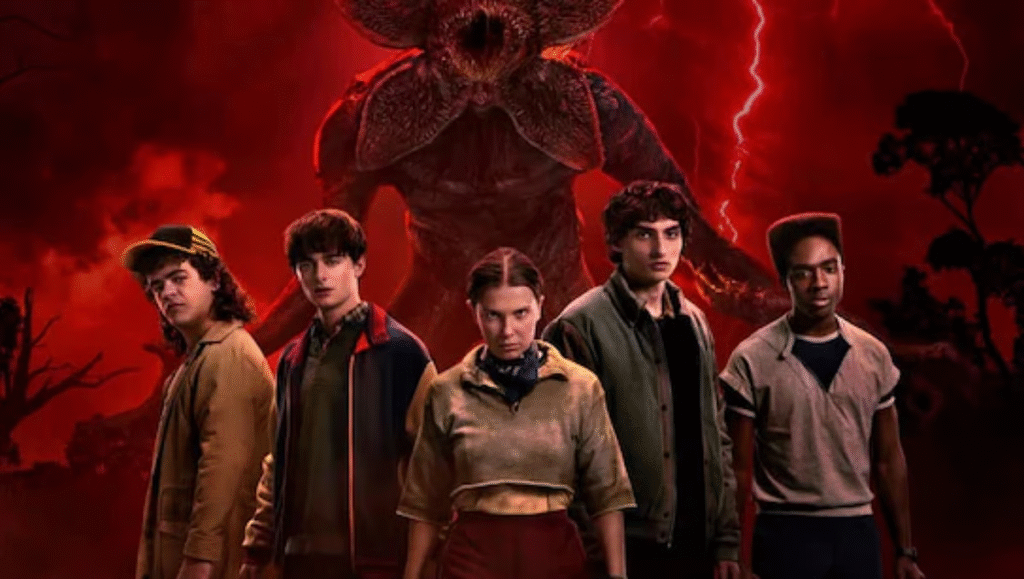
Perhaps the most significant question Stranger Things 5 raises is whether Netflix will finally embrace theatrical releases for its premium content—or double down on streaming exclusivity as a competitive differentiator.
Netflix’s relationship with theatrical exhibition has been complicated. The company built its brand on convenience and accessibility, positioning itself against the hassle and expense of moviegoing. However, this strategy has come with costs. Films need theatrical releases to qualify for major awards consideration, limiting Netflix’s ability to compete in prestige categories. More significantly, theatrical releases generate cultural moments and word-of-mouth marketing that streaming launches struggle to replicate.
The company has experimented with limited theatrical windows for films like Glass Onion, Roma, and The Irishman. Glass Onion’s brief theatrical run generated over $15 million—strong numbers for a limited release—while reportedly driving significant streaming viewership when it hit the platform. This suggested that theatrical and streaming releases could be complementary rather than competitive.
For potential Stranger Things films, the theatrical question becomes even more critical. The property has demonstrated the kind of fan engagement that drives theatrical attendance: cosplay culture, fan theories, viewing parties, and social media moments. These behaviors suggest an audience that would embrace the communal theatrical experience, particularly for a property that has become culturally synonymous with group viewing and shared experience.
A theatrical release would also allow Netflix to tap into revenue streams beyond subscriptions. Box office receipts, international distribution deals, and extended merchandising opportunities tied to theatrical runs could generate hundreds of millions in incremental revenue—significant even for a company of Netflix’s size.
However, theatrical releases would require Netflix to share control and revenue with exhibition partners, contradicting the vertical integration strategy that has defined the company’s approach. It would also potentially cannibalize the exclusive content proposition that keeps subscribers paying monthly fees.
The answer may lie in a hybrid approach. Netflix could release Stranger Things films theatrically for a limited window—say 30 to 45 days—before bringing them to the platform. This would capture theatrical revenue and cultural momentum while maintaining the promise of eventual streaming availability for subscribers. The company could position these releases as special events rather than standard theatrical fare, creating premium pricing opportunities and destination viewing experiences.
Alternatively, Netflix might create different tiers of content: series and most films remain streaming-exclusive, while a select few properties deemed culturally significant enough receive theatrical treatment. Stranger Things would obviously qualify for this top tier, along with potential future properties that achieve similar cultural penetration.
The Stranger Things 5 finale will serve as a test case for audience behavior. If viewership metrics show that subscribers engage with the finale over an extended period rather than binge-watching immediately, it suggests audiences might be willing to wait for a theatrical experience before streaming. If the opposite occurs—massive immediate viewership followed by a sharp drop-off—it reinforces the streaming-first model.
What This Means for Netflix’s Future
The decisions Netflix makes around Stranger Things in the next 18 to 24 months will reverberate through the entertainment industry. If the company successfully transitions the property into a film franchise while maintaining the creative quality and audience engagement that made the series successful, it establishes a template for managing IP in the streaming era.
This matters because Netflix faces a content pipeline challenge. The company has struggled to create new properties with the cultural impact of Stranger Things, even as it spends billions annually on content. Learning to extend and evolve successful properties becomes essential for maintaining competitive advantage as content spending across the industry becomes unsustainable.
The Stranger Things transition also represents a maturation of Netflix’s content strategy. The company built its subscriber base by offering volume and variety—something for everyone, always available. But as subscriber growth slows in mature markets, Netflix needs content that drives conversation, that becomes appointment viewing or destination content. Films based on established properties can serve this function in ways that standalone films or new series often cannot.
For competitors, Netflix’s approach will signal whether the streaming-only model can sustain premium properties long-term, or whether theatrical releases remain necessary for maximizing IP value. If Netflix keeps Stranger Things films streaming-exclusive and sees strong performance, it validates the pure-play streaming approach. If the company reverses course and embraces theatrical, it suggests even the streaming pioneer recognizes limits to the digital-only model.
For viewers, the outcome determines not just whether we’ll see Stranger Things continue in film form, but how we’ll experience it. Will these be communal theatrical events, or will they be Friday night couch experiences? The answer affects not just this one property but potentially the future of how major pop culture moments are shared and experienced.
Stranger Things 5 isn’t just the conclusion of a beloved series—it’s a referendum on streaming’s ability to create and sustain cultural phenomena in an era where audiences have infinite choices and limited attention. How Netflix handles this transition will define the company’s next chapter and potentially reshape how the entire industry thinks about the relationship between series, films, and audience engagement. The Upside Down may be fictional, but the very real inversion of traditional content models that Stranger Things represents is just beginning.
Frequently Asked Questions
Q: Will there be Stranger Things movies after Season 5 ends?
A: While Netflix hasn’t officially confirmed Stranger Things films, the Duffer Brothers have stated that multiple spin-off projects are in development. Given the show’s massive cultural impact and Netflix’s need to extend successful IP, films set in the Stranger Things universe are highly likely, though they may focus on new characters or time periods rather than continuing the core group’s story directly.
Q: Why does Netflix’s strategy with Stranger Things matter for other shows?
A: Stranger Things is Netflix’s most successful original series, making it a test case for how the platform handles flagship properties. If Netflix successfully transitions Stranger Things into films or spin-offs while maintaining quality and audience engagement, it creates a template for other properties like The Witcher, Bridgerton, or Wednesday. The approach will determine whether Netflix can build sustainable franchises or must constantly create new hits.
Q: Will Stranger Things movies be released in theaters or only on Netflix?
A: This remains Netflix’s biggest strategic question. The company has historically resisted theatrical releases but has experimented with limited runs for films like Glass Onion. Given Stranger Things’ cultural significance and fan engagement, theatrical releases would likely be successful, but would require Netflix to share revenue and control. A hybrid model with limited theatrical windows before streaming release seems most probable.
Q: How does ending Stranger Things after Season 5 benefit Netflix’s film strategy?
A: Concluding the series while quality remains high preserves the property’s value for future exploitation. It prevents the common problem of shows declining in later seasons and allows Netflix to reposition the universe for films with more manageable budgets. Feature films also create event content that drives subscriber acquisition in ways that ongoing series increasingly cannot, especially as production costs for premium television have skyrocketed.