

The Stranger Things Strategy
While Marvel dominates theatres, Netflix has a different plan. The streaming giant’s approach to competing with cinematic releases doesn’t involve red carpets or box office numbers—it relies on sophisticated counter-programming, data-driven release strategies, and the creation of cultural moments that happen entirely within the home entertainment ecosystem. For media industry professionals and content strategists, understanding this competitive dynamic has never been more crucial. The Stranger Things finale represents a masterclass in how streaming platforms strategically position their premium content against theatrical releases, fundamentally reshaping how audiences allocate their entertainment time and budgets.
The Counter-Programming Chess Match
When Netflix scheduled the Stranger Things finale, the decision wasn’t made in a vacuum. The timing represents a calculated move in an ongoing strategic competition for audience attention during peak entertainment windows.
Traditional studios have long relied on summer tentpole releases to capture maximum audience engagement. Memorial Day through Labor Day represents the industry’s most lucrative period, when families have discretionary time, and studios can maximize theatrical revenue. Marvel’s dominance of this corridor has been particularly pronounced, with interconnected universe films creating appointment viewing that drives audiences to multiplexes.
Netflix’s counter-strategy acknowledges a fundamental truth: they cannot compete with theatrical spectacle on its own terms. Instead, the platform offers an alternative value proposition—premium, episodic content that delivers extended narrative satisfaction without requiring theatrical attendance.
The Stranger Things finale exemplifies this approach. By positioning a highly-anticipated series conclusion against summer movie releases, Netflix creates a competing cultural event. Social media conversation, water-cooler discussion, and FOMO (fear of missing out) dynamics that traditionally drove theatrical attendance now split between cinema and streaming.
From a strategic timing perspective, Netflix benefits from several advantages:
Flexibility in release windows: Unlike theatrical films locked into specific dates months or years in advance, streaming releases can shift based on competitive intelligence and audience behavior data.
Binge-viewing dynamics: A finale event that drops multiple episodes simultaneously creates concentrated conversation and engagement that can rival or exceed the cultural footprint of a single theatrical release.
Weather independence: Summer movie releases traditionally benefit from air-conditioned theaters during hot weather. Streaming platforms eliminate this consideration, offering climate-controlled viewing in viewers’ homes.
Cost arbitrage: While a family of four might spend $60-100 on a theatrical experience (tickets, concessions, parking), Netflix engagement represents zero marginal cost for existing subscribers.
The data support this strategic positioning. Internal Netflix metrics (occasionally leaked through industry sources) suggest that major series finales can capture viewing hours equivalent to multiple blockbuster theatrical releases combined, when measured across the subscriber base.
Streaming Exclusivity Versus Theatrical Event Films
The competition between Netflix’s streaming exclusives and theatrical event films reveals fundamentally different business models pursuing the same resource: audience attention.
Theatrical releases operate on a scarcity model. Limited release windows, geographic exclusivity, and the unique experiential qualities of cinema viewing create urgency. Marvel’s interconnected universe amplifies this through narrative continuity—missing a theatrical release means falling behind in the broader story, creating a powerful incentive for opening weekend attendance.
Netflix operates on an abundance model. The platform’s entire value proposition rests on unlimited access to extensive libraries. However, this creates a challenge: how do you generate urgency and event-level engagement when content remains permanently available?
The Stranger Things finale strategy resolves this paradox through several mechanisms:
Narrative closure: Unlike mid-season episodes, finales offer definitive conclusions that become immediate conversation topics. The risk of spoilers creates organic urgency despite perpetual availability.
Simultaneous global release: By making content available worldwide at the same moment, Netflix creates a genuine shared experience at scale—something theatrical releases achieve only through months-long international rollouts.
Limited marketing windows: Netflix concentrates promotional spending in the weeks before major releases, creating awareness spikes that mimic theatrical marketing campaigns.
Cultural momentum: The platform leverages social media virality and algorithmic promotion to generate self-sustaining conversation that peaks during release weekends, then gradually declines—similar to theatrical box office curves.
From an economic perspective, the models diverge sharply:
Theatrical films generate revenue through per-ticket transactions. Success is measured in box office gross, with clear winners and losers. A $200 million opening weekend represents an unambiguous triumph. Studios can precisely calculate return on investment.
Netflix operates on subscription retention and growth metrics. The Stranger Things finale’s success isn’t measured by direct revenue attribution but by:
– Subscriber acquisition during the release period
– Churn reduction among existing subscribers
– Viewing hours that justify content investment
– Cultural impact that elevates brand value
– Engagement metrics that inform future content investment
This creates asymmetric competition. Studios and streaming platforms are playing different games on the same field, pursuing related but distinct objectives.
The strategic implications are profound. Netflix doesn’t need to “beat” theatrical releases in any traditional sense. The platform succeeds by offering a compelling alternative during the same attention windows, fragmenting audiences in ways that gradually erode theatrical exclusivity’s value proposition.
The 2026 Fragmented Entertainment Landscape
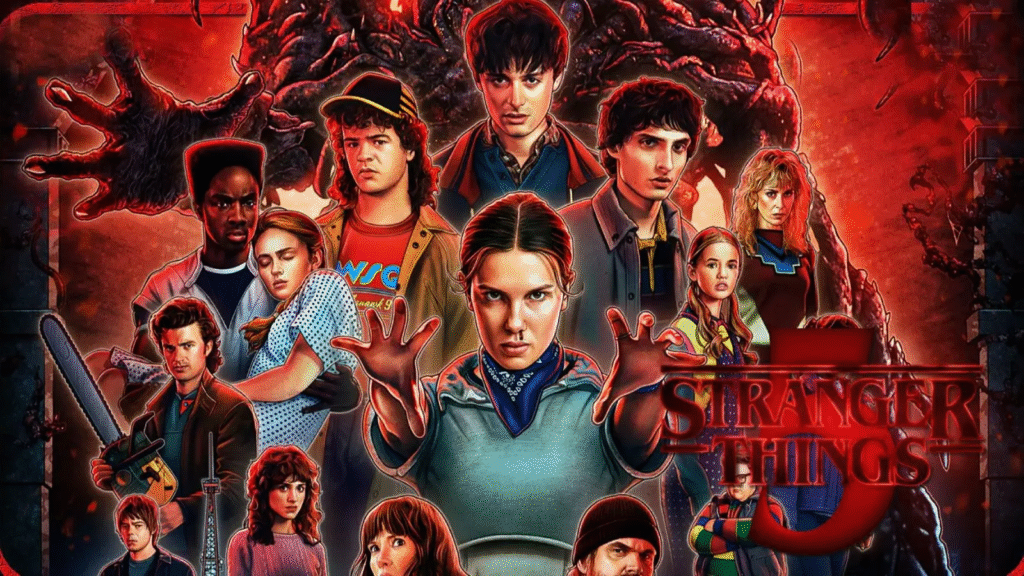
By 2026, the entertainment industry will face unprecedented fragmentation. The Stranger Things finale strategy represents not an isolated tactic but a symptom of structural transformation in how audiences consume premium content.
Consider the fragmentation vectors:
Platform proliferation: Multiple streaming services (Netflix, Disney+, HBO Max, Apple TV+, Amazon Prime Video, Paramount+, Peacock) compete for subscriber attention alongside traditional theatrical releases.
Windowing collapse: The historical separation between theatrical, home video, and streaming windows has compressed dramatically, with some films releasing simultaneously across platforms.
Attention scarcity: Despite content abundance, consumer attention remains fixed. The average person has limited entertainment hours weekly, forcing increasingly difficult allocation decisions.
Generational divergence: Younger audiences demonstrate markedly different consumption patterns than older demographics, with streaming preference intensifying among Gen Z viewers.
For media industry professionals, this fragmentation creates both challenges and opportunities:
Challenges:
– Predicting hit content becomes more difficult as audience segmentation increases
– Marketing efficiency declines as target audiences scatter across platforms
– Cultural monoculture erodes, reducing the “everyone is watching this” phenomenon that drives viral growth
– Revenue models remain uncertain as subscription fatigue sets in and consumers become more selective
Opportunities:
– Niche content can find economically viable audiences through precise targeting
– Data-driven production decisions reduce development risk
– Global distribution becomes simultaneously accessible, enabling a worldwide audience building
– Multiple revenue streams (theatrical, streaming, licensing, merchandising) can be orchestrated strategically
The Stranger Things finale strategy points toward an emerging equilibrium: theatrical releases will increasingly focus on spectacle-driven experience films (Marvel, franchise tentpoles, IMAX-worthy cinematography) that justify premium pricing and theatrical attendance. These films will emphasize what streaming cannot replicate—immersive audio-visual experience, communal viewing, and event-level cultural moments.
Streaming platforms will dominate serialized narrative content, character-driven drama, and mid-budget productions that don’t require theatrical spectacle. These platforms will leverage data advantages, production flexibility, and global distribution to deliver personalized content experiences at scale.
The fragmentation will continue accelerating through 2026 and beyond. No single platform or distribution model will dominate completely. Instead, content strategists must develop portfolio approaches—allocating different content types to optimal distribution channels based on audience, format, and economic potential.
Strategic Takeaways for Content Professionals
The competition between Netflix’s streaming exclusives and theatrical releases offers several lessons for media industry strategists:
1. Timing is strategic warfare: Release scheduling represents competitive positioning, not just logistical planning. Counter-programming can be as valuable as direct competition.
2. Business models determine strategy: Understanding whether you’re selling transactions (theatrical) or subscriptions (streaming) fundamentally shapes content decisions, marketing approaches, and success metrics.
3. Cultural conversation is the real prize: Whether delivered through theaters or streaming, content that captures social media attention and generates sustained conversation achieves outsized impact relative to production costs.
4. Data asymmetry creates advantage: Streaming platforms’ detailed viewer data provides strategic intelligence that theatrical distributors cannot match, enabling more precise targeting and resource allocation.
5. Fragmentation favors flexibility: Organizations that can rapidly adjust strategy, experiment with distribution models, and pivot based on performance data will outperform rigid, plan-driven competitors.
The Stranger Things finale’s strategic positioning against theatrical releases represents more than clever counter-programming. It exemplifies the structural transformation of entertainment distribution—a shift from scarcity-based theatrical models to abundance-based streaming platforms, from geographic release windows to simultaneous global availability, from transaction revenue to subscription retention.
For industry professionals navigating this landscape, success requires understanding both models’ strengths and limitations, recognizing that competition and coexistence will define the next decade of entertainment content strategy.
Frequently Asked Questions
Q: Why does Netflix schedule major releases against theatrical blockbusters?
A: Netflix uses a counter-programming strategy to capture audience attention during peak entertainment periods. By offering high-value content like the Stranger Things finale when audiences are already engaged with entertainment discussions around theatrical releases, Netflix creates a competing cultural event that fragments attention and provides an at-home alternative to theater attendance.
Q: How do streaming platforms measure success differently from theatrical releases?
A: Theatrical releases measure success through box office revenue and per-ticket transactions. Netflix and other streaming platforms measure success through subscription metrics, including subscriber acquisition, churn reduction, total viewing hours, and engagement data. This fundamental difference in business models means they’re pursuing related but distinct objectives even when competing for the same audiences.
Q: What advantages does Netflix have over theatrical releases?
A: Netflix benefits from zero marginal cost for existing subscribers, flexible release timing based on data insights, simultaneous global distribution, and the ability to create binge-viewing events that concentrate conversation. The platform can also leverage detailed viewer data to optimize content and marketing in ways theatrical distributors cannot match.
Q: Will streaming completely replace theatrical releases?
A: No, the industry is moving toward coexistence rather than replacement. Theatrical releases will likely focus increasingly on spectacle-driven experiences that justify premium pricing—films that emphasize immersive audio-visual qualities streaming cannot replicate. Streaming platforms will dominate serialized content, character-driven drama, and mid-budget productions. Both models will serve different audience needs and content types.
Q: How does audience fragmentation in 2026 affect content strategy?
A: Fragmentation across multiple streaming platforms and theatrical releases forces content strategists to develop portfolio approaches, allocating different content types to optimal distribution channels. Success requires flexibility, data-driven decision-making, and understanding which formats and genres work best for theatrical versus streaming distribution. Cultural monoculture is eroding, making niche targeting and precise audience understanding more valuable.