


What is Cryptocurrency?

Cryptocurrency is a type of money that exists only online. It doesn’t rely on banks or governments to operate. Instead, it uses special technology to keep transactions safe and secure. You can think of it as digital cash that you can send directly to others over the internet, with added protection to prevent fraud.
How Does Cryptocurrency Work?
Cryptocurrency works through a system called blockchain, which is like a public digital record book shared across many computers worldwide. Each transaction is added to this record as a “block” and linked to the previous ones, creating a “chain” of transactions. This setup makes sure everything is transparent and secure because the entire network checks and approves each transaction. Special math, called cryptography, keeps your money safe and ensures only the owner can access it.
Types of Cryptocurrencies
The crypto world offers a variety of digital assets, each serving different purposes:
Bitcoin (BTC): The first and most well-known cryptocurrency, often considered digital gold.
Ethereum (ETH): A platform for decentralized applications and smart contracts, offering more than just currency.
Stablecoins: Stablecoins are types of cryptocurrencies that are linked to real-world assets, like traditional money, to keep their value steady. For example, Tether (USDT) and USD Coin (USDC) are stablecoins that are pegged to the US dollar.
Utility Tokens: Tokens that provide access to specific services or products within a blockchain ecosystem. For instance, Binance Coin (BNB) is a utility token that can be used to pay fees on the Binance exchange, and Filecoin (FIL) allows users to buy storage space on the Filecoin network.
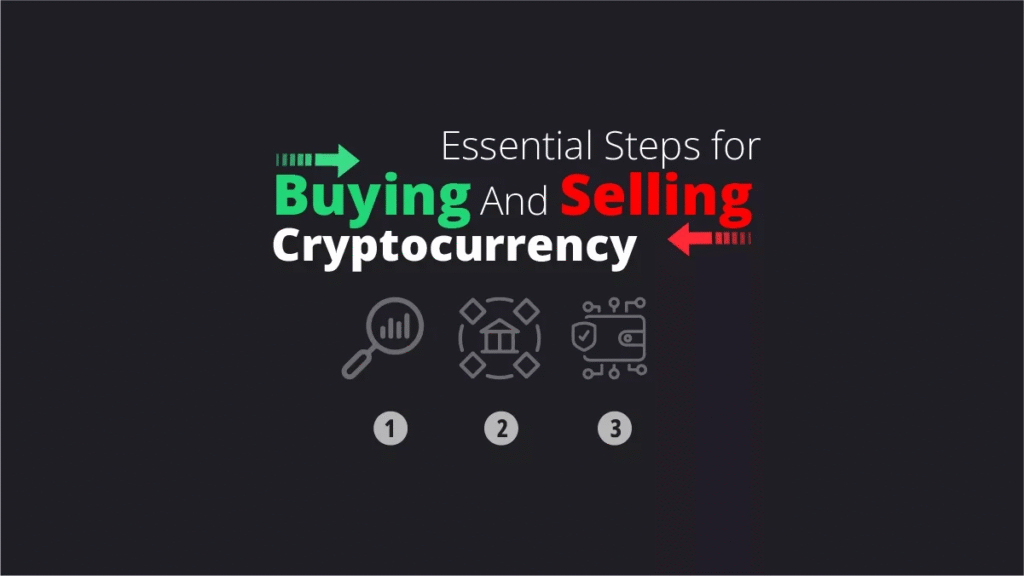
Essential Steps for Buying and Selling Cryptocurrency
As John explored the world of cryptocurrencies, he quickly realized that preparation is key to success. Like John, you’ll need to lay a solid foundation before diving into the exciting realm of buying and selling cryptocurrency.
Research and Select the Right Cryptocurrency
Before investing, thoroughly research different cryptocurrencies. Look beyond the hype and consider the technology, real-world applications, and the team behind each project. This will help you make informed decisions that align with your goals.
Set Up a Secure Digital Wallet
A digital wallet is like your crypto piggy bank—it’s where you store and manage your digital assets. Choosing the right wallet is crucial for keeping your investments secure. You have several options:
Hardware Wallets: Physical devices (like a USB drive), like Ledger Nano S or Trezor, that store your crypto offline, providing top-notch security.
Software Wallets: Apps like Exodus or Electrum that you install on your computer or phone, offering a balance of convenience and security.
Online Wallets: Web-based wallets like MetaMask or Coinbase Wallet that are accessible from anywhere, though they require extra caution regarding security. Prioritize security by selecting a wallet with strong encryption and two-factor authentication to ensure your assets are protected.
Familiarize with Cryptocurrency Exchanges
Cryptocurrency exchanges are platforms where you can buy, sell, and trade cryptocurrencies. Just like John, explore different exchanges, considering factors like security, fees, and the range of cryptocurrencies offered. Whether you prefer a centralized or decentralized exchange (like Xbanka), choose one that fits your needs. By taking these essential steps, you’ll be well-prepared to begin your cryptocurrency journey. In the next part of our guide, we’ll dive into the process of actually buying and selling cryptocurrency so you can confidently navigate this exciting market.
Simple Guide to Buying and Selling Cryptocurrency
Now that you’ve learned the basics, it’s time to put them into action and start your crypto journey, just like John did. Here’s a step-by-step guide to help you get started.
Buying Cryptocurrency
Registering and Verifying Your Account
To begin, you’ll need to sign up for a cryptocurrency exchange. This process is similar to creating a social media account, but with an added step of identity verification for security purposes. On centralized exchanges (CEXs), you’ll need to provide some personal information. Decentralized exchanges (DEXs), however, usually require only your wallet address.
Funding Your Account
Once your account is verified, you need to fund it. On centralized exchanges, you can link your bank account or credit card to deposit money, which you’ll then use to buy cryptocurrencies. Decentralized exchanges work differently. Instead of depositing funds into the platform, you maintain control by using your own digital wallet. You can transfer cryptocurrency directly from your wallet to the DEX for trading. Some DEXs also offer Fiat-on-Ramp features, like Xbanka, allowing you to buy crypto using traditional currency.
Placing a Buy Order
With funds in your account, you’re ready to buy cryptocurrency. On centralized exchanges, you can place different types of orders based on your trading strategy. On decentralized exchanges, you’ll typically use “Swap” or “Trade” options. Here, you trade directly with other users through smart contracts on the blockchain. Review the transaction details carefully before confirming your purchase.
Executing the Purchase
After placing your order, the next step is to execute it. On centralized exchanges, once the transaction is confirmed, your purchased cryptocurrency will appear in your exchange account. However, it’s safer to transfer your crypto to a secure digital wallet. On decentralized exchanges, the cryptocurrency is immediately transferred to your wallet after the transaction, giving you full control and security over your funds.
Selling Cryptocurrency
Selling cryptocurrency is just as straightforward as buying it. Monitor the market to decide the best time to sell, and follow these steps:
Placing a Sell Order
On centralized exchanges, navigate to the sell section, choose the cryptocurrency you want to sell, and specify the amount or price. You can use different order types, like market or limit orders. On decentralized exchanges, connect your wallet, select the cryptocurrency you wish to sell, and initiate the trade.
Executing the Sale
Once your sell order is placed, monitor the transaction until it’s confirmed. On centralized exchanges, the funds will appear in your account balance, while on decentralized exchanges, the proceeds from the sale will be transferred directly to your wallet, maintaining your control over the funds.
Security and Risk Management in Cryptocurrency
Prioritizing Security
Securing your digital assets is crucial. Start by choosing wallets with strong security features, like hardware wallets that store your cryptocurrencies offline. Utilize multi-factor authentication and ensure your wallet is encrypted. These steps reduce the risk of unauthorized access and protect your investments from potential theft.
Protecting Against Threats
Stay vigilant against threats such as phishing attempts. Always verify website URLs, look for secure HTTPS connections, and avoid sharing sensitive information online. Regularly update your devices and software to protect against vulnerabilities.
Implementing Risk Management Strategies
Effective risk management is key to successful crypto investing. Diversify your portfolio across different cryptocurrencies to spread risk. Set clear investment goals, establish a budget you’re comfortable with, and avoid overextending yourself. Maintain a long-term perspective to weather market volatility.
Staying Informed and Adapting
The cryptocurrency market is constantly evolving. Stay informed by following reputable news sources, engaging with cryptocurrency communities, and monitoring market trends. Adapt your strategies to align with emerging developments and market opportunities.
Benefits of Investing in Cryptocurrency
High Potential Returns
Cryptocurrencies have shown the potential for significant returns on investment, with some experiencing rapid price increases. Early investors in major coins like Bitcoin and Ethereum have seen substantial gains, making the crypto market an attractive option for those willing to embrace some risk.
Financial Independence and Control
Cryptocurrencies operate on decentralized networks, meaning they aren’t controlled by any single entity like a bank or government. This provides you with greater control over your assets and enables borderless transactions, making it easier to transfer funds globally without traditional banking restrictions.
Diversification of Portfolio
Adding cryptocurrencies to your investment portfolio can provide diversification, as they often behave independently of traditional markets like stocks and bonds. This can help balance risk and potentially enhance your overall investment returns, particularly during times of economic uncertainty.
Hedge Against Inflation
Some investors view cryptocurrencies as a hedge against inflation. Unlike traditional currencies, which can lose value due to inflationary pressures, many cryptocurrencies have a fixed supply. For example, Bitcoin’s limited supply makes it an appealing store of value, similar to gold, especially in times of economic instability.
Accessibility and Inclusion
Cryptocurrencies offer financial services to individuals who might not have access to traditional banking systems. With just a smartphone and internet connection, anyone can participate in the global financial system, making cryptocurrencies a powerful tool for financial inclusion.
Tracking and Optimising Your Investments
John soon realized that tracking his cryptocurrency investments was crucial to staying ahead in the game of buying and selling cryptocurrency. By using portfolio tracking tools and apps, you can monitor your assets in real time, review historical price trends, and assess performance. This consistent monitoring enables you to spot opportunities, manage risks, and adjust your strategy as needed. Investment strategies in crypto aren’t static. John found that regular reviews and optimizations were key to success. Diversify your portfolio, stay informed on new projects and trends, and continually fine-tune your approach for long-term growth. In the rapidly changing world of cryptocurrency, continuous learning is essential.
CONCLUSION
The crypto market is capricious, and even the most seasoned of investors run into bad episodes. The focus should be consistent and a solid rubric for investment, which can help stem any losses. That said, it’s not the case that the crypto market has strict hard-and-fast rules that will let you sail through smoothly. The guidelines above will help you navigate the difficult waters of crypto. By no means do they guarantee success, but they are effective guideposts that will help you move forward. The basic investing rules still apply—never invest more than you can afford to lose, and always conduct thorough research.
FAQ
- Is it better to buy or sell crypto?
Holding crypto long-term is generally considered less risky than actively trading, as it avoids the volatility of short-term market fluctuations. However, active trading can potentially yield higher profits, but it also requires more time, skill, and carries a greater risk of losses.
- Is it smart to buy crypto now?
Is Crypto a Good Investment Today? Yes, crypto is a good investment today – but only if you understand the risks involved. Much like stocks, real estate, or commodities, crypto assets vary widely.
- Is it the right time to sell crypto?
In conclusion. There’s no perfect formula for when to buy or sell crypto. But by understanding your investment goals and avoiding emotional decisions, you’ll be better prepared to stand your ground against the ups and downs of the market.
- What is the 1% rule in crypto?
The 1% rule states that traders should never risk more than 1% of their capital on a single trade, ensuring that even 10 consecutive losses only draw down 10% of the account. This mathematical approach to position sizing prevents emotional decisions and enables long-term survival in volatile markets.
- How long should I hold crypto before selling?
Important. If you sell crypto less than a year after buying it, the gains are taxed at your ordinary income rate.
- What is the golden rule of crypto?
Never invest more in crypto than you can afford to lose.