

What Is Solana?
In the ever-evolving world of blockchain technology, Solana has rapidly become one of the most discussed and promising platforms. But what is Solana, and why has it captured so much attention? Solana is an open-source, high-performance blockchain designed to support decentralised applications (dApps) and crypto projects with lightning-fast transaction speeds and low costs. Its primary goal is to scale blockchain technology without compromising decentralisation or security.
Understanding the Basics of Solana
The Origins and Founders of Solana
Solana was founded by Anatoly Yakovenko, Greg Fitzgerald, and Raj Gokal in 2017, with the mainnet officially launching in March 2020. Yakovenko’s background in distributed systems and his experience at Qualcomm inspired him to create a blockchain capable of handling massive transaction throughput — similar to global-scale internet systems.
The project’s name, Solana, comes from a small beach town near San Diego, where Yakovenko spent time surfing during his engineering days — symbolizing the blend of innovation and flow that defines the network today.
How Solana Differs from Other Blockchains
While blockchains like Bitcoin prioritize decentralization and security, and Ethereum focuses on flexibility for smart contracts, Solana seeks to combine all three elements of the blockchain trilemma — speed, security, and scalability. Its hybrid consensus model allows it to outperform most blockchains while maintaining a decentralised validator network.
For context, Ethereum can handle around 30 transactions per second, while Solana can process thousands of times more at a fraction of the cost — typically less than $0.001 per transaction.
Key Features of Solana Blockchain

Transaction Speed and Throughput
Solana’s high throughput — over 65,000 TPS — makes it the fastest blockchain in existence today. This speed is achieved through parallel processing and efficient data structures that minimize bottlenecks.
Low Transaction Costs and Energy Efficiency
Unlike Ethereum’s high gas fees, Solana transactions cost less than a cent. Moreover, Solana’s energy-efficient design consumes far less power, making it one of the most eco-friendly blockchains.
Developer-Friendly Tools and dApp Ecosystem
Solana offers developers a wide range of tools, SDKs, and APIs, enabling rapid dApp development. Popular decentralized exchanges (DEXs), NFT platforms, and DeFi projects have thrived within Solana’s ecosystem.
Real-World Applications of Solana
DeFi Projects on Solana
Solana has become a hub for decentralized finance (DeFi). Platforms like Serum, Raydium, and Jupiter provide high-speed trading and lending opportunities with minimal fees.
NFTs and Gaming on Solana
NFT marketplaces such as Magic Eden and SolSea have gained significant traction. Additionally, Solana’s scalability supports immersive blockchain gaming experiences, giving developers the infrastructure they need to build real-time games.
Solana Pay and Web3 Innovations
Solana Pay allows users to make direct payments using SOL and stablecoins without intermediaries. This innovation brings Solana closer to becoming a mainstream payment solution in the Web3 economy.
Advantages and Limitations of Solana
Advantages of Solana
Solana’s appeal lies in its speed, scalability, and affordability, which have set it apart from other blockchain networks. Here are its standout advantages:
- Unmatched Speed – Solana can process 65,000+ transactions per second, making it faster than Visa’s payment network and far exceeding Ethereum’s capacity.
- Ultra-Low Fees – Transaction costs remain consistently below $0.001, enabling microtransactions and large-scale dApp operations.
- Scalability Without Sharding – Solana achieves scalability through its innovative design, without splitting the blockchain into shards.
- Strong Developer Ecosystem – Solana’s open-source nature and supportive community encourage innovation across DeFi, NFTs, and gaming.
- Eco-Friendly Design – Solana’s energy-efficient consensus consumes significantly less power than proof-of-work systems, appealing to environmentally conscious developers and investors.
Limitations and Network Outages
Despite its advantages, Solana has faced challenges — most notably network outages caused by excessive network load or spam transactions. Critics argue that this undermines its claim of reliability. However, the Solana Foundation has worked tirelessly to improve stability and enhance resilience through regular updates and validator optimisation.
Another limitation is centralization risk, as the network’s high hardware requirements make it difficult for smaller validators to participate. Still, Solana continues to expand its validator network to promote greater decentralization over time.
Solana vs Ethereum: A Head-to-Head Comparison
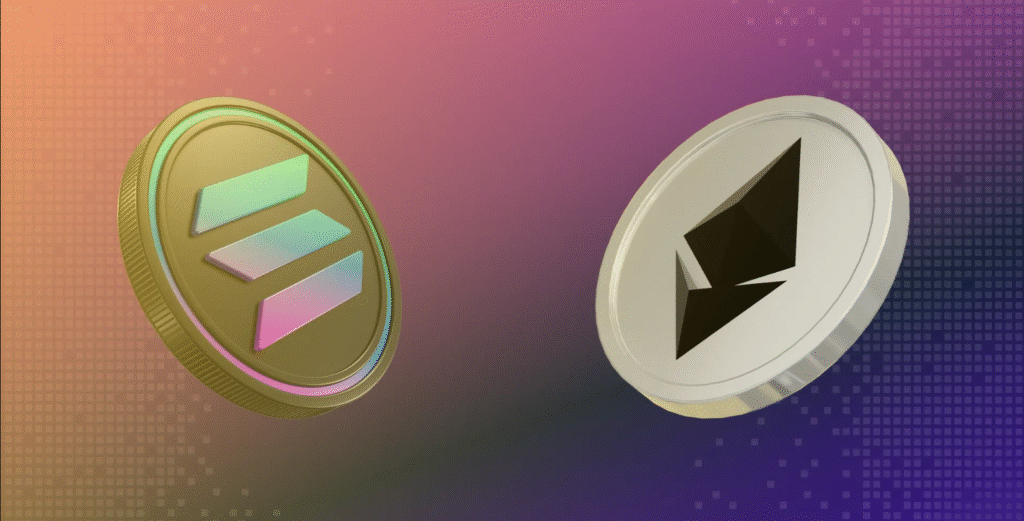
| Feature | Solana | Ethereum |
| Consensus Mechanism | Proof of History + Proof of Stake | Proof of Stake |
| Transactions per Second (TPS) | 65,000+ | 30–50 (Ethereum 2.0: up to 100,000 planned) |
| Average Transaction Fee | <$0.001 | $0.50–$2 (varies) |
| Smart Contract Language | Rust, C, C++ | Solidity |
| Launch Year | 2020 | 2015 |
| Primary Use Cases | DeFi, NFTs, Web3 payments | Smart contracts, DeFi, NFTs |
| Network Stability | Occasional outages | Highly stable |
| Ecosystem Size | Rapidly growing | Mature and dominant |
In short, Ethereum leads in ecosystem size and developer adoption, but Solana dominates in speed and cost-efficiency. Many new projects opt for Solana because it offers a smoother user experience and faster finality, which is critical for high-frequency applications like trading platforms or Web3 gaming.
Investing in Solana (SOL Token)
How to Buy Solana (SOL)
You can purchase SOL tokens on most major exchanges, including Binance, Coinbase, Kraken, and Bybit. Simply create an account, complete identity verification, and purchase SOL using fiat currency or other cryptocurrencies.
Solana Wallets
For security, storing SOL in a private wallet is essential. Popular options include:
- Phantom Wallet (browser extension and mobile app)
- Solflare Wallet (for staking and dApp interaction)
- Ledger Hardware Wallets (for maximum security)
Each wallet supports staking, allowing users to earn rewards while contributing to the network’s decentralization.
Staking and Rewards
What is Solana allows you to stake SOL directly from your wallet. By delegating tokens to a validator, you can earn up to 7–8% APY depending on the validator’s performance. Staking not only offers passive income but also strengthens network security — a win-win for both investors and the ecosystem.
The Future of Solana: What Lies Ahead?
What is Solana? , As of 2025, Solana continues to expand its ecosystem with groundbreaking partnerships, DeFi innovations, and enterprise adoption. The introduction of Solana Mobile Stack and the Saga phone signals its ambition to integrate blockchain technology into everyday life.
Several exciting developments are on the horizon:
- Improved Network Resilience: Updates aim to eliminate outages and enhance node synchronization.
- Cross-Chain Integrations: Interoperability projects are connecting Solana with Ethereum, Cosmos, and other chains.
- Enterprise Use Cases: Businesses are exploring Solana for payment systems, supply chain tracking, and tokenized assets.
- AI Integration: Emerging tools aim to merge Solana’s blockchain capabilities with artificial intelligence for smarter smart contracts and data validation.
With growing adoption across DeFi, NFTs, and Web3, Solana is positioning itself as the backbone of the next-generation internet — scalable, sustainable, and open to all.
Conclusion
So, what is Solana? It’s more than just a blockchain — it’s a revolutionary step toward a faster, more efficient, and accessible digital economy. With its blazing transaction speeds, low fees, and robust developer community, Solana has positioned itself as one of the most promising platforms for the future of Web3. As blockchain technology continues to evolve, Solana stands out as a pioneer redefining what’s possible in decentralised finance, NFTs, and real-world applications. Whether you’re an investor, developer, or simply curious about crypto, Solana is a name you’ll want to remember.
Frequently Asked Questions (FAQs)
1. What makes Solana different from other blockchains?
Solana’s unique Proof of History system timestamps transactions to speed up validation, enabling it to process thousands of transactions per second — much faster than most competitors.
2. What Is Solana, is it decentralized?
Yes. While early critics questioned its decentralization due to hardware demands, Solana now boasts thousands of validators worldwide, making it one of the most distributed proof-of-stake networks.
3. Can I build apps on Solana?
Absolutely. Solana supports Rust, C, and C++, making it developer-friendly and ideal for high-performance decentralized applications.
4. How can I stake my SOL tokens?
You can stake SOL using wallets like Phantom or Solflare. Simply choose a validator, delegate your tokens, and start earning rewards.
5. Is Solana a good investment in 2025?
While no investment is risk-free, Solana’s strong technology, expanding ecosystem, and growing adoption make it a top contender in the crypto space. However, investors should consider volatility and do their own research.