

The Shocking Ease of Token Creation
The barrier to entry for launching a cryptocurrency has never been lower. What once required extensive blockchain development knowledge, smart contract programming skills, and significant technical infrastructure can now be accomplished in roughly 10 minutes by someone with zero coding experience. This democratization of token creation has fueled the explosive growth of meme coins on Solana—but it’s also created an environment ripe for scams, rug pulls, and investor losses.
In this technical breakdown, we’ll walk through the exact process scammers use to launch meme coins, not to encourage bad behavior, but to educate investors on how easily they can be deceived. Understanding the mechanics behind token creation is your first line of defense against losing money to poorly conceived projects or outright scams.
The Solana blockchain, known for its high speed and low transaction costs, has become the preferred platform for meme coin launches. Unlike Ethereum, where gas fees can run into hundreds of dollars, deploying a token on Solana costs pennies. This economic advantage, combined with user-friendly launchpad platforms, has transformed the meme coin landscape entirely.
LUNA Launchpad and No-Code Token Platforms
Understanding Token Launchpads on Solana
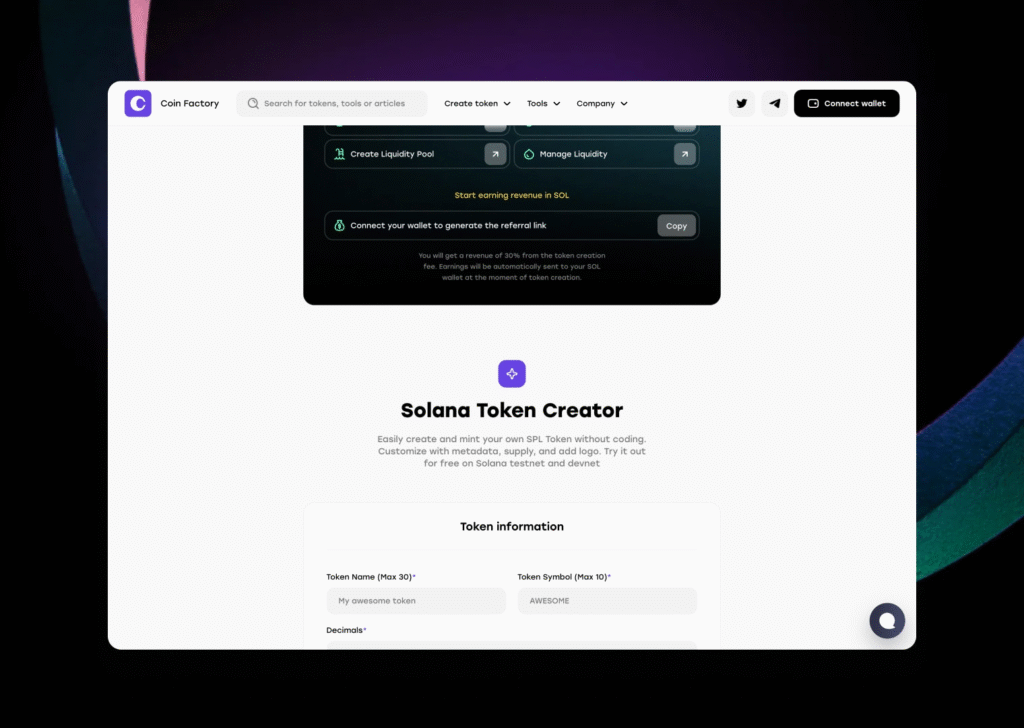
Token launchpads have revolutionized how cryptocurrencies are created and distributed. Platforms like LUNA Launchpad, Pump. fun, and others provide comprehensive interfaces that abstract away all technical complexity. These platforms handle smart contract deployment, token minting, metadata creation, and even initial liquidity provision—all through simple web forms.
The business model is straightforward: these platforms charge small fees for their services (typically 0.1 to 1 SOL) and sometimes take a percentage of tokens created. This creates a perverse incentive structure where the platform profits from volume, regardless of whether the tokens have legitimate utility or are outright scams.
What makes these platforms particularly dangerous from an investor protection standpoint is their complete neutrality. They don’t verify teams, assess business models, or evaluate the legitimacy of projects. Anyone with an internet connection and a few dollars worth of SOL can launch a token.
Step-by-Step: Creating a Token Without Code
Let’s walk through the actual process on a typical Solana token launchpad:
Step 1: Connect Your Wallet
Users connect a Solana wallet (Phantom, Solflare, etc.) to the launchpad platform. This wallet will become the token’s initial authority and receive all minted tokens.
Step 2: Configure Basic Token Parameters
The creator fills out a simple form with:
– Token name (e.g., “DogeKiller”)
– symbol (e.g., “DGKL”)
– Token decimals (usually 9 for Solana tokens)
– Total supply (commonly 1 billion or 1 trillion tokens)
– Token description
Step 3: Upload Visual Assets
The creator uploads a logo (often stolen from other projects or generated with AI) and optionally a banner image. These are automatically stored on decentralized storage solutions like Arweave or IPFS.
Step 4: Add Social Links
Most platforms allow creators to add Twitter, Telegram, Discord, and website links. Scammers often create bare-bones social media accounts minutes before launch to create the illusion of a legitimate project.
Step 5: Review and Deploy
After reviewing the information, the creator clicks “Create Token” and approves two transactions: one to pay the platform fee and another to deploy the token contract. Within seconds, the token exists on Solana’s blockchain.
Step 6: Receive Token Authority
The creator’s wallet now holds 100% of the token supply and maintains all authority over the token contract, including the ability to mint additional tokens (unless explicitly revoked).
Platform Features That Enable Quick Launches
Modern launchpads have evolved to include features that accelerate the entire launch process:
Instant Metadata Generation: The platform automatically creates properly formatted token metadata conforming to Solana’s Metaplex standard, ensuring the token displays correctly in wallets and on block explorers.
Pre-configured Smart Contracts: Rather than writing custom code, users select from pre-audited contract templates. These templates handle standard functionality like transfers, approvals, and burning.
Integrated Marketing Tools: Some platforms include built-in announcement features that automatically post to crypto listing sites and social media aggregators, giving new tokens immediate visibility.
One-Click Liquidity Deployment: The most sophisticated platforms connect directly to decentralized exchanges, allowing creators to establish trading pairs and add liquidity without leaving the launchpad interface.
Authority Management Options: Creators can choose to revoke mint authority (preventing new tokens from being created) or renounce contract ownership (making the token “immutable”). Paradoxically, scammers often do this to create false legitimacy while retaining control through other mechanisms.
The technical sophistication of these platforms cannot be overstated. They’ve essentially productized the entire token launch process, reducing what would have taken a blockchain developer weeks to accomplish into a workflow simpler than creating a social media account.
Smart Contract Deployment on Solana
The SPL Token Standard Explained
Solana’s token standard, called SPL (Solana Program Library) Token, differs fundamentally from Ethereum’s ERC-20 standard. Understanding these differences is crucial to understanding how quickly tokens can be deployed on Solana.
On Ethereum, each token is its own smart contract with custom code. Creating an ERC-20 token requires writing and deploying Solidity code, even if it’s based on a template. On Solana, the token program itself is a shared, deployed program that all tokens use. Creating a new token doesn’t require deploying new program code—instead, it creates new accounts that interact with the existing SPL Token program.
This architectural difference has profound implications:
Reduced Deployment Costs: Since you’re not deploying new executable code, creation costs are minimal—typically less than 0.01 SOL (a few cents).
Instant Creation: There’s no contract compilation, deployment, or verification process. Token creation happens in a single transaction.
Standardization: All SPL tokens behave identically at the base level, which means they’re automatically compatible with all Solana wallets and programs that support the standard.
Limited Customization: The flip side is that custom tokenomics (like reflection mechanisms, transaction taxes, or complex vesting) require additional program development, though most meme coins don’t implement these anyway.
Automated Contract Generation Process
When you click “Create Token” on a launchpad, here’s what happens behind the scenes:
Transaction 1: Create Mint Account
The platform constructs a transaction that creates a new “mint” account on Solana. This account stores the token’s core data:
– Mint authority (who can create new tokens)
– Freeze authority (who can freeze token accounts)
– Decimals (precision of the token)
– Supply (current circulating supply)
The mint account is assigned a unique public key (address) that serves as the token’s identifier. This address is deterministically generated, meaning it’s cryptographically guaranteed to be unique.
Transaction 2: Create Metadata Account
A second transaction creates an associated metadata account using the Metaplex Token Metadata standard. These stores:
– Name and symbol
– URI pointing to off-chain metadata (JSON file with description, image links, etc.)
– Creator information
– Seller fee basis points (for NFT-like features)
The metadata account is a PDA (Program Derived Address) that’s mathematically linked to the mint account, ensuring they stay connected.
Transaction 3: Initial Mint
The platform mints the full supply of tokens to a token account owned by the creator’s wallet. This is typically the entire supply specified during creation.
Optional Transaction 4: Revoke Authorities
If the creator chooses to “freeze” the supply, additional transactions revoke the mint authority (preventing future token creation) and optionally the freeze authority (preventing account freezing).
All of this happens programmatically in seconds. The launchpad platform manages transaction construction, signing requests, and submission to the network. From the user’s perspective, it’s as simple as clicking buttons and approving wallet prompts.
Metadata and Token Configuration
The metadata layer deserves special attention because it’s often where scammers create false legitimacy:
Off-Chain Metadata Storage: The actual token description, images, and extended attributes are stored in a JSON file hosted on decentralized storage (Arweave, IPFS) or sometimes centralized servers. The on-chain metadata only stores a URI pointing to this file.
This creates a vulnerability: if the metadata URI points to a mutable location (like a centralized server), the creator could theoretically change the token’s presentation after launch. Legitimate projects use permanent storage solutions with immutable content addressing.
Verification and Trust Indicators: Some platforms offer verification badges or social proof indicators. However, these are often trivially easy to obtain and don’t represent real due diligence. Scammers frequently copy verification insignias or create official-looking badges to deceive investors.
Token Extensions: Recent upgrades to the SPL Token standard include extensions for:
– Transfer fees (charging a percentage on transfers)
– Confidential transfers (privacy features)
– Permanent delegate (allowing a designated account to always transfer tokens)
– Interest-bearing tokens
While these features enable more sophisticated tokenomics, they also create new vectors for exploitation. A permanent delegate, for example, could drain holder wallets if not properly disclosed.
The key takeaway is that the technical barrier has been eliminated. The smart contract deployment process that once required blockchain expertise is now fully automated and accessible to anyone.
Liquidity Pools and Rug Pull Mechanics
Setting Up Liquidity on Raydium and Other DEXs
Creating a token is only half the battle—to enable trading, creators must establish liquidity on a decentralized exchange. On Solana, Raydium is the dominant DEX, though Orca, Lifinity, and others also facilitate meme coin trading.
Here’s how liquidity pool creation works:
Step 1: Select Trading Pair
The creator chooses what asset to pair their new token with. For meme coins, this is almost always SOL (Solana’s native cryptocurrency) or sometimes USDC. The pairing determines how the token will be valued and traded.
Step 2: Determine Initial Price
By deciding how many tokens to deposit relative to how much SOL, the creator sets the initial price. For example:
– Depositing 500 million tokens and 10 SOL creates an initial price of approximately 0.00002 SOL per token
– This initial ratio is crucial because it determines the market cap at launch
Step 3: Add Liquidity
The creator approves transactions to:
– Deposit their tokens into the pool
– Deposit the paired asset (SOL) into the pool
– Receive LP (Liquidity Provider) tokens representing their share of the pool
These LP tokens are critical—they represent ownership of the deposited assets and are the key to understanding rug pulls.
Step 4: Market Making Begins
Once liquidity is added, the token is tradable. Automated market maker (AMM) algorithms facilitate swaps using the constant product formula (x * y = k), allowing users to trade between the token and SOL.
Initial Market Cap Manipulation
Scammers often create extremely low initial liquidity (as little as 1-2 SOL) to make the token appear to have massive price appreciation potential. With tiny liquidity, even small buys create dramatic price increases, triggering FOMO (fear of missing out) among speculators.
The Technical Anatomy of a Rug Pull
Rug pulls—the sudden removal of liquidity that leaves token holders with worthless assets—can be executed in several ways. Understanding the technical mechanics helps investors spot warning signs:
Type 1: Liquidity Removal Rug Pull
This is the most straightforward rug pull mechanism:
1. Launch Phase: Creator establishes a token and adds liquidity (e.g., 500M tokens + 10 SOL)
2. Hype Phase: Through social media promotion and maybe some initial buys from their own wallets, they generate trading volume
3. Accumulation Phase: As legitimate traders buy the token, the SOL-to-token ratio shifts. The pool now contains more SOL (from buyers) and fewer tokens
4. Rug Pull Execution: The creator redeems their LP tokens, withdrawing both their original tokens AND the SOL that buyers deposited. The pool becomes empty or nearly empty
5. Aftermath: Remaining holders cannot sell because there’s no liquidity. Their tokens become effectively worthless
Technically, this is executed through simple transactions that burn LP tokens and withdraw the underlying assets. It takes seconds and is irreversible.
Type 2: Mint Authority Rug Pull
A more insidious version exploits retained mint authority:
1. Creator launches token, possibly even “burning” most of the supply to create a scarcity illusion
2. Trading begins and price increases
3. Creator mints massive new supply (millions or billions of tokens) directly to their wallet
4. They sell these tokens into the liquidity pool, extracting SOL and crashing the price
5. Original holders are diluted to near-zero value
This doesn’t require removing liquidity—the creator is selling tokens into the existing pool. Technically, it’s executed by calling the mint instruction on the SPL Token program with the mint authority’s signature.
Type 3: Freeze Authority Rug Pull
A rarer but devastating approach:
1. Creator retains freeze authority when deploying the token
2. After achieving sufficient market cap and holder base
3. Creator freezes all token accounts except their own
4. They can still sell while nobody else can trade
5. Holders are locked in with no ability to exit
This is technically executed through the freeze_account instruction in the SPL Token program.
Type 4: The Slow Rug
Not all rug pulls are sudden:
1. Creator holds a significant percentage of supply (e.g., 20-30%)
2. They sell gradually over days or weeks as liquidity grows
3. Each sale reduces their holdings while extracting value
4. Eventually, they exit completely, having extracted maximum value
5. The token doesn’t die immediately,y but bleeds continuously
This doesn’t require any special contract functionality—just patience and gradual selling.
H3:Technical Enablers of Rug Pulls
Several technical factors make rug pulls easy on Solana:
Instant Finality: Solana’s sub-second block times mean rug pulls execute almost instantly. By the time holders notice, it’s too late.
Low Transaction Costs: Executing a rug pull costs pennies in fees, removing economic barriers to scamming.
Irreversibility: Like all blockchain transactions, rug pulls cannot be reversed. Once the liquidity is withdrawn, it’s gone permanently.
Pseudonymity: Wallet addresses provide anonymity. Scammers face minimal risk of identification or legal consequences.
No Circuit Breakers: Unlike centralized exchanges that can halt trading, DEXs have no emergency stop mechanisms. A rug pull in progress cannot be interrupted.
Red Flags Investors Should Recognize
Understanding the technical mechanics allows us to identify warning signs:
Red Flag 1: Retained Authorities
Check if the mint authority or freeze authority has been revoked. Tools like Solscan or SolanaFM show this information. If authorities are retained, the creator can mint new tokens or freeze accounts at will.
Red Flag 2: Low and Unlocked Liquidity
Check the total liquidity value. If it’s less than $10,000, the pool is extremely vulnerable to manipulation. Also, verify if LP tokens are burned (permanently locked) or sitting in a wallet that could withdraw them.
Red Flag 3: Concentrated Holdings
If the top 10 wallets hold more than 50% of the supply, there’s significant rug pull risk. These holders can crash the price by selling into limited liquidity.
Red Flag 4: Anonymous Team
While pseudonymity is common in crypto, completely anonymous teams with no verifiable track record present a higher risk. Scammers typically create new identities for each rug pull.
Red Flag 5: Unrealistic Promises
Tokenomics that seem too good to be true (guaranteed returns, reflection mechanisms promising massive passive income) often hide scams. If the technical implementation doesn’t match the marketing, it’s likely fraudulent.
Red Flag 6: Rapid Launch Timeline
Projects that go from announcement to token launch in hours or days rarely have substance. Legitimate projects typically have months of development before token generation.
Red Flag 7: No Contract Verification
While SPL tokens use a standard program, projects with custom programs should have verified source code. Unverified custom programs could contain hidden backdoors.
H3: Technical Due Diligence Tools
Several platforms help investors assess technical risk:
RugCheck.xyz: Automatically analyses Solana tokens for common rug pull indicators, checking authorities, liquidity lock status, and holder distribution.
Solscan/SolanaFM: Block explorers that show token details, holder lists, and transaction history.
Birdeye/DexScreener: Chart platforms that display liquidity depth, trading volume, and holder metrics.
Metaplex Metadata Viewer: Allows inspection of token metadata to verify storage location and immutability.
The arms race between scammers and detection tools is ongoing. As detection improves, scammers develop new techniques to create false legitimacy.
Protecting Yourself in the Meme Coin Era
The technical ease of launching meme coins on Solana has created an environment where scams outnumber legitimate projects by orders of magnitude. Understanding the mechanics—from no-code launchpads to smart contract deployment to liquidity pool manipulation—is essential for anyone participating in this market.
Key takeaways for investors:
Accessibility Doesn’t Equal Legitimacy: Just because anyone can launch a token doesn’t mean every token is a legitimate investment. The 10-minute creation process is a feature for builders but a bug for investor protection.
Technical Analysis Is Mandatory: Before investing any amount, verify that the mint authority is revoked, liquidity is locked, and holder distribution is reasonable. These technical checks take minutes and can save you from total loss.
Question Everything: The same tools that enable legitimate innovation also empower scammers. Every claim should be verified independently. Screenshots can be faked, social proof can be manufactured, and verified badges often mean nothing.
Liquidity Is Key: The amount and lock status of liquidity is perhaps the single most important technical indicator. A token with $1,000 in unlocked liquidity is a ticking time bomb, regardless of how compelling the marketing is.
Understand the Game: The meme coin market is largely a zero-sum game where early entrants profit from later ones. The technical setup—instant deployment, minimal liquidity, concentrated holdings—is designed to enable this wealth transfer.
The Broader Implications: The Solana meme coin phenomenon demonstrates both the promise and peril of permissionless innovation. The same technology that enables financial inclusion and democratizes access also enables fraud at scale. There’s no easy regulatory solution because the code is neutral—it enables both good and bad actors equally.
For the crypto industry to mature, investor education must keep pace with technical innovation. Understanding how tokens are created, how liquidity functions, and how rug pulls are executed is no longer optional knowledge—it’s essential survival skills in the meme coin jungle.
The platforms that enable 10-minute token launches aren’t going away. If anything, they’ll become even more sophisticated and accessible. The responsibility falls to investors to understand the technical realities behind the marketing hype. Armed with this knowledge, you can make informed decisions about which risks to take and which tokens to avoid entirely.
The meme coin market will continue to evolve, with new platforms, new chains, and new mechanisms for both innovation and exploitation. By understanding the technical fundamentals—how tokens are created, deployed, and potentially rug-pulled—you position yourself to participate in this market with eyes wide open rather than becoming another statistic in the long list of rug pull victims.
Frequently Asked Questions
Q: How much does it actually cost to launch a meme coin on Solana?
A: Launching a basic meme coin on Solana is extremely inexpensive. The technical costs include: approximately 0.01 SOL for creating the mint account and metadata (less than $2), platform fees ranging from 0.1 to 1 SOL ($10-100) depending on the launchpad used, and initial liquidity (variable, but scammers often use as little as 1-2 SOL or $100-200). In total, someone could launch a token with as little as $50-100, though more sophisticated launches might cost $500-1,000, including initial marketing and liquidity.
Q: What does it mean when a token’s mint authority is revoked, and why does it matter?
A: Mint authority is the permission to create new tokens after initial deployment. When mint authority is revoked, it means no one—including the original creator—can ever mint additional tokens beyond the existing supply. This is important because retained mint authority allows creators to execute ‘mint rug pulls’ where they create billions of new tokens and sell them, diluting existing holders to near-zero value. Revoked mint authority appears on block explorers as ‘None’ or ‘Disabled’ in the mint authority field. However, revoked mint authority alone doesn’t make a token safe—creators can still rug pull through liquidity removal if LP tokens aren’t locked.
Q: How can I verify if liquidity is actually locked for a token?
A: To verify locked liquidity, you need to: (1) Find the liquidity pool address on the DEX (Raydium, Orca, etc.) where the token trades. (2) Look up the LP (Liquidity Provider) token mint address associated with that pool. (3) Check who holds the LP tokens using a block explorer like Solscan. If the LP tokens are in a normal wallet address, the creator can withdraw liquidity at any time. If they’re sent to a burn address (like 1111111111111111111111111111111) or a time-locked contract, the liquidity is secured. Tools like RugCheck.xyz automate this process, showing liquidity lock status with a simple percentage indicator.
Q: Can rug pulls be reversed or prevented once they happen?
A: No, rug pulls cannot be reversed once executed. Blockchain transactions are irreversible by design—once a creator withdraws liquidity or sells massive quantities of tokens, those transactions are permanent and cannot be undone. There’s also no mechanism to prevent a rug pull in progress on decentralized exchanges, which have no circuit breakers or emergency halts. This is fundamentally different from centralized exchanges that can stop trading. The only protection is prevention: checking technical indicators before investing, verifying liquidity is locked, confirming authorities are revoked, and recognizing that if these safeguards aren’t in place, a rug pull is technically possible at any moment.
Q: Why do scammers choose Solana over other blockchains for meme coin launches?
A: Solana offers several advantages for both legitimate projects and scammers: (1) Extremely low transaction costs (fractions of a cent vs. hundreds of dollars on Ethereum) make launching and rug-pulling economically viable even for small scams. (2) High speed and instant finality mean rug pulls are executed in seconds before holders can react. (3) The SPL token standard makes token creation nearly instant without custom contract deployment. (4) A growing ecosystem of no-code launchpads has made the process accessible to non-technical users. (5) A large retail trader base actively seeking meme coin opportunities provides ready victims.
Q: What’s the difference between a slow rug and a hard rug pull?
A: A hard rug pull is a sudden, immediate extraction of value—typically through withdrawing all liquidity at once or minting and dumping massive token quantities in minutes. The token price crashes instantly, often to near-zero, and trading becomes impossible. This is the classic ‘rug pull’ that gets attention. A slow rug is more subtle: the creator holds a significant portion of the supply (20-40%) and sells gradually over days or weeks as liquidity grows. Each sale extracts value while allowing the price to partially recover, making the dumping less obvious. The token doesn’t die immediately but bleeds continuously. Slow rugs are harder to detect because they look like normal selling activity.