
Bitcoin Adoption in Sanctioned Economies: How Restricted Nations Are Building Economic Lifelines
Sanctions can’t stop Bitcoin, here’s proof from the world’s most restricted zones.
When traditional banking systems become weapons of geopolitical warfare, populations and governments alike search for alternatives. This isn’t just a theoretical speculation, it’s the documented reality in sanctioned economies worldwide where Bitcoin has transitioned from speculative investment to economic necessity. From Iran’s official recognition of cryptocurrency mining to Venezuela’s Petro experiments and Russia’s pivot toward digital asset infrastructure, we’re witnessing a natural experiment in forced Bitcoin adoption at national scales.
The question isn’t whether sanctioned economies will turn to Bitcoin, but rather what happens to the cryptocurrency, and the global financial system, when they do.
The Strait of Hormuz Case Study
Iran’s Strategic Bitcoin Pivot
Iran represents perhaps the clearest case study of state-level Bitcoin adoption driven by sanctions pressure. Following the reimposition of comprehensive U.S. sanctions in 2018 and subsequent disconnection from SWIFT in 2019, Iran faced existential economic isolation. Traditional correspondent banking relationships evaporated overnight. Oil exports, the lifeblood of Iran’s economy, became nearly impossible to monetize through conventional channels.
The response was systematic and revealing. In 2019, Iran’s government officially recognized cryptocurrency mining as an industrial activity, requiring licensing but legitimizing the sector. By 2020, the Central Bank of Iran authorized the use of cryptocurrency mined domestically to pay for imports—a watershed moment marking the first instance of a sovereign nation formally integrating Bitcoin into its trade settlement infrastructure.
The scale is significant. Estimates suggest Iran accounts for 4-7% of global Bitcoin mining, leveraging heavily subsidized electricity (particularly natural gas that cannot easily reach export markets due to sanctions) to create a sanctions-resistant export product. Chinese mining operations relocated to Iran following Beijing’s 2021 crackdown, bringing industrial-scale expertise to the country’s growing crypto infrastructure.
Real-World Trade Mechanics
How does this work in practice? Iranian exporters—particularly in sectors like petrochemicals, carpets, and agricultural products—increasingly accept Bitcoin as payment from foreign buyers. These Bitcoin holdings then serve multiple purposes:
Import financing: Bitcoin is converted to local currency or used directly to purchase imports from vendors willing to accept cryptocurrency, particularly in Turkey, China, and the UAE.
Value preservation: In an economy experiencing chronic inflation (often exceeding 40% annually), Bitcoin serves as a hard asset alternative to rapidly depreciating rials.
Sanctions circumvention: Bitcoin transactions bypass the traditional banking system entirely, making them resistant to SWIFT disconnection and correspondent banking restrictions.
The Iranian government itself has acknowledged using cryptocurrency for import payments. In 2022, Iran’s Ministry of Industry, Mine and Trade confirmed the country’s first import order valued at $10 million was settled using cryptocurrency. While officials didn’t specify Bitcoin, the infrastructure and liquidity point toward BTC as the primary vehicle.
Wartime Acceleration
The Ukraine conflict and subsequent expansion of Russian sanctions created a template for rapid cryptocurrency adoption under pressure. Russia’s partial exclusion from SWIFT in 2022 and the freezing of approximately $300 billion in central bank reserves demonstrated the vulnerability of even major economies to financial system weaponization.
Russia’s response mirrored and expanded upon Iran’s playbook: legalization of cryptocurrency mining, exploration of Bitcoin for international settlements, and development of domestic crypto infrastructure insulated from Western intervention. The Bank of Russia, previously hostile to cryptocurrency, acknowledged in 2022 that crypto could play a role in international settlements, a remarkable policy reversal driven by necessity.
The Economic Logic of Sanctions-Driven Adoption

Capital Controls Create Crypto Demand
Sanctions don’t merely restrict governments, they impact entire populations. Citizens of sanctioned economies face:
Banking isolation: Difficulty accessing international payment systems, limiting everything from online purchases to tuition payments for students abroad.
Currency collapse: Sanctions typically exacerbate inflation and currency devaluation, destroying savings held in local currency.
Wealth preservation challenges: Limited access to traditional safe-haven assets like dollars, euros, or gold.
Bitcoin offers solutions to each problem. It’s globally accessible with only an internet connection, immune to central bank monetary policy, and can be self-custodied without reliance on financial institutions. These characteristics make it uniquely valuable in restricted economies.
Venezuela provides compelling evidence. As hyperinflation destroyed the bolivar (inflation exceeded 1,000,000% in 2018), Bitcoin adoption surged. LocalBitcoins volume in Venezuela reached record highs, peer-to-peer trading flourished, and merchants from grocery stores to restaurants began accepting Bitcoin. By 2020, Venezuela ranked third globally in Chainalysis’s cryptocurrency adoption index, behind only Ukraine and Russia, all countries experiencing severe economic stress.
The Network Effect in Closed Systems
Sanctions create closed economic loops that paradoxically accelerate cryptocurrency adoption through network effects. When Country A and Country B are both sanctioned by the West, conventional trade between them becomes complicated by:
– Currency conversion challenges (neither wants the other’s depreciating fiat)
– Limited banking channels (both are excluded from major financial networks)
– Political risk (payments can be seized or frozen)
Bitcoin solves the three-body problem. Iranian oil exporters can sell to Chinese buyers, receiving Bitcoin that’s immediately useful for purchasing Russian machinery or Turkish consumer goods. The cryptocurrency becomes a common settlement layer for the sanctioned economy bloc.
This dynamic is evident in trade patterns. Research by blockchain analytics firms shows significant Bitcoin flow between sanctioned jurisdictions, suggesting its use as an international settlement medium within this parallel economic sphere.
Mining as Sanctions-Resistant Export
Perhaps most strategically significant is Bitcoin mining’s role as a sanctions-proof export industry. Unlike oil, grain, or manufactured goods, all vulnerable to interdiction, sanctions, or seizure, Bitcoin mining produces a purely digital, borderless commodity.
For sanctioned petrostates like Iran and Venezuela, the logic is compelling:
Stranded energy monetization: Natural gas that cannot economically reach export markets (due to lack of LNG infrastructure or sanctions on energy exports) can be converted to electricity and then to Bitcoin.
Sanction-resistant revenue: Mined Bitcoin can be sold globally without shipping routes, banking intermediaries, or vulnerable infrastructure.
Strategic reserves: Bitcoin holdings represent sovereign wealth that cannot be frozen, seized, or sanctioned, a crucial consideration after Russia’s reserves were largely immobilized in 2022.
Iran’s mining industry exemplifies this strategy. The government licenses mining operations specifically to monetize otherwise wasted associated gas from oil fields, effectively converting sanctions-blocked petroleum into a digital asset that can be freely traded globally.
Long-Term Implications and Emerging Realities
Bitcoin as Sanctions-Evasion Standard
If Bitcoin becomes primarily known as a sanctions-evasion tool, the implications are profound and multifaceted.
For adopting nations, this represents economic lifeline and strategic autonomy. The ability to conduct international commerce despite Western sanctions fundamentally alters the calculus of geopolitical isolation. Sanctions lose much of their coercive power if targeted nations can maintain trade flows through cryptocurrency channels.
For the cryptocurrency ecosystem, association with sanctions evasion presents both opportunity and risk. Bitcoin’s value proposition as censorship-resistant money is validated, but mainstream institutional adoption may face headwinds if Bitcoin becomes too closely associated with pariah states.
For the sanctioning powers, this represents an erosion of financial statecraft effectiveness. The U.S. dollar’s role as global reserve currency derives partly from its necessity in international trade. If alternative settlement mechanisms emerge, American geopolitical leverage diminishes.
Regulatory Response and Escalation
Western governments are not passive observers. Responses include:
Enhanced blockchain surveillance: The U.S. Treasury’s Office of Foreign Assets Control (OFAC) has sanctioned specific cryptocurrency addresses, signaling intent to extend sanctions into the digital realm.
Exchange compliance requirements: Pressure on cryptocurrency exchanges to implement robust KYC/AML and block users from sanctioned jurisdictions, effectively creating a “compliant Bitcoin” ecosystem separate from the permissionless base layer.
Mining pool concerns: Discussions about sanctioning mining pools that process transactions from sanctioned addresses, though implementation challenges are substantial given Bitcoin’s decentralized structure.
This creates a regulatory cat-and-mouse dynamic. Sanctioned economies respond with domestic exchanges, peer-to-peer trading platforms, and privacy-enhancing technologies. The bifurcation between “compliant” and “permissionless” Bitcoin use accelerates.
The Parallel Financial System Thesis
The logical endpoint of current trends is not Bitcoin’s suppression but rather the emergence of parallel financial systems—one Western-aligned and regulated, the other sanctions-resistant and permissionless.
We see early evidence in payment infrastructure. While Western economies integrate Bitcoin through regulated custodians and ETFs, sanctioned economies build parallel infrastructure: domestic exchanges, mining operations, and crypto-based payment systems entirely outside Western oversight.
This bifurcation may ultimately strengthen Bitcoin’s value proposition. If the cryptocurrency successfully serves both systems—providing investment exposure in developed markets while facilitating sanctions-resistant commerce in restricted economies—it demonstrates unprecedented versatility as both asset and payment network.
Game Theory and Adoption Cascades
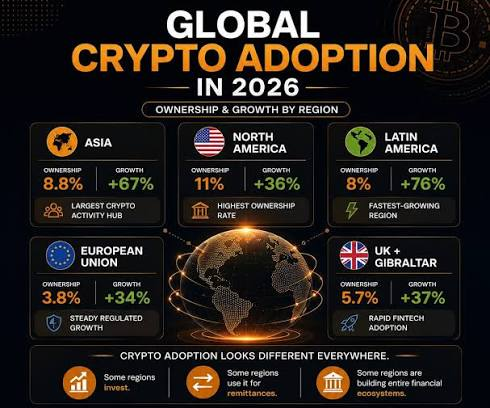
Perhaps most significant is the game-theoretic pressure on sovereign actors. Once some nations successfully use Bitcoin for sanctions evasion, others face incentives to develop similar capabilities “just in case.”
We’ve seen this pattern with nuclear weapons, cyber capabilities, and other strategic technologies. Nations develop capabilities not because they intend immediate use, but because lacking them represents dangerous strategic vulnerability.
Bitcoin mining and cryptocurrency infrastructure may follow similar logic. Countries observing Iran and Russia maintain trade flows despite sanctions will invest in domestic crypto infrastructure as strategic hedging. This creates an adoption cascade independent of whether nations currently face sanctions, driven by the desire to avoid future vulnerability.
The Unbanked and Human Impact
Beyond geopolitical abstractions, Bitcoin adoption in sanctioned economies has profound human dimensions. Sanctions—intended to pressure governments—inevitably impact civilian populations. Citizens lose access to international payment systems, making routine activities like receiving remittances or paying for online services difficult or impossible.
Bitcoin provides individual-level sanctions resistance. An Iranian student can pay international tuition, a Venezuelan family can receive remittances, a Russian citizen can purchase foreign goods—all without requiring permission from financial intermediaries.
This framing—Bitcoin as financial inclusion for the sanctioned—resonates with cryptocurrency’s libertarian origins. Whether this represents sanctions evasion or human rights depends largely on perspective, but the practical impact is undeniable: Bitcoin provides financial access to hundreds of millions in restricted economies.
Conclusions and Open Questions
The evidence is clear: sanctions are catalyzing Bitcoin adoption in restricted economies at scales previously considered unlikely. This adoption is not speculative or ideological—it’s practical and demand-driven, solving real economic problems for nations and individuals cut off from the global financial system.
This raises profound questions without clear answers:
Effectiveness: Do sanctions remain effective tools of statecraft if targeted nations can maintain commerce through cryptocurrency channels?
Legitimacy: Does sanctions-evasion use undermine or validate Bitcoin’s value proposition as censorship-resistant money?
Stability: Can the global financial system remain dollar-centric if significant trade flows migrate to decentralized alternatives?
Ethics: Is financial access for sanctioned populations a human right or a loophole undermining international law?
What’s certain is that this experiment continues in real-time. As sanctions expand and cryptocurrency infrastructure matures, we’ll gain unprecedented empirical data on Bitcoin’s viability as an alternative international settlement layer. The world’s most restricted zones aren’t just adopting Bitcoin—they’re stress-testing its core promises under the most challenging conditions imaginable.
The results will shape not just cryptocurrency’s future, but the architecture of global finance itself.
Frequently Asked Questions
Q: How much of global Bitcoin mining actually occurs in sanctioned economies?
A: Estimates suggest Iran accounts for 4-7% of global Bitcoin mining, while Russia’s share increased significantly following its 2022 sanctions, potentially reaching 10-15% of global hashrate. Venezuela hosts smaller but growing mining operations. Combined, sanctioned economies may represent 15-25% of global mining capacity, though exact figures are difficult to verify due to the pseudonymous nature of mining and limited official reporting from these jurisdictions.
Q: Can the United States effectively sanction Bitcoin addresses or mining operations?
A: The U.S. Treasury’s OFAC can and has sanctioned specific Bitcoin addresses, making it illegal for U.S. persons to transact with them. However, enforcement is challenging. Bitcoin’s permissionless nature means sanctioned addresses can still transact on the base layer protocol. The effectiveness depends largely on whether exchanges and service providers comply with blocklists. Sanctioning mining pools is theoretically possible but practically difficult—mining is pseudonymous, pools can relocate, and new pools can emerge. This creates a persistent cat-and-mouse dynamic rather than comprehensive control.
Q: Does Bitcoin adoption in sanctioned economies hurt mainstream institutional adoption?
A: The relationship is complex and possibly paradoxical. Sanctions-evasion association may deter some institutional investors concerned about regulatory risk or reputational issues. However, it simultaneously validates Bitcoin’s core value proposition as censorship-resistant, permissionless money—which appeals to institutions seeking assets uncorrelated with traditional financial systems. The emergence of regulated products (ETFs, custodians) in developed markets while sanctioned economies use Bitcoin directly suggests the market is bifurcating rather than choosing one narrative over the other.
Q: What happens if China or India face Western sanctions—would Bitcoin scale to accommodate that volume?
A: This scenario would represent an unprecedented stress test. China and India combined account for roughly 35% of global GDP. Their potential sanctions-driven Bitcoin adoption would dwarf current sanctioned economy usage by orders of magnitude. Bitcoin’s base layer (approximately 7 transactions per second) could not accommodate this volume without significant congestion and fee escalation. This scenario would likely accelerate Layer 2 development (Lightning Network, sidechains) and potentially drive adoption of alternative cryptocurrencies with higher throughput. It would also massively increase Bitcoin’s price due to sudden demand shock, creating complex feedback loops between adoption, price, mining incentives, and network capacity.
Q: Are there documented cases of governments successfully using Bitcoin to evade sanctions?
A: Yes, though documentation is often partial. Iran’s Ministry of Industry confirmed using cryptocurrency for a $10 million import order in 2022. Venezuelan officials have acknowledged exploring cryptocurrency for oil sales, though details remain murky. North Korea has reportedly used stolen and mined cryptocurrency to fund its programs, according to UN sanctions monitors. Russia’s central bank acknowledged considering cryptocurrency for international settlements post-2022 sanctions. However, comprehensive documentation is limited—governments don’t publicize sanctions evasion, and blockchain analytics provides only partial visibility. The evidence suggests active use but full extent remains uncertain.