Complete Beginner’s Guide to Trading Meme Coins: A Foundation-First Playbook
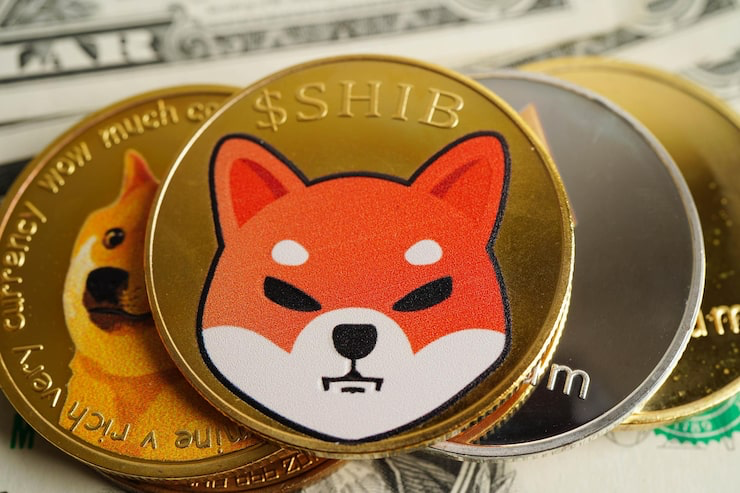
Before you lose your money on meme coins, learn these essential trading basics.
Many beginners lose money in meme coins not because of bad luck, but because they skip the fundamentals, secure account setup, how orders work, what spreads and fees do to returns, and simple risk rules. This guide takes a foundation-first approach so you can enter meme coin trading with a realistic plan, safer habits, and clearer expectations.
Note: This is educational information, not financial advice. Crypto is volatile and can result in total loss. Always follow your local laws and do your own research.
Setting Up Your First Crypto Exchange Account and Wallet
Your setup is your seatbelt. Before you touch any meme coin, lock down the basics so a simple mistake doesn’t become an expensive lesson.
1) Choose Your On-Ramp (where you first buy crypto)
– Centralized exchanges (CEXs): Examples include large, regulated platforms that let you buy crypto with a bank card or transfer. Pros: easy fiat on-ramp, solid liquidity for majors, customer support. Cons: account verification (KYC), custody is not self-sovereign.
– Peer-to-peer (P2P) or local brokers: May be used where CEX options are limited. Requires extra care to avoid scams and comply with local regulations.
For most beginners, a reputable CEX is the simplest starting point. Complete KYC per law, enable account security, and start with a small test amount to learn the process.
2) Lock Down Security Before Depositing Funds
– Two-factor authentication (2FA): Use an authenticator app (not SMS) for logins and withdrawals.
– Anti-phishing tools: Many exchanges let you set a verification code that appears on official emails. Turn it on.
– Allowlists: On CEXs and wallets, restrict withdrawals to pre-approved addresses when possible.
– Device hygiene: Keep your operating system updated, use strong unique passwords via a password manager, and avoid public Wi‑Fi for trading.
3) Understand Wallets: Custodial vs Self-Custody
– Custodial wallet (on a CEX): The exchange holds your keys. Easiest for beginners, but you trust a third party.
– Self-custody wallet: You hold your private keys/seed phrase. This is the standard for DEX trading and newer meme coins.
– Software wallets (browser extension or mobile): Easy setup, convenient for DEXs. Higher phishing risk if you’re not careful.
– Hardware wallets: Physical devices that keep private keys isolated. Best for serious amounts; slightly more setup effort.
Seed Phrase Hygiene
– Your 12/24-word seed phrase controls your wallet. Never type it into websites or share it. Store it offline, written clearly in multiple secure locations.
– Practice recovery: Create a fresh wallet with a small amount and restore it with your seed to ensure you understand the process.
4) Choose the Right Network and Plan Gas
Meme coins live on multiple chains. The most common:
– Ethereum (ETH): Deepest liquidity and most scams detected early via active communities, but gas fees can spike.
– Solana (SOL): Fast and cheap fees, popular for trendy memes; occasional network congestion.
– BNB Chain (BNB), Base, Polygon, others: Cheaper fees and many tokens. Liquidity and tooling vary.
Gas is a network fee you pay to submit transactions. Keep a small balance of the native token for gas (ETH on Ethereum, SOL on Solana, etc.). If you don’t have gas, you can’t trade or move funds.
5) Moving Money From CEX to Wallet
– Buy a major token on your CEX (e.g., ETH on Ethereum or SOL on Solana) and withdraw to your self-custody wallet.
– Always verify the network and address match. Send a tiny test transaction first to confirm.
– Bookmark your official wallet app and DEX addresses. Use block explorers (e.g., Etherscan-like sites) to verify token contract addresses before trading.
6) DEX Basics for Meme Coins
– AMM-based DEXs (automated market makers) let you swap tokens via liquidity pools. Price depends on pool balances.
– You’ll often search for a token by contract address on the DEX or via an aggregator that sources liquidity from multiple pools.
– Many meme coins are new, illiquid, and risky. A small slippage setting may cause failed trades; a large one can cause a bad fill. You’ll learn more about slippage below.
Checklist Before You Make Your First Swap
– Confirm you’re on the correct chain and have gas.
– Verify the token contract from an official project channel or reputable explorer. Beware lookalike ticker symbols.
– Check liquidity and recent volume; very thin pools make for dangerous fills and easy price manipulation.
– Approve the minimum spend on DEXs when prompted (limit token approvals to the amount you plan to trade, if supported).
Understanding Order Types, Spreads, and Fees in Meme Coin Trading
Meme coins move fast. If you don’t understand how orders execute or what fees and spreads do to your results, you’ll overpay going in and leak value coming out.
1) Order Types and When to Use Them
– Market order: Buys/sells at the best available price. Fast, but you accept whatever price the market gives you. On AMMs, this is a swap at current pool price. Good for small trades in liquid markets.
– Limit order: You set a specific price; the order fills only when the market reaches it. On CEXs this is standard; on DEXs you may need a limit-order tool or aggregator that supports it. Good for controlling entry/exit price.
– Stop-loss order: Triggers a sell if price hits a threshold. On CEXs, you can automate this; on DEXs, you might use third-party tools or alerts to act manually.
– Stop-limit: Sets a trigger price and a limit price, giving you protection from extreme slippage on triggered orders.
– OCO (One-Cancels-the-Other): A pair—typically take-profit and stop-loss—where one cancels the other if triggered. Useful on CEXs; DEXs may require tooling or manual management.
For early meme coins often traded on DEXs, you’ll rely on market (swap) functionality. Learn limit-order tools available on your chain; they can reduce slippage on larger trades in volatile pools.
2) Spread, Slippage, and Price Impact
– Bid-ask spread (CEXs) or pool price impact (DEXs): The difference between buy and sell prices. Wider spreads mean you lose more value entering and exiting.
– Slippage tolerance: How much worse a fill you’re willing to accept than the quoted price (common DEX setting). If slippage is too low in a fast move, your trade fails; if too high, you may overpay.
– Price impact: On AMMs, your trade size relative to pool liquidity moves the price. Bigger trades in small pools cause worse fills.
Example
– Suppose a meme coin pool has shallow liquidity. You buy $500 worth with 2% slippage. If price runs up mid-transaction or your own order shifts the price, you might fill at 2% worse than quote and pay a swap fee plus gas. Do this repeatedly and the costs stack.
Practical Tips
– Keep trade sizes small relative to pool liquidity. If your order impacts price >1–2% in quiet conditions, consider splitting into multiple smaller trades or using more liquid pools.
– Adjust slippage only as needed. Start tight (e.g., 0.5–1%) in calm markets; widen temporarily in volatile moments. Reduce again after.
– On CEXs, use limit orders to avoid paying the spread unnecessarily, especially in thinly traded pairs.
3) Fees You Actually Pay (they add up)
– Trading fees: On CEXs, you’ll see maker/taker fees (maker = add liquidity with limit orders; taker = remove liquidity with market orders). On DEXs, there’s a swap fee that goes to liquidity providers and/or the protocol.
– Network fees (gas): Paid in the chain’s native token for every transaction (approvals, swaps, transfers). These can spike during hype.
– Withdrawal fees: CEXs may charge to move crypto to your wallet. Compare costs and choose the correct network.
– Aggregator/bridge fees: Tools that route across pools or chains often add small fees; check quotes carefully.
How Fees Eat Returns
– If you round-trip a position (buy then sell) and pay, say, 0.3% per trade on the DEX, plus slippage of 1% in and 1% out, your breakeven is already above 2.6%, not counting gas. Many beginners forget this and chase tiny moves that don’t cover costs.
4) Liquidity, Volatility, and Timing
– Liquidity: Prefer pairs with deeper liquidity and consistent volume. Thin liquidity magnifies slippage and can trap you during dumps.
– Volatility: Meme coins swing wildly. If you place a market order into a spike, expect poor fills. Patience often beats FOMO.
– Timing: Avoid executing during gas spikes if you can; high gas turns small trades unprofitable. Consider scheduling alerts and waiting for calmer blocks.
Basic Risk Management Rules Before Buying Any Meme Coin
Your rules should be boring and repeatable. They keep you in the game long enough to learn.
1) Position Sizing That Survives Volatility
– Fixed-fractional risk: Decide what percent of your total trading capital you’ll risk per trade (e.g., 0.5–1%). Risk means what you can lose if the stop is hit or the thesis is invalidated.
– Simple sizing math: If you have $1,000 and risk 1% ($10) on a trade with a 20% stop distance, your position size is $10 / 0.20 = $50. This prevents one bad move from wiping you out.
– Portfolio caps: Set a maximum allocation to meme coins (e.g., 10–20% of your crypto portfolio), and a max per single meme coin (e.g., 2–5%). Adjust to your risk tolerance.
2) Use Tops—Even if Manual
– On DEXs, hard stops often require third-party tools. If you can’t automate, at least set alerts on price levels and place manual exits when your plan says so.
– Predefine invalidation levels: Price below recent support? Liquidity removed? Developer wallet dumped? If your thesis breaks, exit.
3) Avoid Leverage as a Beginner
– Leverage magnifies both gains and losses. Meme coins already move like they’re leveraged. Adding margin often leads to liquidation during normal volatility.
4) Don’t Chase, Don’t Average Down Blindly
– Chasing green candles: Entering after a massive spike often means you’re exit liquidity for early buyers.
– Averaging down: Only add if your original thesis still holds and your risk rules allow it. Blindly averaging down is how accounts implode.
5) Plan the Entire Trade Before Entering
Write it down or use a template:
– Thesis: Why this coin? (Liquidity, community traction, clear catalysts?)
– Entry: Preferred price and method (limit vs market, acceptable slippage).
– Invalidation: Specific events or levels that prove you wrong.
– Targets: Conservative take-profit levels (e.g., scale out portions at +25%, +50%, +100%, etc.).
– Size: Based on risk percent and stop distance.
– Time horizon: Minutes/hours (scalp), days (swing), or longer. Meme trades without a horizon often become accidental bags.
6) Red Flags to Screen Before Buying
– Contract risk: Honeypots (you can buy but can’t sell), trading restrictions, blacklists. Use reputable scanners but don’t rely solely on them.
– Liquidity control: Is liquidity locked? If it can be withdrawn at any time, the rug risk is higher.
– Developer wallets and token allocation: Large, unlocked allocations can dump on holders.
– Socials and transparency: Anonymous devs are common in memes, but no roadmap, no communication, and suspicious sudden hype are danger signs.
– Copycat contracts: Look for near-identical tickers or recently created contracts pretending to be the same coin.
7) Execution Discipline and Journaling
– Keep a simple log for each trade: date, pair, entry, plan, outcome, mistakes, what you’ll do differently.
– Review weekly: Identify recurring errors (late chasing, over-sizing, ignoring stops) and set one correction goal for the next week.
8) Psychology: Protect Your Attention and Emotions
– Set alert-based workflows: React to alerts, don’t stare at charts all day.
– Pre-commit to cool-down rules: After a big loss or win, step away before trading again. Emotional trading leads to errors.
9) Legal and Tax Basics
– Track every trade: Amount, date, cost basis, proceeds, network fees. Many tools help automate this, but a simple spreadsheet works to start.
– Understand local tax rules on crypto disposals and income. Plan ahead rather than retrofitting records later.
10) A Minimal Pre-Trade Checklist
– Capital at risk per trade <= your rule (e.g., 1%).
– Verified token contract and chain.
– Sufficient gas on the right network.
– Liquidity/volume acceptable; expected price impact < your threshold.
– Entry/exit plan written; alerts set.
– Slippage and fees considered; trade still makes sense after costs.
Common Mistakes Beginners Make (and Quick Fixes)
– Mistake: Depositing a large sum on day one. Fix: Start with tiny test amounts; practice withdrawals and swaps first.
– Mistake: Confusing ticker symbols and buying the wrong token. Fix: Always confirm the exact contract address.
– Mistake: Ignoring approvals. Fix: Limit token approvals to your intended trade size; revoke unneeded approvals periodically using reputable tools.
– Mistake: Trading during fee spikes. Fix: Check current gas; if elevated, wait or reduce trade size.
– Mistake: All-in bets based on social hype. Fix: Cap position sizes and require objective signals (liquidity, volume, clear catalyst).
– Mistake: No exit plan. Fix: Set invalidation and staggered take-profits before entering.
Putting it All Together: A Sample First-Week Plan
– Day 1–2: Open a CEX account; complete KYC; enable 2FA and anti-phishing code; make a small deposit; buy a tiny amount of a major token; perform a $5–$10 test withdrawal to your self-custody wallet.
– Day 3: Add a bit more to your wallet; practice one DEX swap with a micro amount; learn to set slippage; observe price impact in a small pool.
– Day 4: Explore block explorers; practice verifying a token contract; review liquidity and recent volume; read basic scanner outputs.
– Day 5: Draft your trade template; define risk per trade and portfolio caps; set up price alerts.
– Day 6–7: Paper trade or use tiny positions to test your plan; journal outcomes; adjust slippage and size rules based on observations.
By the end of week one, your goals are operational confidence, not big profits. Once you can move funds safely, verify contracts, understand spreads and fees, and execute a small planned trade without surprises, you’re ready to scale cautiously.
Final Verdict
Meme coins are chaotic by design. Without fundamentals, the chaos punishes beginners. With a foundation-first approach—secure setup, clear order and fee mechanics, and strict risk rules—you transform randomness into a structured game where you control what you can and cut losses fast when you can’t. Start small, document everything, and let consistency—not hype—drive your learning curve.
Frequently Asked Questions
Q: How much money should a beginner start with?
A: Only what you can afford to lose. Start with amounts small enough that mistakes are cheap (even $20–$100). Focus on learning transfers, approvals, slippage, and journaling before sizing up.
Q: Is it better to trade meme coins on a CEX or a DEX?
A: Early or tiny-cap meme coins often launch on DEXs first, but DEX trading adds contract and execution risks. CEX listings typically come later with better liquidity and tools. Beginners can practice on CEXs to learn order mechanics, then use DEXs cautiously once they understand wallets, gas, and contract verification.
Q: What slippage tolerance should I use?
A: There’s no universal number. Try 0.5–1% in calm, liquid pools; increase only when volatility or thin liquidity causes failures. Reduce slippage again after entry to avoid poor fills.
Q: How do I avoid honeypots and scam tokens?
A: Verify the contract address from official sources, check for recent contract creation, look for trading restrictions, examine liquidity locks, and review developer wallet allocations. Use multiple independent checks; don’t rely on a single scanner result.
Q: Should I use leverage for meme coins?
A: Generally no for beginners. Meme coins are already highly volatile, and leverage compounds liquidation risk. Focus on position sizing and hard invalidation levels instead.
Q: When should I sell?
A: Define exits before entry. Use invalidation levels to cut losses quickly and set staggered take-profit targets to lock in gains. If your thesis breaks—liquidity pulled, dev dumps, or structural change—exit regardless of hope or social sentiment.
Q: What records should I keep for taxes?
A: Track every trade: date/time, token amounts, cost basis, proceeds, gas, and fees. Keep wallet addresses and transaction hashes. Many jurisdictions treat trades as taxable events—consult local rules.
Q: How do spreads and fees impact small accounts?
A: They matter more. If you pay 2–3% round-trip in spread, slippage, and fees, small gains get erased. Trade less frequently, target larger moves, and use limit orders (where possible) to reduce costs.
Q: What’s the safest wallet setup for a beginner?
A: For learning: a software wallet with tiny amounts and strong device security. For meaningful capital: add a hardware wallet, store seed phrases offline, and use allowlists and minimal token approvals.
Q: Can I make quick profits with meme coins?
A: Sometimes, but it’s unpredictable and risky. Treat any trade as potentially going to zero. A process—risk caps, planned exits, and documentation—beats gambling on hype.